People Behind People in Peril —Veronika Barilla: I now know I’m not a unicorn
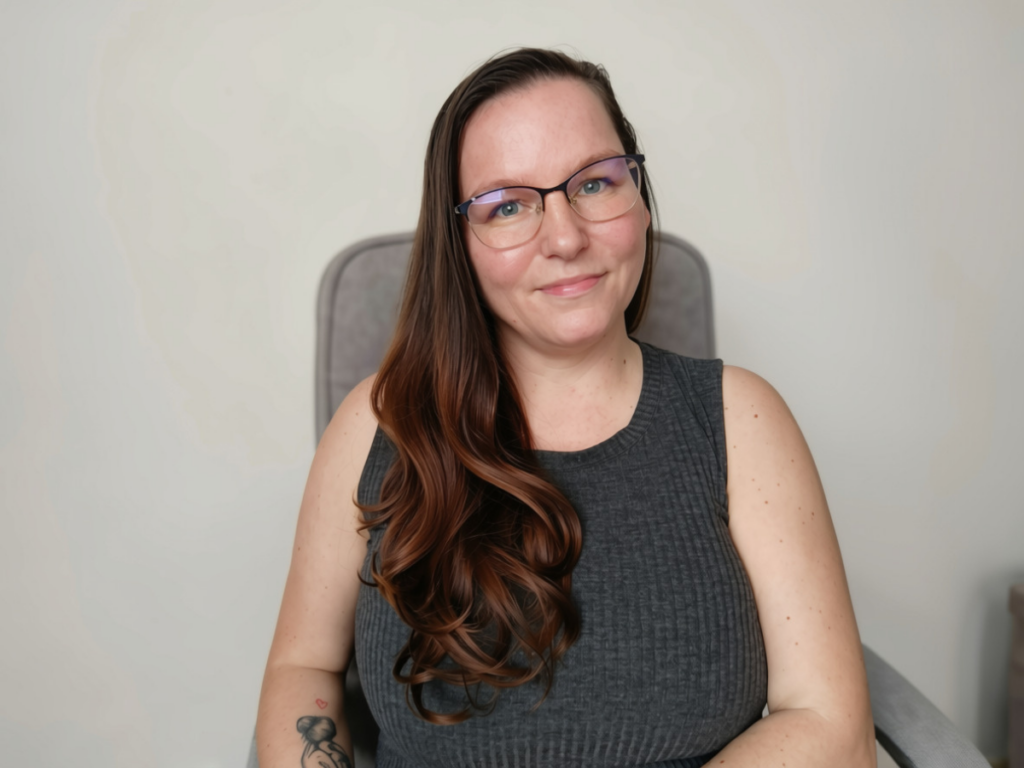
As part of the People Behind People in Peril interview series, I spoke with Veronika Barilla, who leads the telefundraising team at People in Peril.
For a while, Veronika felt that her desire to help made her something of a unicorn. When she joined People in Peril, she realised just how many people felt the same way. “Suddenly you find yourself thinking, ‘Wow, are there really so many of us?’” she says. Helping others is part of her life outside work, too. As she tells me about rescuing animals during our video call, I can see one of the dogs she has helped on screen, sleeping peacefully in its bed.
As head of the telefundraising team at People in Peril, she supports colleagues who speak with donors every day. They thank them, explain what their support has made possible, listen to their stories and answer their questions. Veronika and I talked about why she left the corporate world for the non-profit sector, and the wonderful things that can come from a simple phone call.
In the interview, she also talks about:
- why we still call people even in the age of social media,
- how to have a conversation that leaves someone feeling good, even if they decide not to donate,
- what made her think she could now “retire”,
- how her colleagues support one another despite working in different parts of Slovakia,
- what unusual animal she once brought home as a child.

People Behind People in Peril interview series offers a closer look at the people behind People in Peril and the humanitarian work it delivers. It introduces both those working on the ground and those coordinating relief efforts behind the scenes. Through their stories, motivations, and everyday challenges, the series shows that every act of assistance is made possible by ordinary people who have chosen to do extraordinary work.
From Bratislava to Sečovce, from the corporate world to the non-profit sector
What did you do before joining People in Peril, and what brought you to us?
Do you want my CV too? (laughs)
I’m more interested in what drew you to working in the non-profit sector.
The reasons go deeper. There were two major turning points: my daughter was born in 2019, and shortly afterwards, in March 2020, the pandemic began. I was working in the corporate sector at the time, and my husband worked at Volkswagen. We said to ourselves: “Right, that’s enough. We’ve achieved what we could, and now we’re going to live completely differently.”
People still ask us why we moved away from Bratislava. I think they expect something to have happened there. But no, we simply agreed that we would buy a house, grow our own food and give something back to society.
We bought a house in Sečovce, we have a garden, and we’re renovating. The house was built in 1966, so we’re doing everything from the ground up. Neither of us has any training in construction. We’re taking the DIY approach.
So it wasn’t that I woke up one day and said: “I’m going to work for a non-profit.” You have a child, and suddenly your priorities change. You adapt and become aware of so many things. You feel an enormous responsibility for the future. You think: “I’m forty, and perhaps I’ll be here for another twenty years, but my child will be here for another sixty.” You start thinking differently.
Then the pandemic came. Nobody believed it would turn out the way it did. Seeing it unfold, I thought we needed to teach our child to look after herself and grow some food, so she would be prepared. The way we live now, the things we do and what we show our daughter are all helping prepare her for life.
What was your role in the corporate sector? Did it involve much phone work?
No, I left a very senior position. I worked as a credit controller for a long time, and that was the role I held when I went on maternity leave. Even then, they simply changed my contract and I carried on working. I really was a workaholic.
You studied management in social work. Was helping others important to you from childhood?
It always was, because that was how I was brought up. I was born in 1987, and I was taught to respect older people and help others. There were benches outside the houses, and we all played together. My mum didn’t tell me to get off the computer or stop looking at my phone. We didn’t have computers or phones.
I was the child who was always dirty and covered in mud, and who wouldn’t even go home for a drink in the evening because Mum wouldn’t let me back out. (laughs) We spent our lives out on the street, among other people, and those social bonds were very strong. Everyone knew everyone, and everyone knew everything.
Even as a little child, I brought home every animal I found. Once, my mum sent me to the shop and I came home with a snake, I swear. She told me I had to let it go. We also moved lizards and frogs to safety. When the water rose and the drainage ditches filled up, the frogs would come out onto the road. We collected them and carried them into the field so they wouldn’t get run over. That was normal for us; it happened every year.
It’s just occurred to me that I was the child who brought everything home, and now I’m the mother who brings everything home. You’re driving along, you see a dog by the road and you think someone will stop for it. Well, I stop. I pick it up, put it on my lap and take it home.
My daughter won’t have that kind of childhood. But I grew up seeing people help one another, I was taught to do the same, and it has stayed with me.
Were you also interested in frontline social work, or did you see yourself more in management?
I know my skills and abilities, which is precisely why I studied management. It’s not that I didn’t want to work in the field, but I had always helped others, and I didn’t need to do it under the name of an organisation.
When you were looking for work after moving, did you specifically want to join the non-profit sector, or was it a particular vacancy at People in Peril that appealed to you?
I specifically wanted to work in the non-profit sector, and that was why I sent my CV here. I attended several interviews around the same time, and this wasn’t the only place that offered me a job. I don’t want it to sound as though I had arrived from Bratislava and everyone had been waiting for me, but I did feel wanted.
What clearly tipped the balance in favour of the non-profit sector was the value and purpose of the work. I found where I belonged and chose it over the corporate world. And, honestly, over a very different salary from the one I earn here.
In fact, I had already accepted another job and even started working there when People in Peril called. I sent my husband a message, and we both knew straight away. He knew where I saw myself and where I wanted to be. And I’m still here.
Telefundraising as a bridge between people
You now lead our telefundraising team. How would you explain your work to someone hearing the word “telefundraising” for the first time?
You come across the word and think you know what it means, but there’s more to it. I’ll explain it the way I explained it to my family.
Imagine an invisible bridge between people who want to help and those who need help right now. Telefundraising isn’t about squeezing money out of people. It’s a conversation. Our aim is to introduce the work of People in Peril, share stories directly from the field and offer people the chance to become a lasting part of that work through a financial donation.
Many people are compassionate. You feel for people in Nepal who have been affected by floods, and you want to help them. But you can’t just pack your bags and go there. You don’t know how, you don’t have the means, or perhaps your family circumstances won’t allow it. That bridge is missing.
People care about other people. That is what telefundraising is here for: we connect and help together. Afterwards, we contact the donor again and explain what their donation has made possible. That people are now safe, have shelter and a hot meal.
These aren’t just words. This is something that has actually happened thanks to their donation. They have become part of the effort and fulfilled their wish to help.
We share information about current needs and our work on social media. What does a phone conversation add?
Social media is great for spreading information quickly and reaching enormous numbers of people instantly. But it’s impersonal. The human voice and emotion are missing. Someone can respond and donate straight away, but it isn’t as personal as a conversation.
It’s like artificial intelligence. If you ask it the right question, it will give you advice, solve your problem and even chat with you. But it will never be like a person who understands when you’re hurting, offers a comforting touch or changes their tone of voice and suddenly makes you feel safe.
That’s how I see social media too. It works brilliantly as a source of information, but that’s where its role ends. In my view, neither social media nor artificial intelligence will ever be able to replace a human voice, emotion and connection.
Our calls aren’t just about raising money. What other reasons do we have for calling people?
First of all, we have nothing to offer in the sense of “something in return”. People donate, and we have nothing tangible to give them in exchange. But we can thank them and explain what they have been part of and what their donation has made possible.
That is why our main reason for calling is to say thank you. Whether they join the Friends Club is secondary, and the decision is entirely theirs. Feedback is also very important to us. We want to hear what they think, and personal contact gives us the chance to listen.
When people feel safe to open up, many share their story: “I donated because…” And the “because” varies. Many people donate because they have visited the country in question and seen the conditions for themselves. We have many donors like that: “I’ve been to Kenya. I saw how those classrooms managed with just one container of water, and it motivated me to donate.”
There is also room for questions and concerns. You can’t know exactly what a donor is thinking. Politics, the media and other things influence them. For example, they ask us: “How can I be sure that my donation will be used transparently?”
That is an excellent question. It’s a real concern for the donor, and it’s something we can explain. We publish annual reports where they can find the information, including the auditors’ reports. Sometimes a small detail like that is enough to put their mind at ease. That is another reason why being able to talk matters.
It’s worth emphasising that you only call people who have already agreed to be contacted by phone. Do you sometimes catch someone in a bad mood, or find that they don’t remember giving their consent, but the conversation eventually takes a positive turn and they may even decide to donate?
Yes, with such a large number of calls, those situations do happen. It also reflects the times we live in. There are all sorts of scam calls and sales calls, and I would describe some sales tactics as bordering on unethical.
People are cautious because they, or someone they know, have had a bad experience. That makes it even harder to explain to the person on the other end that our call is different. We’re not trying to sell them anything, and there’s no hidden tactic.
We often encounter distrust, but it’s something we can work through. That is also why we try to build friendships with our donors. It makes communication easier and the conversation between the fundraiser and the donor more open.
You mentioned the Friends Club, which people also join through telefundraising. Why is a regular donation, even a small one, so important?
The Friends Club is made up of donors who give to us regularly. It is very important to the organisation because it provides a budget we can plan around.
But we don’t just run development projects and do long-term work. We also respond to humanitarian crises. When something happens, we can immediately allocate funds and start helping. We don’t have to wait for donations to arrive, which can take days or even weeks. In situations where every second literally counts, being able to respond immediately matters most.
From a phone call to a guitar at a youth club
Do you remember any particularly special conversations with donors?
We had one donor who had, I think, donated to support education. One of our fundraisers called him, and they talked about how learning activities work at our youth clubs, the subjects children receive tutoring in and how volunteers get involved.
He mentioned that he had a guitar at home that he no longer used and could imagine donating it to a youth club. My colleague contacted me after the call, and I got in touch with the clubs. One told me that some of the young people who attended came from excluded communities and had an excellent ear for music.
The donor brought the guitar to our office on Baštová Street in Bratislava, and from there it went to the youth club. And that was when it became really lovely. The young people recorded a video for him, playing his guitar while the girls sang. I had tears in my eyes.
I sent the video to the donor, and he was delighted. He even commented on how wonderful the guitar sounded. I hadn’t even realised that guitars could sound anything other than wonderful.
And it had started with such a small thing. One phone call, a spark of an idea that he could pass the guitar on — and look at everything that came from it. He is still one of our donors today.
There are many stories and connections like this. But this one stayed with me, and I’ll never forget it.
Listening matters more than talking
During an internal presentation on telefundraising, you joked that the thought of calling people and asking for money makes half of us anxious and want to call in sick. I’m definitely one of those people. How do you make sure both sides come away feeling good about the conversation, even if the person decides not to donate?
That is exactly what we aim for. We want the conversation to be pleasant and the person on the other end to see us as a fellow human being. All we can offer is our thanks and a good feeling. We also want them to come away with a positive impression of People in Peril.
Donors are cautious, and rightly so. We don’t expect someone to hang up, immediately open their online banking and set up a standing order. We want them to look at our website, social media and projects, learn more about us and make their decision in their own time.
At the end of the conversation, we always ask whether we may contact them again in the future, or how much time they need to think it over. If they say they’ll have a look and decide for themselves, that is absolutely fine. In fact, we welcome it.
What matters is that they feel no pressure from us. This isn’t sales.
What does someone need to be good at this job? Is it more important to be an engaging speaker or a good listener?
A good listener. A good telefundraiser needs a great deal of empathy, patience and resilience in the face of rejection. You go into every conversation with a smile and a positive attitude, but after an unpleasant call, you may no longer feel that way inside. Rejection happens, and my colleagues mustn’t carry it into the next conversation.
You can learn to speak engagingly: how to use your voice, when to pause and how to tell a good story. What matters more is being able to sense the mood of the person on the other end. Not everyone has that ability.
When I choose people for the team, I’m less interested in how engagingly they speak or how good their voices would sound on the phone. What matters is who they are inside, the kind of heart they have and whether they can put themselves in someone else’s shoes.
You can read out a beautiful story, but it won’t stir any emotion in the other person if that bridge I mentioned hasn’t been built. They need to be able to listen, connect with the person and respond to their needs. That has to come from within. I don’t know whether it can be taught — perhaps through some form of psychological training. But for me, that ability matters more than engaging speech and a wonderful voice.
It must be even harder when they can’t see the person and have only their voice and the emotion in it to guide them.
Exactly. It’s very difficult to connect with someone you can’t see. You wouldn’t even need to watch their hand gestures, how they’re sitting or whether their legs are crossed. Their facial expression alone would be enough to help you adjust the conversation.
But my colleagues have to rely on tone of voice and sense what situation they’ve caught the donor in. That is why I say this ability has to come from within.
And what do people most often want to know?
Most often, they ask how the money is used. When they donate, they want to be sure we will deliver what we promised. And we do.
When we contact them again and explain what they have helped make possible, you can hear the excitement in their voices. They are happy to have been part of it and to know that they helped make it happen.
We don’t just reassure them verbally that their help has reached the right place. After the call, they receive an email with information they can check for themselves. We send photographs and links to articles and social media posts relevant to the work and the use of their donation that we discussed.
So donors don’t just hear about what has been achieved; they can see it and share their thoughts. I think they feel satisfied. We also see it in the fact that people donate again. It means they trust us.
One team, even at a distance
You work from different parts of Slovakia and don’t see each other every day. How do you support one another, whether after a successful call or one that is unpleasant or emotionally difficult?
We have a group chat, and that is where it starts. We share both positive and negative experiences. Sharing something helps you get it off your chest. I do it myself. Perhaps I shouldn’t as the team leader, but I don’t bottle anything up. I let it all out.
We write things like: “No one’s picking up. What sort of day is this going to be?” I can even read you some actual messages from this morning. At 9.29: “People are answering today, all good.” Or: “I’ve just had such a lovely conversation. I wish there were more like that today.” With a big smiley face at the end.
We send each other hearts too, and my colleagues know they’re not alone. We also learn from one another this way. You may not have experienced something yourself yet, but you know Majka has. She’ll write: “I had this kind of call, and this is what I did.” If something similar happens to you, you already know at least one way to respond. You can do the same or try something different and share that too. That is part of the job as well.
Do you stay in touch outside work?
Yes, to some extent our work chat takes the place of a shared office. Once we log off after work, we also have a WhatsApp group. That’s where we share what’s happening in our lives, personal problems and little things that don’t quite belong in the work chat.
Wow, are there really so many of us?
You often share kind or encouraging messages from supporters in our telefundraising group chat. It’s clear how much joy they bring you. What do they mean to you, and why do you share them with us?
I only send you one per cent because I don’t want to spam the group chat. But that is how I start my day. I open my emails in the morning and think: “I’m part of this.” Those responses make me happy.
Even an email saying “I’ve set up a standing order” makes my day. But when people write a little more, it’s a real “wow” moment. I can picture the person behind the message more clearly. I know a little more about them and what they think. It feels more personal, and it brings me so much joy.
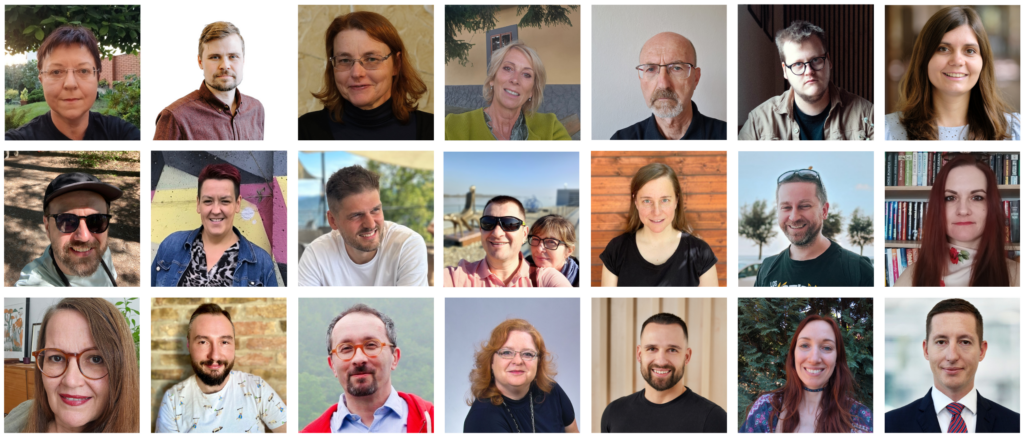
I felt the same way when our colleague Peťa recently shared campaign images featuring members of our Friends Club. I looked at their faces and imagined us calling them and having those conversations. It’s wonderful to see the people who make all of this possible and allow us to keep helping.
They aren’t just numbers in a database. They are real people, and suddenly we can see their faces too. That is why I share these messages with you — so you can enjoy them as well.
When did you most recently feel, with particular intensity, that your work really matters?
On Monday morning, when my colleague Radka gave me the updated number of Friends Club members. That was when I thought I could retire. (laughs)
So many people have chosen us. They see us as transparent, they trust us and they have set up a standing order to support us. I also see it as a reflection of how I approach my work and how I do it.
That is when I know it’s working. I’m in the right place, I made the right choice, and this is where I’m meant to be. The results speak for themselves.
Have conversations with donors and their emails changed how you see people, or why we help one another?
Yes, I was surprised by how many good people there are. For a while, influenced by the media and the news, I felt like a unicorn. As though I was somehow strange for having such a strong need to help. I really thought there was something wrong with me.
When I came here, I saw how many people wanted to get involved and help. They ask whether they can bring books or sanitary pads, where our volunteer centres are, whether they can volunteer in their free time or whether we need commercial premises.
Suddenly you find yourself thinking: “Wow, are there really so many of us?” I’m not the only one who cares about education and making the world a better place. Who cares about remembering the people behind a tragedy, rather than seeing them simply as images on television. That gave me a sense of fulfilment — knowing I wasn’t alone.
I don’t want to frighten my daughter. I want to prepare her.
At the beginning, you said the pandemic prompted you to change your life and move into a house. There is a lot of discussion today about preparing for different kinds of crises, and through your work you hear about the war in Ukraine and other disasters. Does that influence how you prepare at home? And how do you talk about it with your daughter?
Yes. I’m the person who already has an emergency bag packed at home.
People often think: “If something happens, I’ll deal with it then. Nothing is happening now, so why worry about it?” But by then, it may be too late to prepare.
I prepare my daughter too. When there was an earthquake — not directly in Sečovce, but in another part of the region — I used a book for preschool children to help explain it to her: “Look, this is what an earthquake is like. If it happens, this is where we’ll take shelter.”
I don’t frighten her, and that is important. I don’t want her to be afraid. I want her to know what to do if something happens. And this is just one of many examples.
We couldn’t imagine the pandemic beforehand either, and we still feel its effects today. Working at People in Peril is one of the reasons I try to be prepared and talk about these things with my daughter. We take practical steps at home too. I keep our documents and IDs in one place, the emergency bag is packed, we always have bottled water and we have enough food for three days. I’m prepared.
Finally, could you recommend a book, film, series, podcast or board game that has influenced you or could give people some insight into your work?
It isn’t directly related to my work. It’s more about broadening our understanding and how we see the world. These days, social media and so many other things have a strong influence on us.
I would recommend the Slovak podcast TROSHCAST. It features long, inspiring conversations with experts about psychology, relationships, health and the human mind.
Even seemingly basic topics and questions are explored brilliantly. I would actually make it compulsory listening. I think it could change many people’s perspectives on mental health, artificial intelligence, health and food.
I’ve had many “aha” moments listening to the experts explain things. I share interesting interviews with others. The most recent one was about artificial intelligence. But that is just one example; there are so many moments like that. It’s an excellent podcast.
Veronika Barilla (in her own words)
Working at People in Peril teaches me humility every day, and reminds me that the best way to grow is to listen closely to the stories of those around us. I recognise that the world is not black and white, so instead of rushing to judgement, I try to understand the wider context and the real causes of problems. My greatest motivation is to turn the values of solidarity into quiet but meaningful actions that restore dignity to people in need.
