
When Classrooms Turn into Mini Festival Cinemas
The new school year has begun, and One World in Schools (Jeden svet na školách) is returning to the classroom. The programme brings students documentary films, discussions and educational materials that open up important social issues.
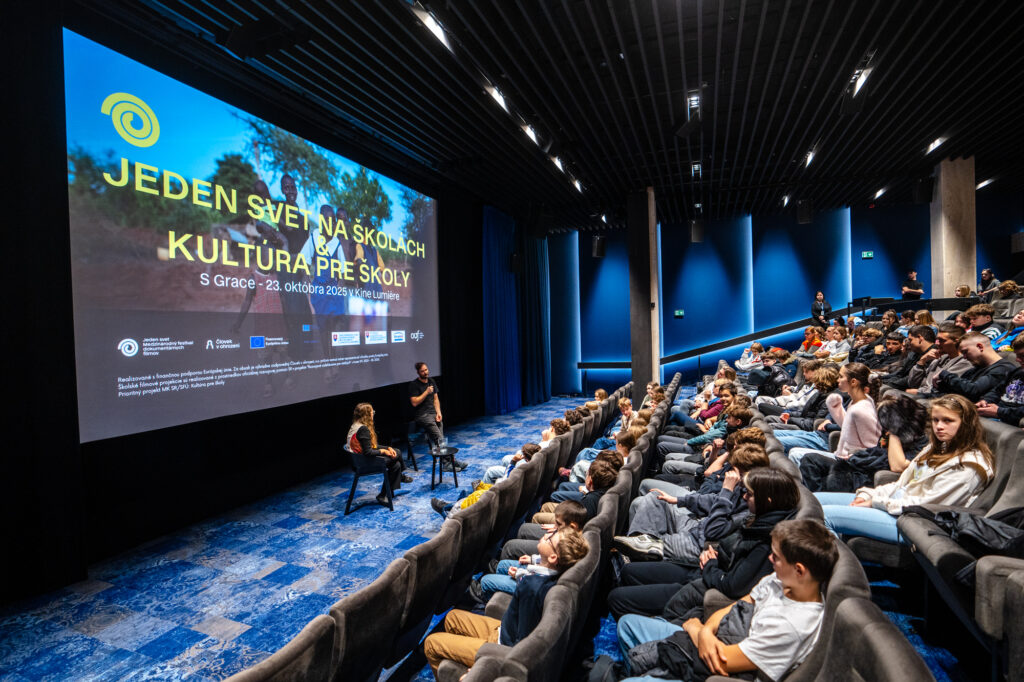
A documentary film can be a good starting point for conversations about climate change, gender equality, democracy, human rights or living with disadvantage. Teachers can choose a film from our database free of charge and use it in their lessons according to the needs of their class. Can you guess how many of them did so between January and June this year?
What the One World in Schools Programme Offers
Before we look at the figures for the first half of the year, try this short quiz.
Which of these free activities are part of the One World in Schools programme?
- A year-round database of documentary films and educational materials
- School film screenings during the One World Film Festival in Bratislava
- Documentary films with subtitles for deaf and hard-of-hearing viewers, and discussions interpreted into Slovak Sign Language
- Online screenings and live-streamed discussions during the school year
The correct answer is: all of the above.
And schools are making use of them. Between January and June 2026, 112 teachers ordered films and educational materials from our database. Another 280 took part in online screenings and discussions.
In total, 13,913 students from across Slovakia watched films from the database and through online screenings.
Two New Films Tell the Stories of Girls from Kyrgyzstan and Pakistan
In the new school year, we are expanding our selection with two new documentary films. Both tell the stories of young women who decided to change the world around them.
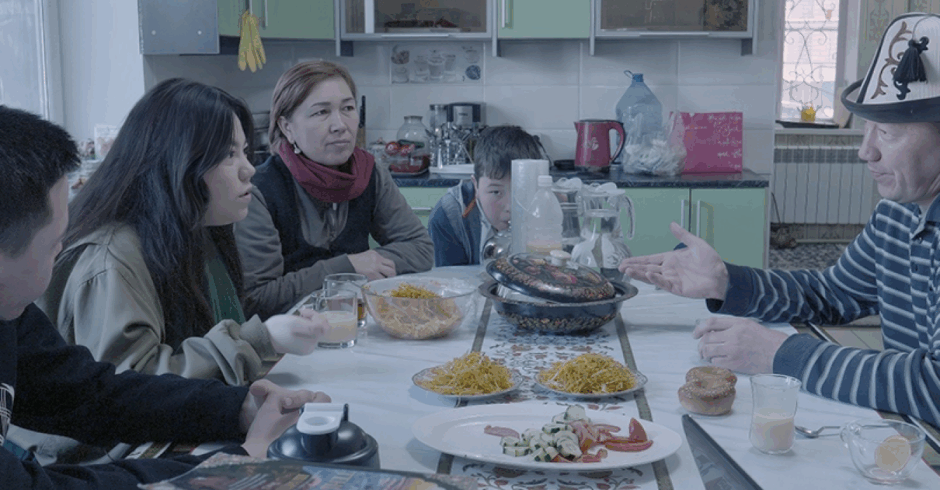
A Free Daughter of Free Kyrgyzstan
Nineteen-year-old Zere Asylbek releases a music video calling for respect for women who have long faced discrimination within the local culture. In conservative Kyrgyzstan, the video sparks a fierce backlash.
The documentary follows her journey from pop singer to civic activist. Zere faces threats, public ridicule and accusations of attacking “traditional values”. Yet she refuses to remain silent. Through her story, the film explores gender equality, civic courage, activism and the workings of a fragile democracy.
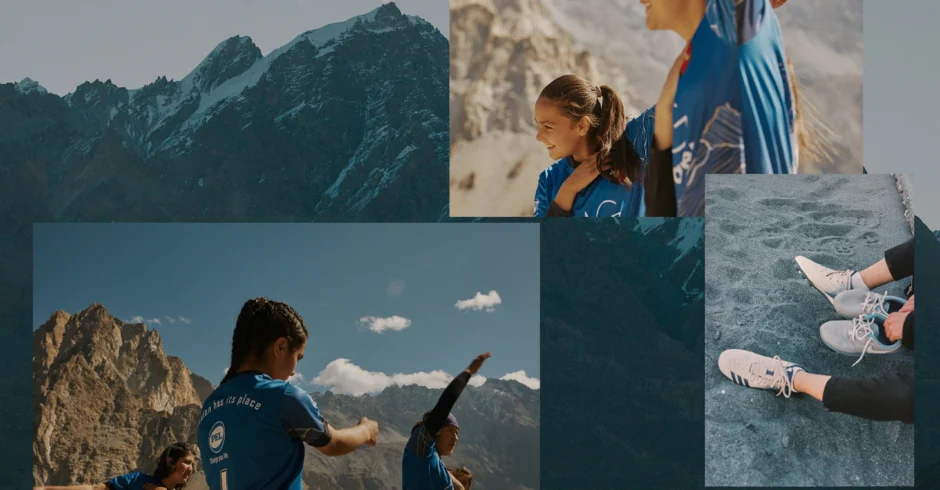
Girls Move Mountains
The second new film takes us to northern Pakistan, where Karishma organises a girls’ football tournament and challenges the notion of what girls and women in her community “can” and “cannot” do.
Football has given Karishma and her sister greater personal freedom, but it has also exposed them to harassment, hateful comments and attacks online and in the media. The film portrays their fight for girls’ rights while reminding us that social change rarely happens overnight. One generation, however, can create more space for the next.
It Doesn’t End with the Screening
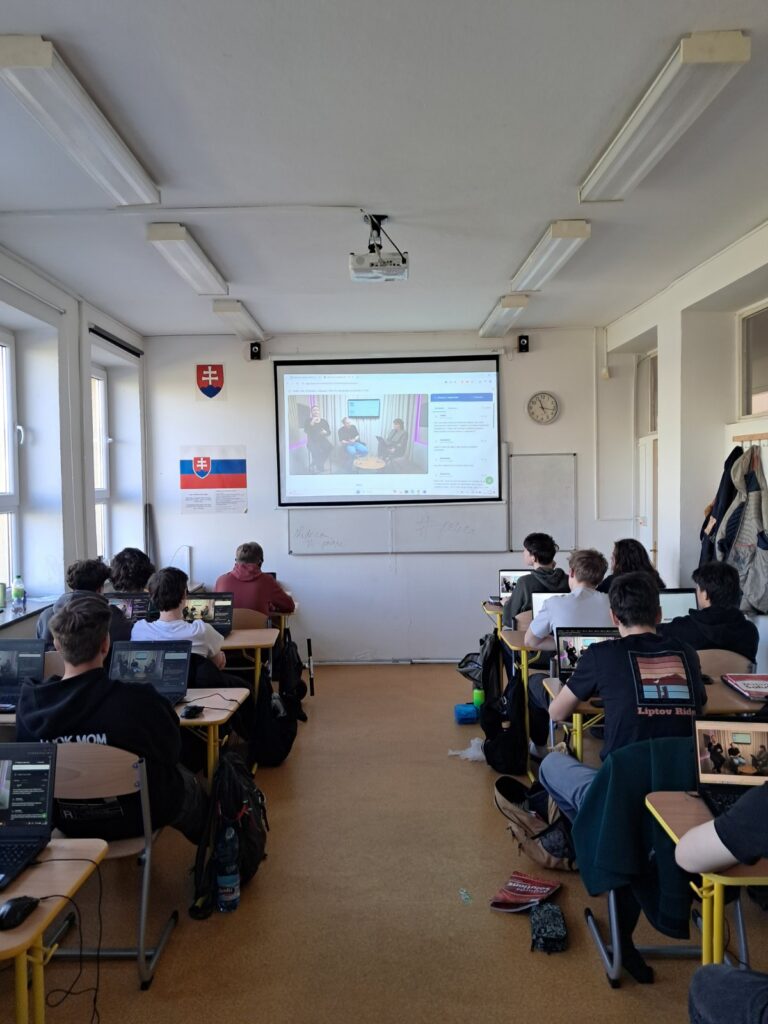
Online discussions with experts and other guests are another important part of One World in Schools. Students can submit their own questions in real time, respond to the film and explore the topics that caught their attention. In the first half of the year, we organised six live-streamed discussions for them.
“Older students often recognise the broader context as well. I am sometimes surprised by how much they already know about a topic and how sophisticated their questions can be. We also receive funny or provocative questions. We try to engage with all of them and respond in an age-appropriate way,” says Michaela Kolláriková, coordinator of the One World in Schools programme.

Young People Themselves Helped Select the Films
During the One World International Documentary Film Festival, taking place from 20 to 25 October 2026, we will also organise school screenings at Kino Lumière in Bratislava. Schools elsewhere in Slovakia will not miss out on the festival programme, as they will also be able to join online directly from their classrooms.
Another new feature is the way we selected the films. Young volunteers who attended the People in Peril Summer School (known as LEČO) in 2024 and 2025 were involved in the selection process.
LEČO brings together young people aged 16 to 20. During the programme, they reflect on their own privileges and the vulnerability of different groups, discuss local and global challenges, learn to collaborate within a diverse group and consider their own approach to education. This time, they also had the opportunity to influence which documentaries their peers would see.
“We wanted the film selection to better reflect the needs and preferences of young people. That is why, this year, we invited LEČO summer school graduates to take part in the selection process, so that adults would not be the only ones deciding what their peers would get to see,” explains Michaela Kolláriková.
Schools can also use films from the year-round programme outside the festival dates, incorporating them into lessons whenever they complement the topic being covered or when teachers want to open up an important social issue with their students.
How Many of Us Will Take Part This School Year? That Depends on You, Too
In the first six months of 2026 alone, films from One World in Schools were watched by more than 13,000 students. In the new school year, we want to bring documentary stories and discussions that open up important issues to even more classrooms across Slovakia.
If you teach at a primary school, secondary school or grammar school, choose a film and get your class involved in the One World in Schools programme. Participation is free, and selected films come with materials that will help you explore their themes with your students before and after the screening.
