
People Behind People in Peril —Nina Gubišová: When I hear people criticising today’s young people, I invite them to visit our Clubroom
As part of the People Behind People in Peril interview series, I spoke with Nina Gubišová, our community coordinator for the Žilina Region and a recent recipient of the Youth Worker Award.
When Nina Gubišová accepted an award for her work with young people in the Žilina Region, she also thought of the people who make her work possible. “I really want people to know that this isn’t just about me. Neither the award nor my work,” she emphasised several times during our interview.
As People in Peril’s community coordinator in Žilina, she works with young people from Ukraine and marginalized Roma communities, and supports volunteers who provide tutoring, organise film discussions and contribute to other activities at the Žilina Clubroom. We spoke with Nina about what drew her to working with young people, how friendships grow through tutoring, and why she was moved when students asked her to teach them how to tie a tie.
In the interview, she also talks about:
- why she sees it as a sign of trust when young people say “no” to her,
- what motivates young people to volunteer beyond the required hour a week,
- how she maintains personal boundaries while building close relationships with young people,
- and why young Ukrainians still do not feel at home in Slovakia, even after years of living here.
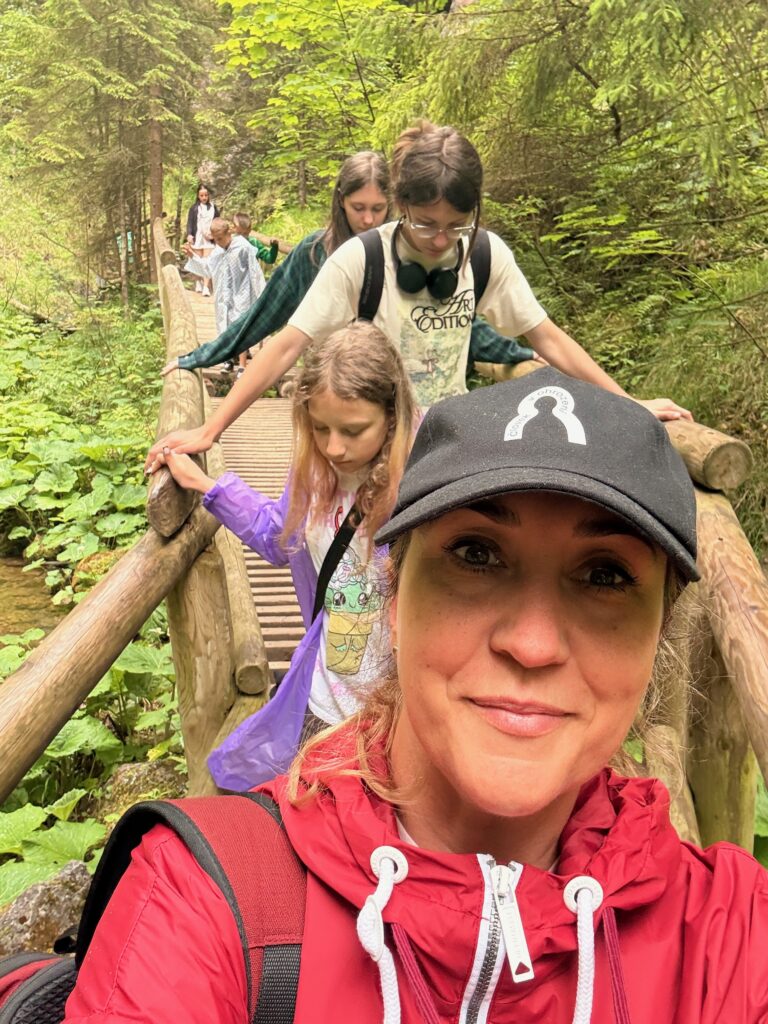
People Behind People in Peril interview series offers a closer look at the people behind People in Peril and the humanitarian work it delivers. It introduces both those working on the ground and those coordinating relief efforts behind the scenes. Through their stories, motivations, and everyday challenges, the series shows that every act of assistance is made possible by ordinary people who have chosen to do extraordinary work.
Volunteers brought me closer to young people
I haven’t visited our Žilina Clubroom yet. How would you describe it to me – who would I meet there, and what might be happening?
You’d definitely meet some lovely women, because our team in Žilina is all female. You’d meet Veronika, our psychologist Oksana, our social worker Evka, Alenka or me. At least one of us would definitely be there. Beyond that, it really depends on when you visit – during the holidays or the school year, in the morning or the afternoon.
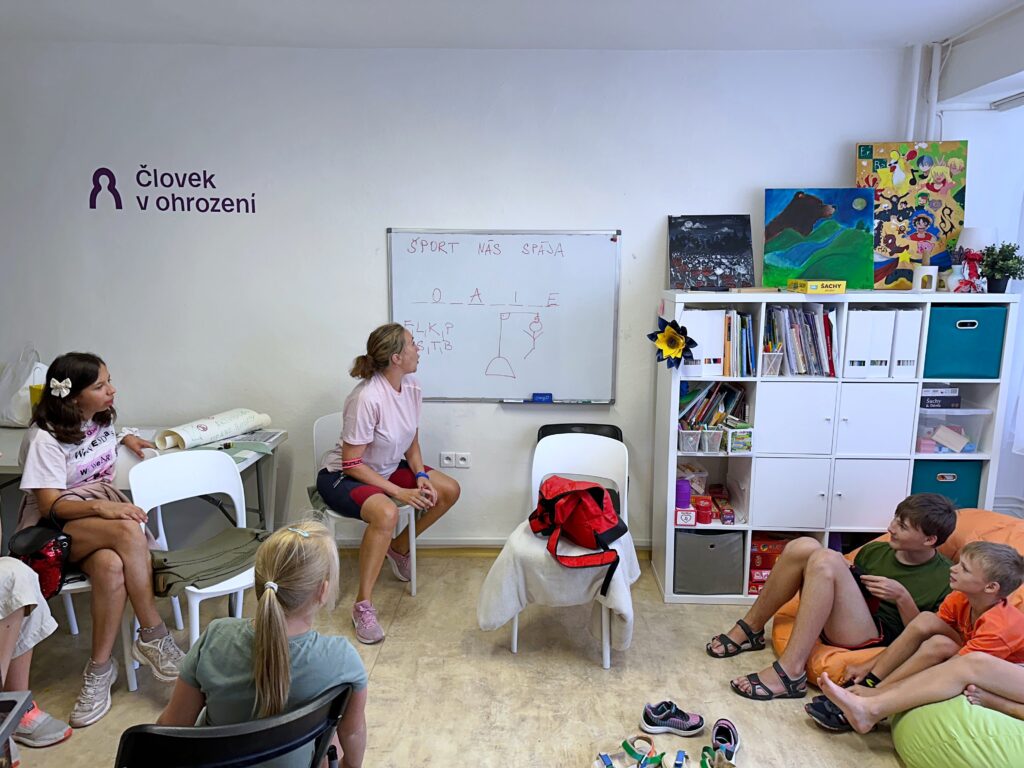
It’s definitely liveliest in the afternoons, when the Clubroom is usually full of young people. We decided to let them shape how the space is used. For the past three years, that has mostly meant tutoring for Ukrainian children, provided by our Slovak volunteers. So if you came in the afternoon, you’d almost certainly meet young people learning something.
We’ll come back to young people, but first let’s talk about how you started. What did you do before joining People in Peril, and what brought you to us?
My husband and I have a small IT company in Žilina, and that’s where I mostly worked before. When the war in Ukraine broke out, we both immediately started volunteering to help in the city.
Gradually, I found myself volunteering for eight or more hours a day. That was when People in Peril came to Žilina, looking into opening a regional office and recruiting staff. The regional coordinator at the time actually talked me into taking a job here. I’d never wanted to work for someone else, and I spent a long time deciding whether to take the job because I wanted to focus mainly on my children. But I’ve been here for over four years now, and I don’t regret it at all.
Was working with children and young people something you’d always wanted to do, or did you find your way into it gradually?
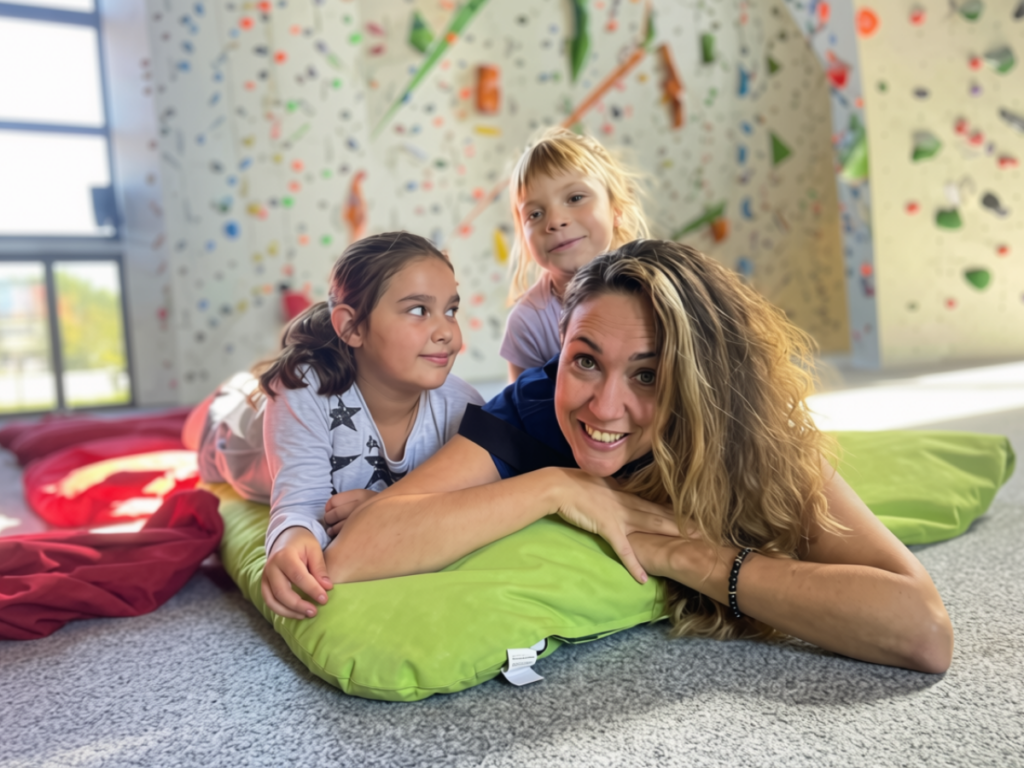
Gradually, I think. I have two teenagers of my own – a daughter and a son. I’ve always enjoyed talking to young people, but I found my way into working with them over time. I started out working mainly with adults. When I think about the turning point, it was probably the volunteers and the huge interest in volunteering with our organisation. The volunteers completely won me over. Most of them want to work with young people, and I want to work with the volunteers. So I think it was through them that I found my way into youth work.
When you were a child or teenager, did you have an adult in your life who took you seriously and whom you trusted?
I was very lucky. Both my parents, my mum and dad, were definitely those people. They never had strictly defined roles, so I could turn to either of them when I needed a good cry. The same was true of my grandparents and my aunt, my mum’s sister. I was surrounded by wonderful adults. I got up to my fair share of mischief, but they were always the first people I turned to.
Has that experience influenced how you approach young people today?
Definitely. At the very least, it has made me aware of how important it is to have an adult you feel safe with when you’re growing up. Not everyone is lucky enough to find that in a parent. I think I’m that person for some young people. They can tell me what’s troubling them. Sometimes we work through it together, or I refer them elsewhere for support. I want to pass on at least some of what I was lucky enough to experience.
Saying “no” is also a sign of trust
What does your work in Žilina involve today? What should we understand by the title “community coordinator”? Could you give us a concrete example?
I think my role is to bring communities together in Žilina, perhaps even beyond the city, and sometimes to build new ones. When I was thinking about this question, our theatre work came to mind as a lovely example.
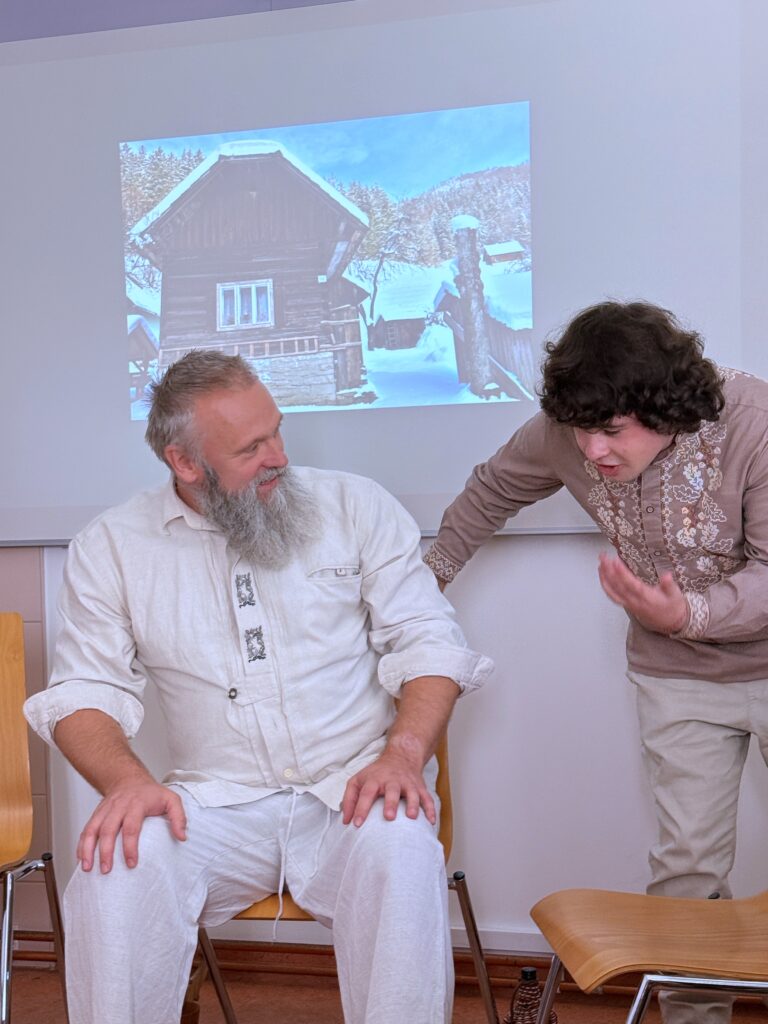
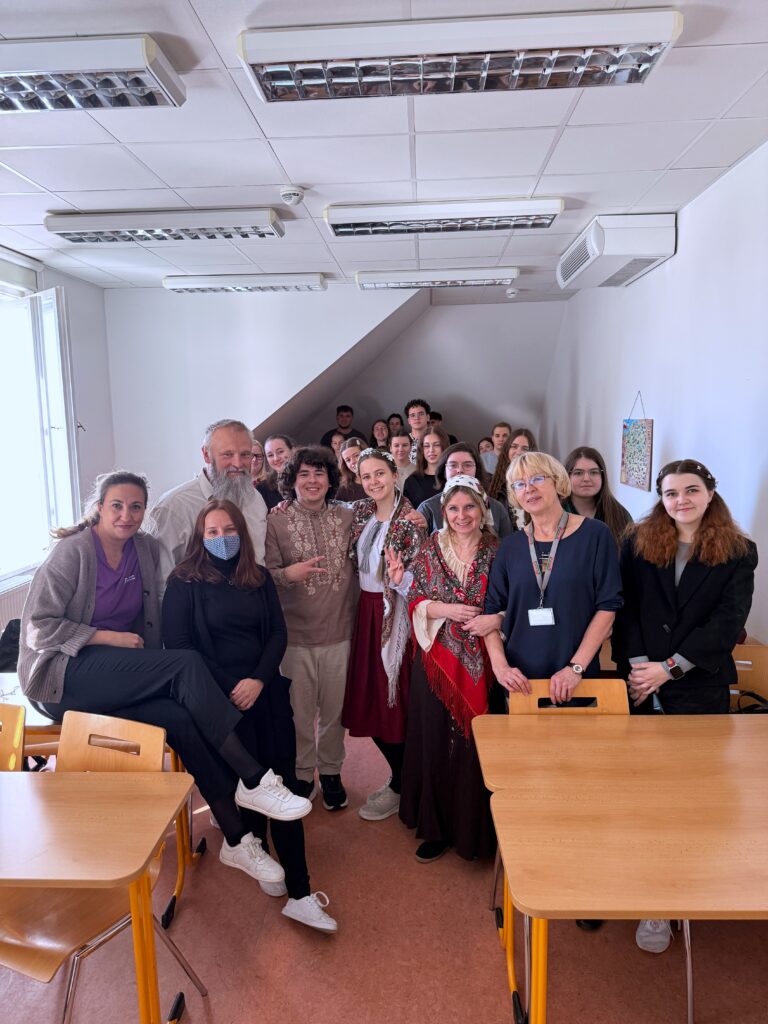
Since the start of the war, we’ve been working on theatre productions with a Ukrainian director. So on some afternoons, you might also find us at the Clubroom rehearsing a play with Ukrainian and Slovak students. We perform in Ukrainian, and I think it’s lovely that our Slovak volunteers are willing to learn their lines in Ukrainian. Bringing communities together shouldn’t always be a one-way process. We can also do something to help them feel welcome here. I’ve never had a problem with people speaking Ukrainian, and we’ve never banned it at the Clubroom either. Once a production is ready, we usually team up with a Slovak folk ensemble, for example, and put on a performance.
I also see fostering understanding and empathy among the public as part of my work. Before a performance, we give a short introduction that allows us to share a message with the audience or draw their attention to an issue. The experience can also help them become more welcoming towards the Ukrainian community, for example.
What I like about community work is how one thing leads to another. Most recently, we performed at Palacký University in Olomouc. A Czech dentist came to see us. Afterwards, she called me to say we’d inspired her to do something good too. After our performance, she had called a children’s home in Olomouc and offered the children free dental hygiene appointments four times a year.
We see many examples like this of community work reaching further and further. In our tutoring programme, too, children who have received tutoring quite often go on to tutor other children themselves. It’s a way of passing kindness on.

How do you earn young people’s trust? How can you tell that they feel comfortable with you and can be themselves?
When someone new comes to the Clubroom, we go through our rules together. I think that’s really important. My favourite rule is probably that they have the right to say no. I put a lot of emphasis on that. To me, it’s actually a sign of success when our relationship reaches a point where they can tell me they don’t want to do something.
It takes a little while – they don’t feel able to say no to me straight away. But I think it’s important for them. They see how much I care about making sure they feel comfortable there. Not everyone enjoys singing, so they don’t have to sing. Not everyone enjoys sport, so they don’t have to take part. And not everyone wants to answer my questions. It’s completely fine to say, “No, I don’t want to answer that.” I think they appreciate this, and it’s one of the reasons they feel comfortable at our Clubroom. They can do what they want to do, and they don’t have to do anything they don’t want to.
I try to make time for them. I rarely feel able to cut a conversation short by saying it’s five o’clock and I’m going home. We usually talk things through before wrapping up. And I’m not afraid to talk to young people about anything. Whatever topic they bring up, I’m open to it. Even if I don’t know much about it, I’m honest with them, then I read up on it and we come back to it. They bring up everything from politics to relationships. None of those topics puts me off.
Volunteering doesn’t stop at one hour a week
You recently received an award for your work with young people in the Žilina Region. What does this recognition mean to you?
First of all, I want to say that this award belongs to our whole organisation, or at least to the team I work with. Honestly, if it were just about me, I wouldn’t even have gone to collect it. What should I wear? What should I say? I don’t feel comfortable being on stage.
But when I thought of my colleagues and their contribution, I told myself I had to do it for them too. None of this would be possible without them. We have a wonderful team in Žilina, and our methodology specialists are fantastic too. I see it as recognition of our work as a team.
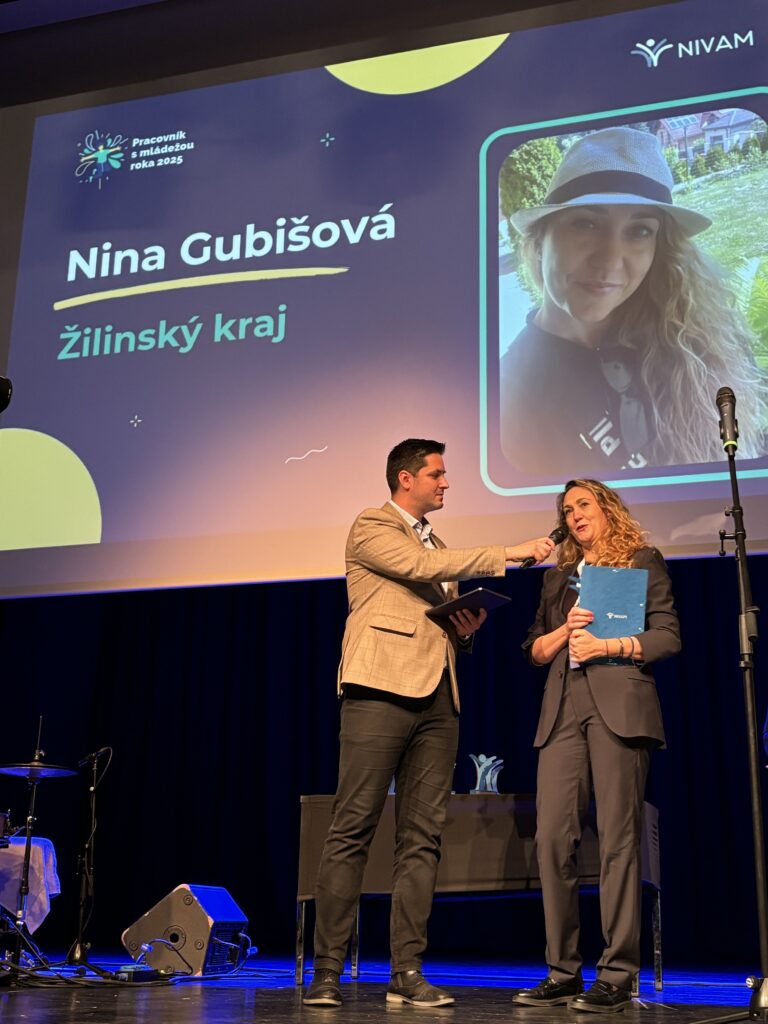
In your acceptance speech, you said: “I’m standing here also thanks to the volunteers I work with every day, who give me incredible energy and bring wonderful ideas to our Clubroom in Žilina.” It’s clear how much you value them and enjoy working with them. What do you personally gain from working with them?
I could write an essay about volunteering. We’re incredibly lucky with our volunteers. Or perhaps it isn’t luck – maybe other organisations have similar experiences.
When I hear people talking about young people today, often negatively, I always think: “Come to our Clubroom and see what young people today are like.” Our volunteers really don’t have much spare time. They’re active young people with extracurricular activities, and they’re involved in student councils. Yet they still make it a priority to share their time with children who need it.
It really moves me. I’m so proud of the people they are. They have so much going on, yet they still find two or three hours a week to support children who may not have been as fortunate. It fills me with positive energy and hope that, with people like them, the future will be in good hands.
What brings volunteers to your Clubroom, and how do you start working with them?
We’ve put a lot of effort into this ever since we started working in Žilina. First, we contacted secondary schools involved in the Duke of Edinburgh’s International Award (DofE) programme. We let them know we were here and would be delighted to welcome volunteers. Things gradually picked up; perhaps one or two schools got involved at first.
I always gave the schools feedback. I sent photos to their volunteering coordinators and showed them how their students had helped us. I even asked whether the young people could receive commendations from their class teacher or headteacher for this too, rather than just for their academic achievements. After all, it’s a school activity as well. One year, it worked, and they did receive commendations from their class teacher.
We keep in touch with the schools, and things are now so well established that one grammar school alone meets all our volunteering needs. We already have fifteen volunteers, and just today I received two more emails from people interested in joining us.
Some join you through the DofE personal development programme and stay even after completing its requirements. What do you think keeps them coming back?
They log one hour of volunteering a week for DofE, but most of our volunteers do far more than that. We currently have a group of five whom we’ve nominated for the Srdce na dlani award [a national award recognising volunteers]. Their involvement has gone well beyond tutoring. They’ve come up with their own ideas, such as screening One World films at the Clubroom. So if you visited at the weekend, you might find us watching a film or having a discussion. They choose the film, organise the discussion and invite their friends, while we invite university students. That’s another form volunteering takes here.
I think that’s how it should work. Someone discovers volunteering through a programme. Perhaps they want something extra for their CV, or simply want to give it a try. But most genuinely enjoy it and find it fulfilling, so they stay with us even after the programme ends.
I keep telling them it’s great when they come up with their own ideas. Volunteering shouldn’t leave them thinking: “Oh no, I have to go to the Clubroom now. I really don’t feel like it.” I want them to look forward to it: “It’s Friday, and I’m going to the Clubroom because I get to do something I enjoy and that helps me grow.”
That’s why I start conversations with volunteers by asking what they enjoy and what they’d like to do. Often, they don’t know yet. In that case, we might suggest tutoring. But once they’ve been with us for a while, they start coming up with ideas of their own.
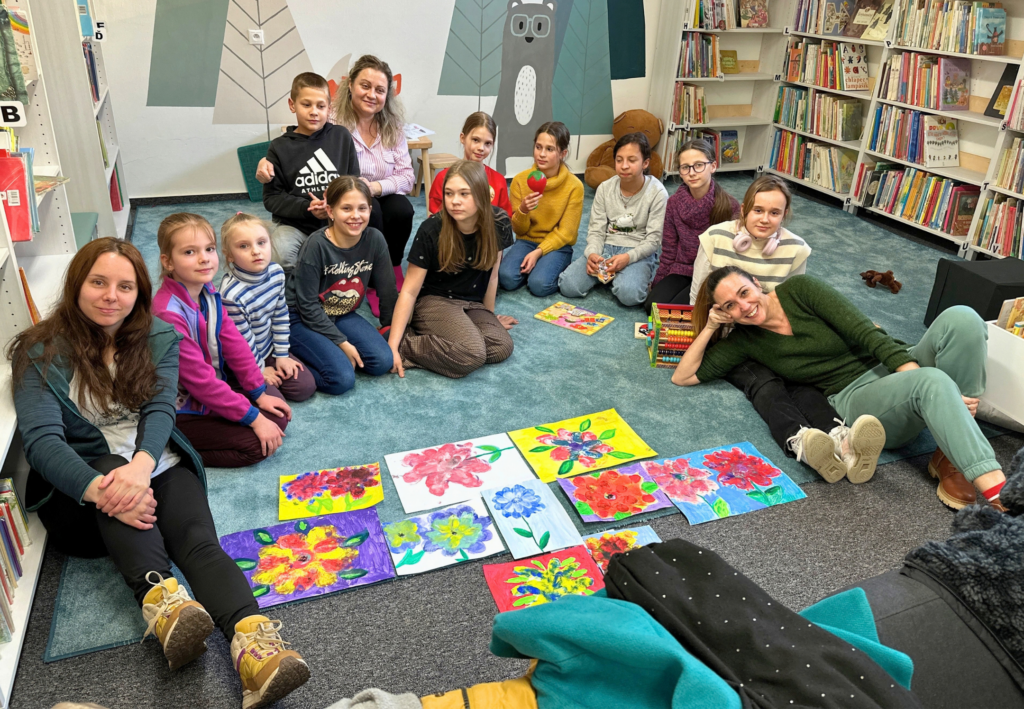
Your volunteers are young people themselves, still learning how to handle difficult situations. How do you prepare them for what they might encounter – for example, when sensitive topics come up during tutoring?
All our volunteers receive training when they join us. Our methodology specialists – Lukáš Andrejčák, Terezka Gálová and Lucka Sivoková – lead this, together with our volunteering coordinator, Anka Neplechová, of course. It’s an introduction to volunteering.
My role is to build a relationship with them where they feel able to tell us if they don’t want to do something or if something doesn’t feel right. That way, we can go through it and talk it over together. The training itself, though, is handled by our methodology specialists at People in Peril.
They wondered why the volunteers were doing it for free
You’ve involved local secondary school students in tutoring young people from Ukraine. When peers from different backgrounds come together like this, what happens beyond the learning itself?
Our volunteers are mainly secondary school students. Whenever we start tutoring a new group, the children from Ukraine almost always wonder why the volunteers are doing it for free. They ask why they don’t go and play volleyball, basketball or football instead, or go to the cinema. It’s lovely to explain: “They want to help you. They want you to be here and to feel welcome too.”
I can see that the volunteers are role models for the children they tutor. For example, someone will come to us and say: “I’ve passed my tests and got into grammar school. Can I help you next year too? Could I try tutoring?”
Do they only tutor Slovak, or other subjects too?
Maths and English too. They help the children prepare for school tests and entrance exams. It’s lovely to see how they often keep working together right up to the end of June. A child may have passed their tests and been accepted into secondary school, so they could put their feet up, but they keep meeting. By that point, the sessions tend to focus more on games that incorporate Slovak. You can see that they want to keep meeting and look forward to seeing each other.
Do they become friends too?
Absolutely. It always warms my heart when I see them exchanging Instagram handles or phone numbers.
At first, I thought we’d pair boys with boys and girls with girls. But the schedules didn’t work out – when the female volunteers were available, the boys had time, and vice versa. So I decided we’d just go with it.
In the end, those groups worked wonderfully, perhaps even better than all-girl or all-boy groups would have. One male volunteer, for example, was a little worried about what he would do with “boring girls”. Afterwards, though, he said they were great. Perhaps it also challenged some of his prejudices about girls and women, whom he wouldn’t otherwise have sought out in that way. And it worked the other way round too.
We don’t need to step in and plan every detail for young people. Sometimes you have to leave a little room for chance, and things can turn out beautifully.
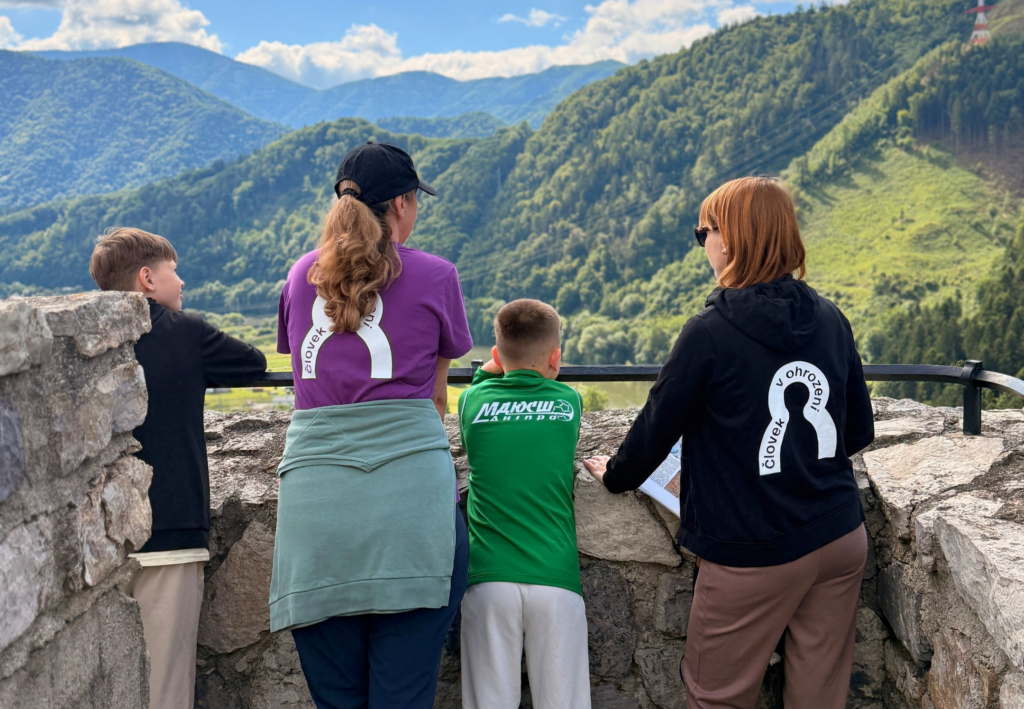
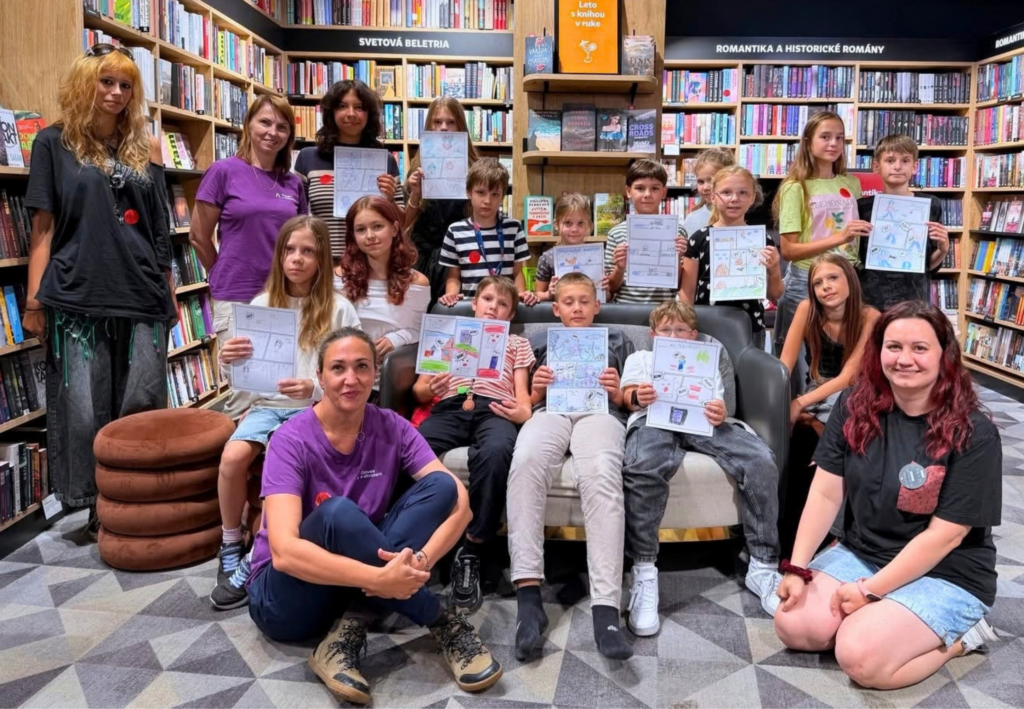
Ukraine is still home
Do you remember when you first started working with people from Ukraine? What was new or difficult for you, and what helped you understand them better?
The early days were very difficult. We were arranging food, and I also spent a lot of time sourcing medication. People were arriving with serious medical conditions, such as epilepsy, as well as people who had just undergone surgery or needed further operations to complete their treatment. I basically spent those first few weeks in hospital. I would just return to the centre and accompany the next family.
I remember a father, a daughter and a son. The father had just had eye surgery and needed strong eye drops. The daughter needed further surgery on her leg, and the son had severe epilepsy. They almost argued over whom I should take first, because each wanted the others to go ahead of them. In the end, we took all three and split up to accompany them.
I spent those first few weeks at Žilina Hospital, and I really want to acknowledge the work of the doctors there. I didn’t have a single bad experience.
Looking back at when you first started working with them, how has the support you provide changed?
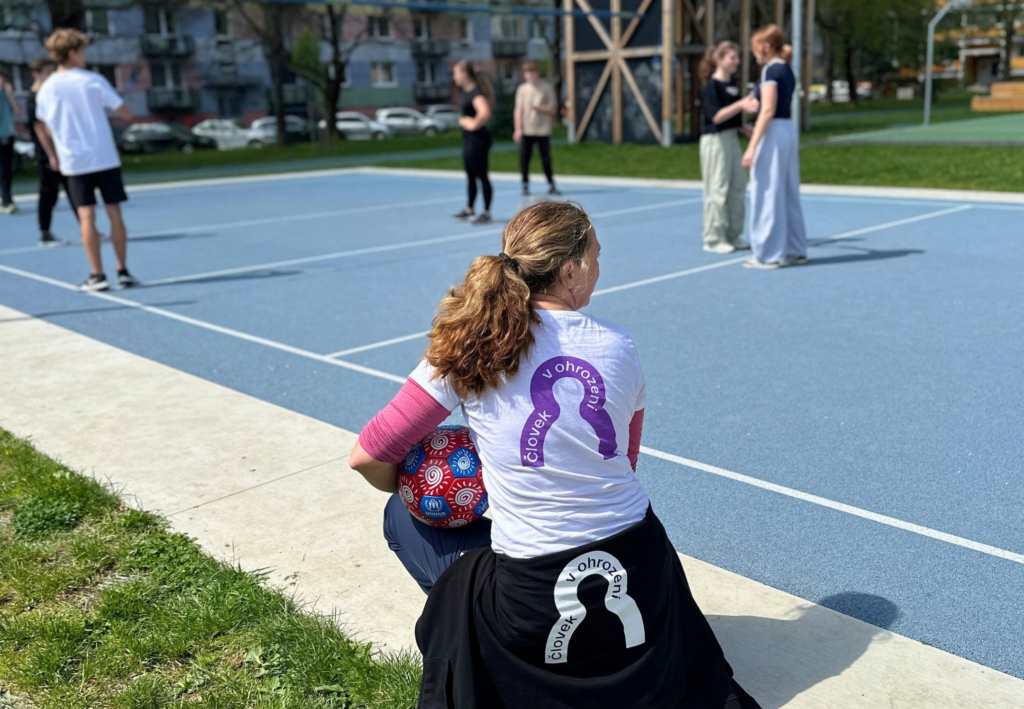
It has changed completely. We essentially no longer provide humanitarian aid in the traditional sense. Today, our work is mainly about inclusion, acceptance and helping people become part of life in Žilina. We want them to take part in activities beyond the Clubroom too – to visit the library or theatre, or join community activities run by other organisations in the city. We want them to truly become part of life here.
Do you feel that your work is helping Ukrainians feel more comfortable here?
Yes, I do. But honestly, I thought things were better than they actually are. Last year, I was really surprised by something a Ukrainian student said as he was leaving after graduating from university. We interviewed him for People in Peril, and he told us that, apart from our Clubroom, he hadn’t really felt welcome anywhere here.
That made me think. They feel welcome at our Clubroom, but I’m very sorry that this feeling often doesn’t extend beyond its doors. They don’t feel accepted at school, for example. That’s a major issue.
What is most on the minds of the young Ukrainians you meet today? What might we miss in an everyday conversation with them?
None of those I know feel at home here. We often have long conversations about whether they could call Žilina home yet, but the answer is no. Ukraine is home. The vast majority, if not all, of those I know would really like to go home.
I’ve also found that they don’t want to complain. Even when they’re treated unfairly at school, for example, they don’t want to burden anyone else. They still feel like guests here. It’s as though they’re telling themselves: “I’m a guest, so I have to be polite, stay quiet and not speak up.”
They were surprised by how much the children knew
You also work with children and young people from marginalized Roma communities. What does this part of your work involve, and what do you learn from it yourself?
I work with them much less, so it’s hard to compare. But I really enjoy it. The people I meet are very sincere. I don’t think I’ve ever received so many compliments. They’ll compliment your lipstick, your clothes and what you’re teaching them. They’re cheerful and say what’s on their minds. I find them easy to talk to, and there’s never a dull moment.
They’re also very talented in many ways. I try to take volunteers along to these communities too. That doesn’t happen as often, though, because these activities take place outside the Clubroom. The volunteers also say these encounters have challenged their prejudices. For example, they hadn’t expected the children to be as bright as they were.
Once, we took a group of Roma children to the university, and it was amazing how much they knew and how curious they were. The volunteers were really surprised. They’d thought the children would be bored, but the opposite was true.
What specific activities do you organise with children and families from Roma communities?
One example that’s still fresh in my mind is visiting a community throughout the year to help a group of mostly Roma women develop basic skills. During the summer, their children were naturally at home with them. I’ve never minded having children around. I also brought volunteers along to keep them entertained and play with them while we worked. We brought out electronic circuit kits and various board games.
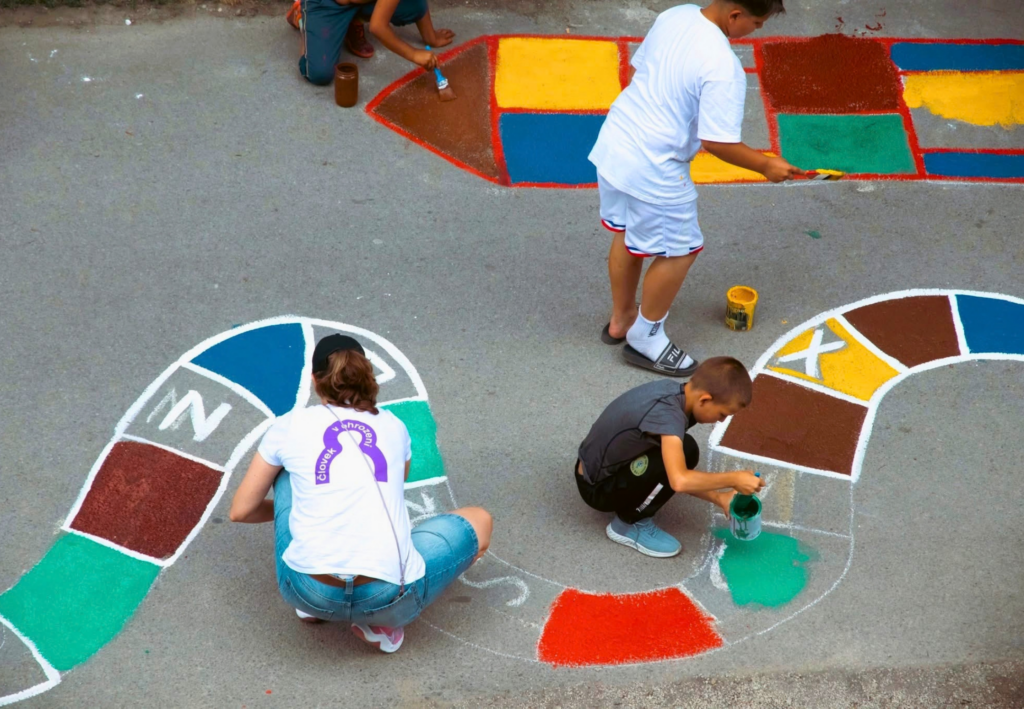
We organise small group activities as well as larger community events. At the community centre in Predmestie, for example, we put on a health festival. We also painted educational games on the pavements. We invited two artists to paint alongside the children. My involvement is mainly in one-off activities like these. My colleagues also provide employment support, of course, but that’s another topic.
I thought I would only ever teach my own son this
Can you recall a particular moment when you felt especially strongly how much your work matters?
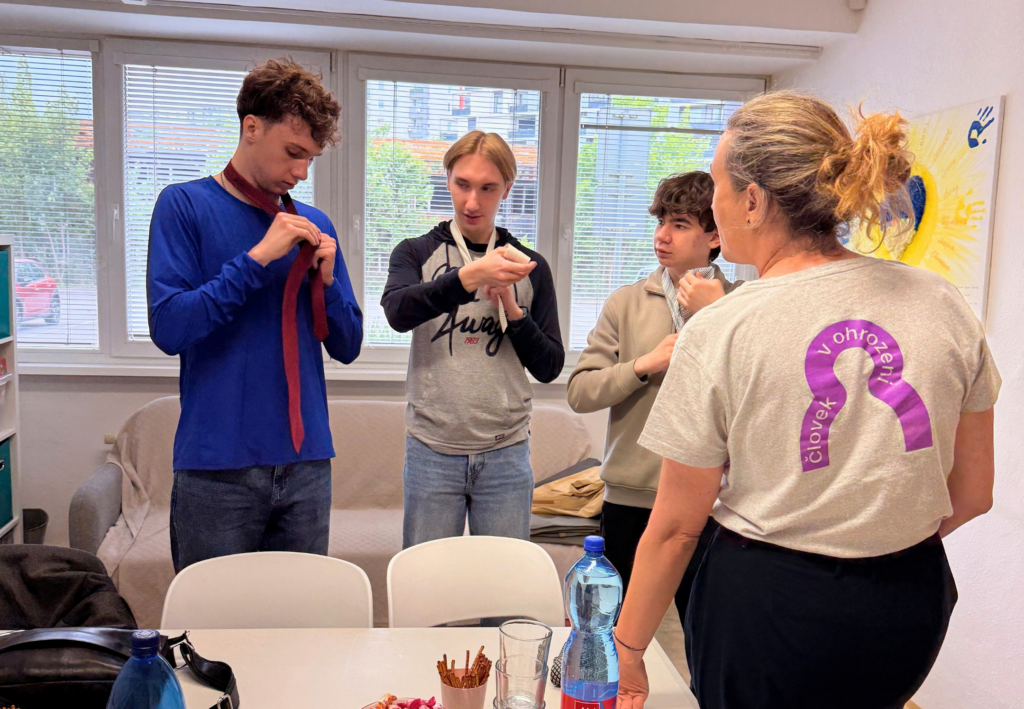
There have been several. There’s one I’ll certainly never forget. I’m always telling the young people at the Clubroom to suggest things they’d like to do there. I was very moved when some university students came to me because their final state exams were coming up, and they didn’t have ties or know how to tie them. They asked if I could teach them.
I thought I would only ever teach my own son this. It makes me very sad that their parents aren’t here to teach them. I may have shed a tear or two that day. On the one hand, I was glad they’d asked me and saw me as someone they could turn to. It meant a lot that they wanted me, specifically, to help. On the other hand, I was sad that I was doing it instead of their parents.
Are we talking about students from Ukraine?
Yes. They passed their final state exams last year. None of them stayed in Slovakia – they moved to places like Canada and France.
Did they invite you to their graduation ceremonies too?
They didn’t invite me to the ceremonies, but we spent the afternoon together that day and celebrated. This also brings us to boundaries. I don’t want to overstep them or become too emotionally attached, but sometimes it just happens.
Do you maintain those boundaries for your own sake or theirs?
Mostly for theirs. Perhaps a little for my family’s sake too, but mainly for theirs. I wouldn’t want to become a mother figure to them, or someone they grow overly attached to. I’d like our relationship to be one of friendship.
It isn’t always easy, but I think we do a good job in Žilina of staying within our roles and maintaining our boundaries. At the same time, we’re the trusted people they feel safe confiding in and who try to help them.
Young people need space to speak
What would you like to see created or changed in Žilina so that young people from different backgrounds have more opportunities and feel accepted here?
I’d like the activities at our Clubroom to come from young people themselves. And I’d love everyone in Žilina to share that approach. Instead of telling them what to do, we should let them bring forward what matters to them now and what they want to address. It would certainly help to have more safe spaces like this in Žilina – larger spaces, with longer opening hours and more staff. Places where young people can spend time safely. Even if they’re just on their phones, they’d be somewhere warm, with water to drink and an adult who will listen.
What’s coming up next at the Clubroom?
Over the next two Tuesdays, we’ll be running a workshop for a vocational secondary school in Žilina on multicultural teams and hate speech. We talk to students about how working in multicultural teams is the future. Many already have classmates from other countries, and we try to help them develop greater awareness and understanding. We’re doing this together with the Information Office for Victims of Crime, which covers criminal responsibility in relation to hate speech.
We’re also heading to the One World festival. We have a group of five volunteers who organise One World in Communities screenings at our Clubroom, and we want to show them what the festival itself is like. When I told them I was taking them to Bratislava for a workshop, a discussion and a film, they were absolutely delighted. They’re really looking forward to it. Perhaps they’ll pick up more ideas to bring back to our Clubroom.
What have you chosen from the programme?
Since they’re at school during the week, we’ve planned our visit for Saturday, 24 October. We’ll start with a festival breakfast and workshop. Then they’ve chosen a discussion on colonialism. It’s quite a challenging topic, and the discussion will be in English, but I gave them several options, and this was the one they wanted. At four, we’re going to see Yanumi, a film about a Brazilian girl, followed by a discussion.
They’re very good at debating, and their English is excellent. I think they’ve made great choices. We’re going to the events they want to attend.
Finally, could you recommend a book, film, series, podcast or board game that has influenced you or could give people an insight into your work?
We play games very often, but I don’t like losing (laughs), so I definitely recommend cooperative games, such as Pandemic or Harry Potter. We also play games that encourage communication at the Clubroom – Dixit and Ikonikus are great.
One book that recently struck a chord with me is set here in the Žilina Region. It’s called Kde si sa vydala, tam si mlieko pýtaj. It’s excellent; no book has resonated with me this much in a long time. It tells a story from Poluvsie, a village on the way to Rajec, and offers a glimpse into the lives of women and families around a hundred years ago – what worked and what didn’t. It’s very sad, but it’s based on real stories collected by the author. It’s very popular, and I found it a compelling read despite the difficult themes.
My favourite series for many years has been Big Little Lies. I’ve wondered whether that might have some subconscious connection to my work. Both the book and the series are about relationships, family and friendship – about what can happen when relationships work, and when they don’t.
I’m interested in everything to do with young people, and I spend a lot of time learning. I feel as though I’ve watched just about every webinar from IPčko, Zmudri and STORM. I sign up for all sorts of things. I also mentioned training in my acceptance speech because it has helped me grow enormously in my work with young people. For example, I’ve learned to give them space to speak. I’m still surprised by the ideas and thoughts they share when you give them room. You really do need to let them speak and listen to what they have to say.
Nina Gubišová (in her own words)
I’m a mother, partner, sister, daughter, aunt, friend, colleague to wonderful people, a Žilina local, a volunteer and someone who always enjoys learning new things. Although I studied information and control systems, life led me to work with young people at an organisation that helps others – work that I find meaningful and fulfilling. If I could turn back time, I wouldn’t change a thing, because I believe I’m where I’m meant to be.
