
“We fear most for our grandchildren’s lives.” Life in the villages of northern Ukraine
Halyna is raising four grandchildren, Kateryna and her daughters are now living in their third place, and Natalia has had to heat her home since September. Our colleagues Yuliia Tsyba and Peter Vološčuk visited families we are helping prepare for winter in northern Ukraine.
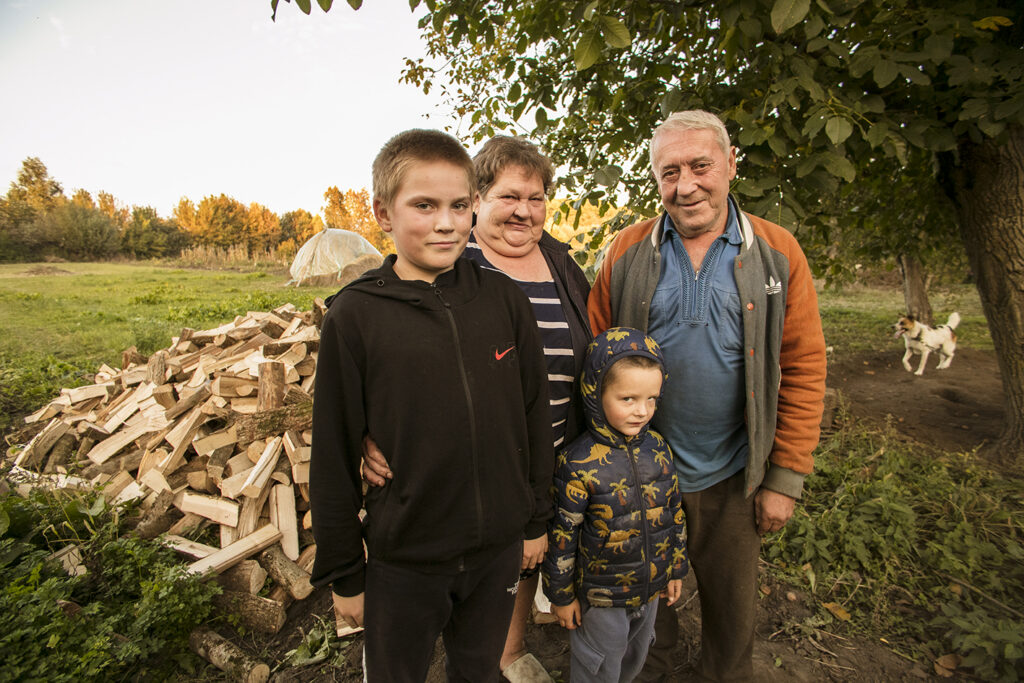
It is a sunny October day, and at first glance, it seems like any ordinary autumn. But as we begin talking to the families we have brought firewood to, their stories gradually unfold. They tell us about preparing for winter, the homes they had to leave behind, and how they are rebuilding their lives in a new place.
“We are pensioners, and our pensions are small. On top of that, we had to move somewhere where we had nothing and start completely from scratch,” says Halyna.
Her family is one of 40 households we are delivering firewood to these days. We have already written about how we are helping people in Ukraine prepare for winter. This time, we share the stories of three families who have received this support.
Another winter in a place they never planned to live
Another winter is approaching in Ukraine, bringing fears of power cuts and heating outages. Reports of Russian attacks and their consequences are also coming from Kyiv. In remote villages in the north of the country, people are preparing for the cold months far from basic services, in places that are harder for aid to reach. Some homes are accessible only by dirt roads.
We visit older people, families with children, and people with disabilities who lack the money or means to secure enough fuel. Many are families who have fled their homes because of the war, some more than once. They have found somewhere to live in old houses once occupied by others, but even here, they cannot count on peaceful nights free from shelling.
They prepare for winter as best they can. They collect old wood, dismantle dilapidated sheds, and set aside anything they can burn for heat. Yet these supplies may not last through the entire cold season. Many households also rely on firewood for cooking and heating water.
We visited Halyna, Kateryna, and Natalia in the Bochechkivska community near Konotop in the Sumy region, around 50 kilometres from the front line. Our field worker Yuliia Tsyba and field worker and photographer Peter Vološčuk spoke with the families while delivering firewood. Peter describes old wooden houses where, in places, the floors are nothing more than packed earth, and stoves that people repair themselves. They draw water from wells and travel to town by minibus to access services when conditions allow.
“The families we visited in the Sumy region live with constant air raid alerts and drones flying over their homes. Many have nowhere safe to shelter,“ he says.
Each of the three women has taken a different path to get here. But all three now face the same need: to keep their families warm at home throughout the winter.
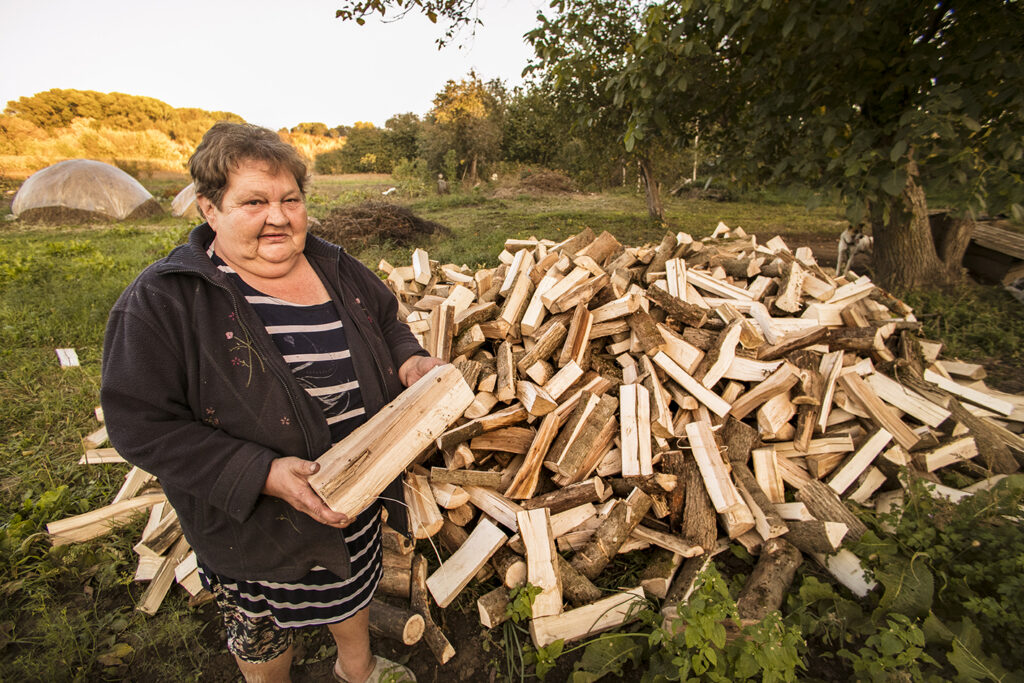
Halyna: Winter supplies from the garden, pensions for the grandchildren’s needs
Halyna and her husband left their home district of Shostka because of constant shelling. They are raising four grandchildren, aged four, twelve, fifteen, and eighteen. Their daughter died in a tragic accident, and the grandparents took over caring for the children.
In their new home, they try to make the most of everything they can grow and prepare themselves. Their garden provides some of their food, and they preserve fruit and vegetables for winter. They also collect firewood throughout the year, but cannot gather enough to meet their needs.
When temperatures dropped, they began heating their home with the stove. Halyna’s main concern is keeping the children warm so they do not fall ill. She estimates that the firewood we delivered will last throughout the heating season. This means they can use their money for food and their grandchildren’s other needs.
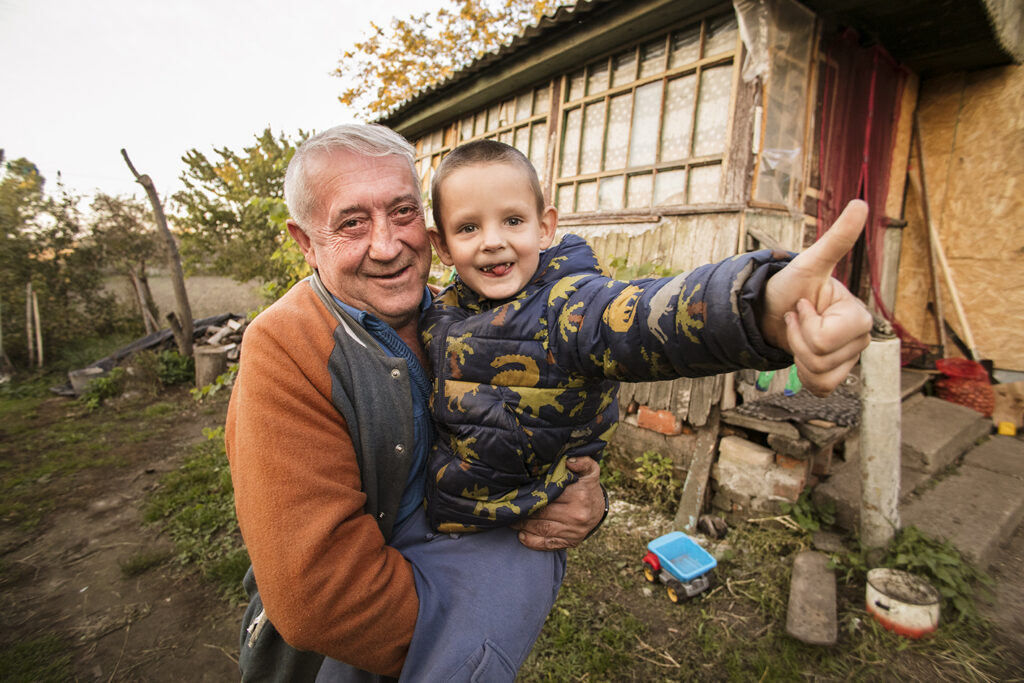
But as we talk about winter, she also recalls one night in January. A Russian drone exploded near the house. Its torn-off wing landed on their home, the blast blew out the windows and doors, and fragments tore through the house.
“The fragments pierced the walls, the wardrobes, even our clothes,” Halyna recalls. Her youngest grandson had just ducked down when a fragment flew through the window, narrowly missing his head.
“What we fear most is for our grandchildren’s lives. We have at least had a chance to live, but they are still young and have their whole lives ahead of them.”
Kateryna still does not know what happened to their home
Thirty-three-year-old Kateryna Atamanova left the Luhansk region with her daughters, Anastasia and Regina, moving first to the Dnipropetrovsk region and later to the Sumy region. This is now the third place where they have tried to build a new life since the war began. Kateryna still does not know what has happened to their original home.
In their current house, they use firewood for heating, cooking, and heating water. According to Kateryna, the supply they need costs around 20,000 hryvnias (approximately €390). She would struggle to afford it herself.
“That is a lot of money for me, so I am very grateful for your help,” she says.
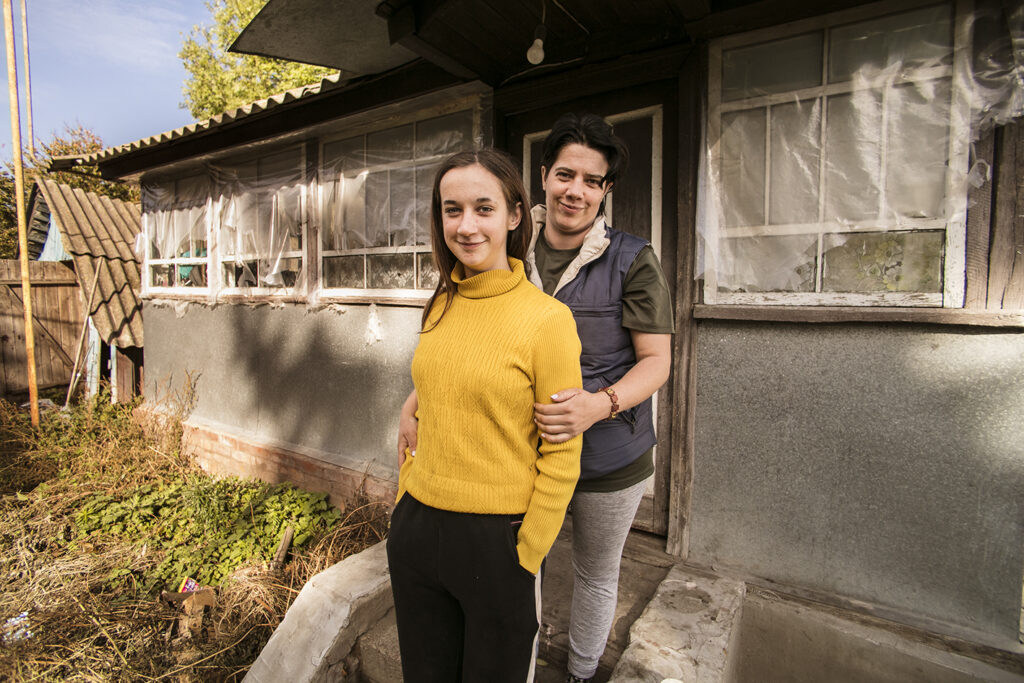
Kateryna estimates that the firewood we delivered will last her family two to three months. But when we ask about her fears for the coming winter, she is more concerned about her family’s safety than the cold.
“I am more afraid of the shelling than the winter. But my children give me the strength to keep going. Our neighbours and volunteers help us too. Their support also helps me cope with this situation.”
Natalia: They began heating their home back in September
Natalia Makarenko and her daughter Oleksandra and son Dmytro have been living away from their home village for almost three years. The war forced them to leave Lukashenkove in the Shostka district. Their house was severely damaged.
“The windows in our house are broken, and almost half of one wall is missing,” she says.
In the house where they now live, firewood is their only source of heating. They also need it for cooking. They began using the stove for heating back in September.

As winter approaches, Natalia is most worried about the bitter cold. She could not afford enough fuel herself. But she estimates that the firewood we delivered could last until April or May.
When we ask what helps her cope with life after leaving her home and the daily demands of caring for her family, she answers simply: “I don’t really know. Perhaps some kind of inner strength.”
We bought and processed the firewood in Ukraine
displaced by the war, single mothers with children, older people, and people with disabilities whose incomes are not enough to cover the fuel they need.
We provided each household with 7.51 cubic metres of firewood. We bought it in Ukraine, sourced from local forests, and transported it to the villages by truck. Local men then cut and split the wood and delivered it to individual homes.
We arranged the processing and delivery so that families could use the firewood straight away. This spared older people and people with disabilities, in particular, work they would have struggled to manage on their own.
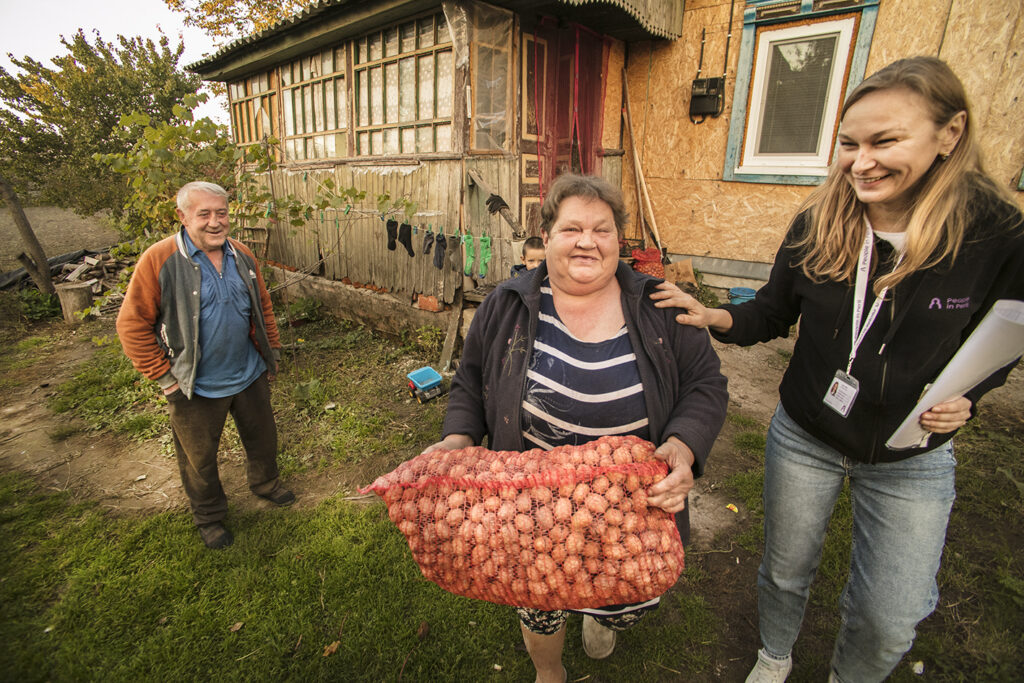
Peter also remembers the hospitality of the local people he visited.
“When I complimented one woman on her walnuts while we were delivering firewood, she immediately wanted to give me a whole sack. I thanked her and politely declined. She had little herself, yet she wanted to share what she had with us,” he recalls.
Thank you for helping families prepare for winter
Thanks to our donors, we are providing firewood for 40 households. These include the families of Halyna, Kateryna, and Natalia, who have already received this support. They can now use their incomes for food, clothing, and other everyday needs.
With your support, we can reach more households and provide backup power sources for schools, clinics, and other local facilities. The needs exceed our current financial resources. You can help by donating any amount. We will use your donations before and throughout the winter, according to the needs at the time.
Thank you to everyone who has already helped and to those who will join us.
Photos: Peter Vološčuk, People in Peril
