How do you choose a school when you don’t know your options?
Rudy from Petrovany completed a four-year secondary programme combining classroom learning with practical training and culminating in a school-leaving examination. During his studies, he gained work experience at Tesco and stayed on as an employee after graduating. He is one of the young people we at People in Peril have supported both through their education and into their first job.
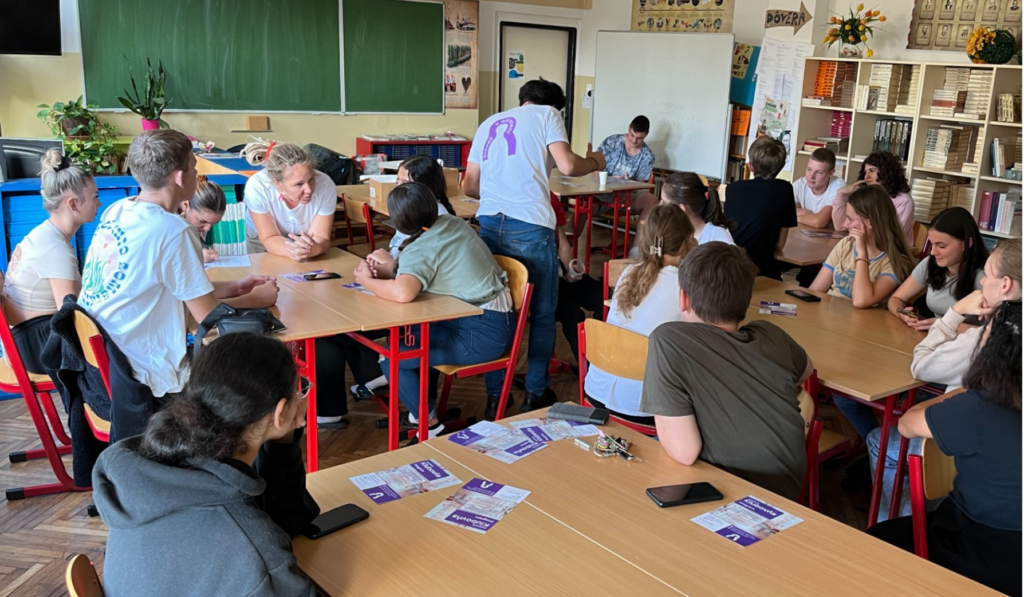
Our colleagues who know Rudy remember him as a student who took his responsibilities seriously. He was also interested in becoming a police officer. Although that plan did not work out, he had the opportunity to stay with an employer he already knew from his practical training.
I’m going where my friend is going
His story shows one of the paths young people can take. But first, they need to know it exists.
“Children often have no idea that they can be paid for their practical training. They choose a school based on where a friend is going or where someone in their family studied. Information about dual education and paid vocational training often never reaches them,” says Jana Mojšová, an employment methodology specialist at People in Peril.
We have had a similar experience in Plavecký Štvrtok, where pupils traditionally applied to just two schools. We therefore began talking to them about other options, taking them on visits and introducing them to employers.
Choosing a field of study is easier when young people can picture what lies behind its name. Visiting a school or company allows them to explore the environment where they would learn, find out what their practical training would involve and ask questions about things that interest them. This gives them a firmer basis for making their decision.
Learning a trade in the workplace
One of the options we introduce to young people is dual education. It combines classroom learning at a secondary vocational school with practical training at a specific employer. Students gain knowledge at school and learn how to apply it in the workplace. They get to know their future colleagues, working procedures and day-to-day responsibilities.
Unlike a standard work placement, participation in dual education requires students to sign a training contract with their employer. The company also signs a dual education agreement with the school and takes a long-term role in training the students. A common arrangement, for example, is to alternate five days of classroom learning with five days of practical training.
Students are paid for productive work. Depending on what the employer offers, they may also receive a company scholarship or help with transport or boarding costs. During their studies, both sides have time to get to know each other and consider continuing to work together after graduation. Practical training can therefore lead to employment, although a job cannot be automatically guaranteed to everyone.
Helping young people make the most of the opportunity
Knowing their options is the first step. But young people also need the right conditions to be able to study. For families from socially disadvantaged backgrounds, transport and accommodation costs can be barriers, as can the lack of a suitable space to study at home.
Data from the EU-SILC_MRK 2020 survey illustrate the scale of this disadvantage. According to the findings, 91% of young Roma from disadvantaged households in marginalised communities live below the poverty line. As many as 83% of Roma from marginalised communities have not completed secondary education, and 28% of children from these communities never enrol in secondary school.
In our work, we therefore look for solutions tailored to each young person’s circumstances. One boy from Zvolen, for example, needed boarding accommodation in the very town where he lived. He did not have a suitable place to study at home, and the accommodation provided him with an environment where he could focus on his education.
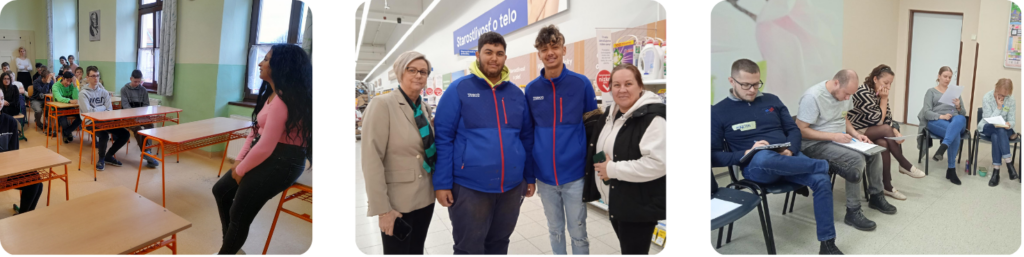
This example from our wider support for secondary school students shows why our help does not end with submitting an application. Some need tutoring, others need help applying for a scholarship or someone to accompany them on their first day at school or a work placement. We involve parents and stay in touch with teachers and vocational training instructors who guide students in the workplace.
We also work with employers. We look for suitable placements based on young people’s interests and help companies understand the circumstances they come from.
Experiences that can inspire others
We want successful graduates like Rudy to return to school and talk to younger pupils about how they managed their studies and practical training, what they found difficult and what helped them. Positive examples and role models are important when making decisions about the future. Hearing from a peer from a similar background who completed school and found a job can help children imagine themselves following a similar path.
Dual education is part of the KOMPOD project (Comprehensive Support for Inclusion and Equal Opportunities for Children and Young People from Marginalised Roma Communities), which is co-funded by the European Union under Programme Slovakia. The project runs from 1 February 2026 to 31 January 2028 in Prešov, Kojatice, Petrovany, Sveržov, Roškovce, Spišská Nová Ves, Zvolen, Lučenec and Plavecký Štvrtok.