“Today, I go to work feeling that I belong.” How we supported people from Ukraine
Finding a job, navigating a new environment and having someone to turn to. In Žilina and Prešov, we helped people from Ukraine overcome everyday challenges and gradually build more stable lives in Slovakia.

We combined support in finding and keeping a job with financial education, mental well-being support and community gatherings. We developed these activities as part of the IMMERSED project, working with organisations from Poland, Romania and Italy from April 2025 to August 2026.
From safety to independence
After reaching safety, people gradually face questions that initial humanitarian aid cannot resolve. Where can they find a stable job? How can they pay for housing? Who can they turn to when they do not understand the language? And how can they overcome loneliness?
According to UNHCR (the United Nations High Commissioner for Refugees), nearly 145,500 people held valid temporary protection status in Slovakia as of 1 June 2026. Findings from the 2025 Socio-Economic Insights Survey also showed that 66% of respondents planned to remain in their current place of residence for the following twelve months. Only 6% planned to return to Ukraine in the near future at that time. In 2025, the priority needs of people from Ukraine included employment and livelihoods, healthcare and housing.
These findings further highlight why long-term support matters. People need opportunities to plan their future, provide for their families and take part in community life in the places where they have found safety.
“From the very beginning of the full-scale war, we at People in Peril knew that we would help not only in Ukraine, but also here in Slovakia, supporting people who had come seeking safety. Alongside our initial assistance at the border, helping people settle into everyday life here in Slovakia became a priority for us,” said our director, Andrea Najvirtová, at the IMMERSED final conference.
She also recalled the danger our team had faced while working in Ukraine and expressed her admiration for those who remain there despite the war. “But I have just as much understanding and admiration for those who decided to leave behind everything they had, everything they had built—their homes, often their families and communities—and start from scratch in a new country where no one knows them and they do not speak the language,” she added.
With our support, many of these people have found safety, stability and a new home in Slovakia. According to UNHCR findings, 73% of respondents rated their relationships with the host community positively, and 93% felt safe.
A job that makes use of people’s skills
We helped people from Ukraine find and keep jobs, providing individual guidance and connecting them with employers. We also worked with HR professionals to help them better understand the barriers people from Ukraine face.
Finding a job also means finding opportunities to use one’s education and experience. According to a UNHCR survey, 59% of working-age Ukrainians in Slovakia were employed as of June 2026. However, almost half of employed respondents were working below their qualification level. So while employment is relatively high, many people’s potential remains untapped. This is why we focused on helping people find work that matched their skills and experience.
Hanna’s story illustrates what employment support can mean for an entire family. She came to Slovakia with her two children before the war. She was learning to navigate a new city, handle paperwork and look for work.
“As a foreigner, I often didn’t know where to start or who to turn to. During the day, I tried to be a strong mum, and in the evenings, I wondered how I would manage it all,” she recalls.
After the war broke out, she began volunteering to help people arriving from Ukraine. That is how she met our team and Oksana, a coach who later helped her find a job. Today, she works as a sales assistant at Tesco.
“This is more than just a job to me. It means peace of mind. Security. Stability for my children,” says Hanna. She learned to work at the checkout, communicate with customers and become part of the team. Her patient and supportive colleagues also helped her along the way.
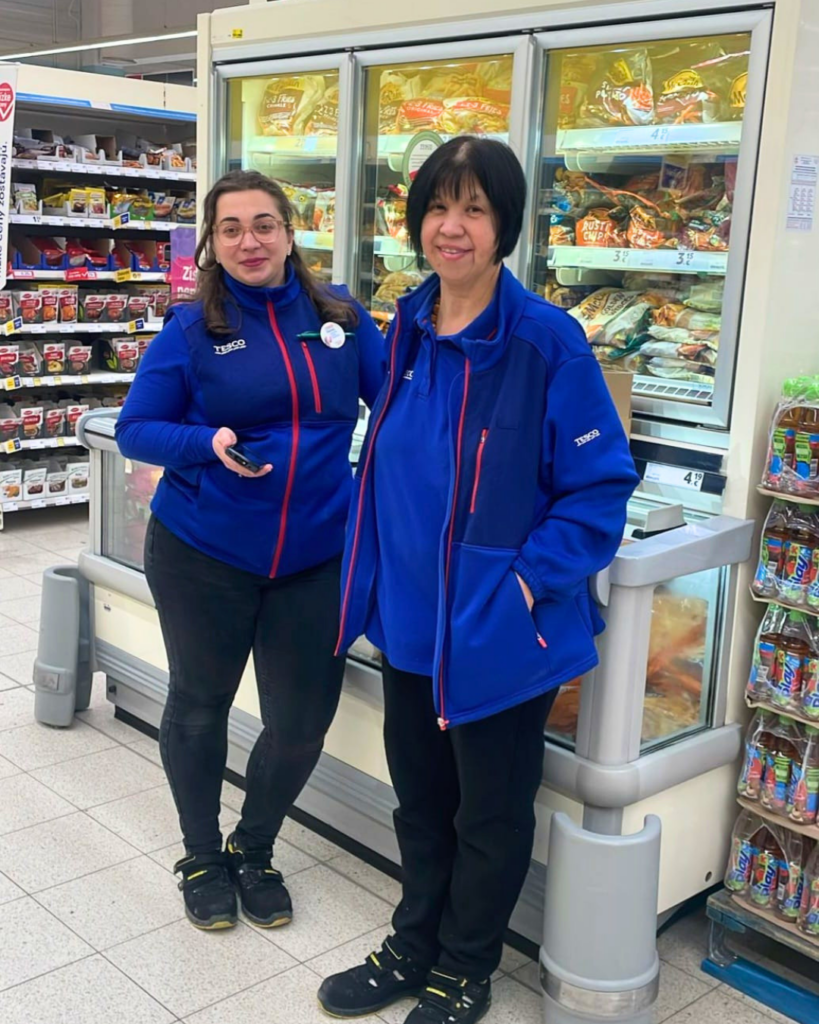
“Today, I go to work feeling that I belong. I’m proud of how far I’ve come. As a mum and as a woman who started over in a foreign country.”
Today, she passes that support on to others by helping Inna learn the ropes at work. “It’s my way of giving back the support I received,” she explains.
Together with our partners, we also turned our experience in employment support into practical resources. They offer coaches, trainers and social workers guidance on workplace communication, employment rights and long-term motivation. Explore the practical guides on supporting sustainable employment and financial stability.
Greater confidence in everyday financial decisions
Alongside a regular income, financial stability depends on planning expenses and understanding financial matters in a new country. This is why we also focused on financial education.
The resources we developed cover budgeting, tracking expenses, saving and consumer rights. They include guidance for trainers as well as self-study materials, helping people develop the skills they need to manage their money and make everyday financial decisions. The financial education resources are available free of charge.
Drawing on the guides on sustainable employment and financial resilience, we also developed training for participants, representatives of local non-profit organisations and other stakeholders from the public, private and civil society sectors. We brought these two areas together because stable employment and the ability to manage one’s income provide a stronger foundation for independent living.
A place to talk and take a breather
Looking for work and managing daily responsibilities often go hand in hand with worries about loved ones, exhaustion and uncertainty. We therefore set up discussion clubs in Žilina and Prešov and organised activities to support mental well-being. These gave people opportunities to make new friends, share experiences and take some time for themselves.
At the discussion club in Žilina, for example, we talked about winter customs in Slovakia and Ukraine. Conversations about traditions gradually developed into sharing personal stories. When participants wrote letters to Baby Jesus, their wishes centred mainly on peace and a safe home. What began as an exercise to practise writing became a space to express what they missed most.
We also made Christmas wreaths as part of our activities to support mental well-being. For many women, this was a rare opportunity to relax and focus on something that brought them a sense of calm.
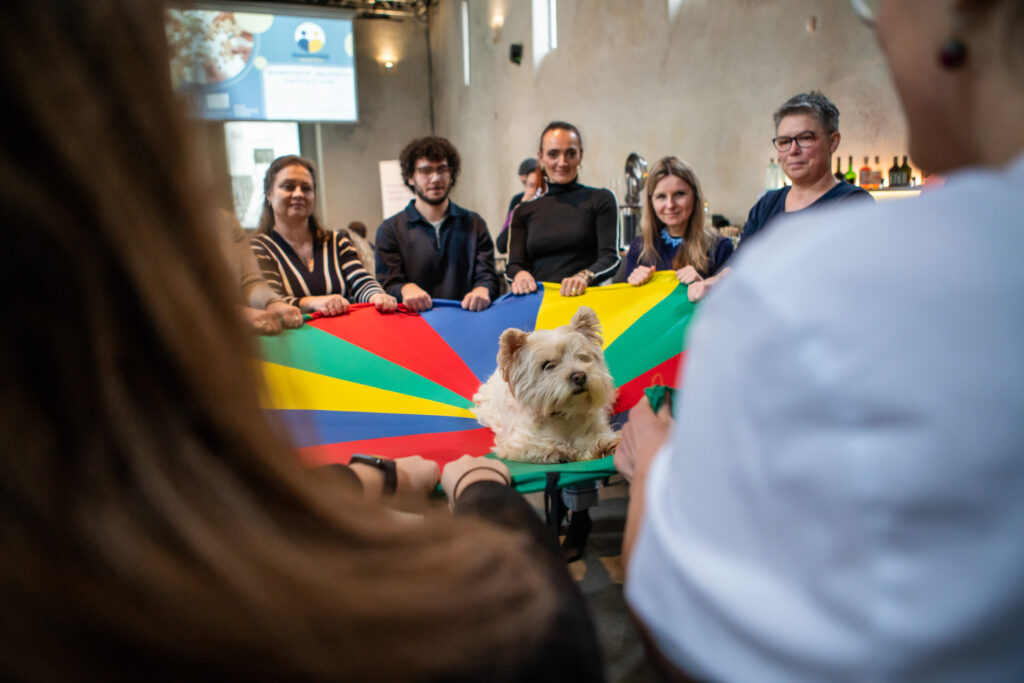
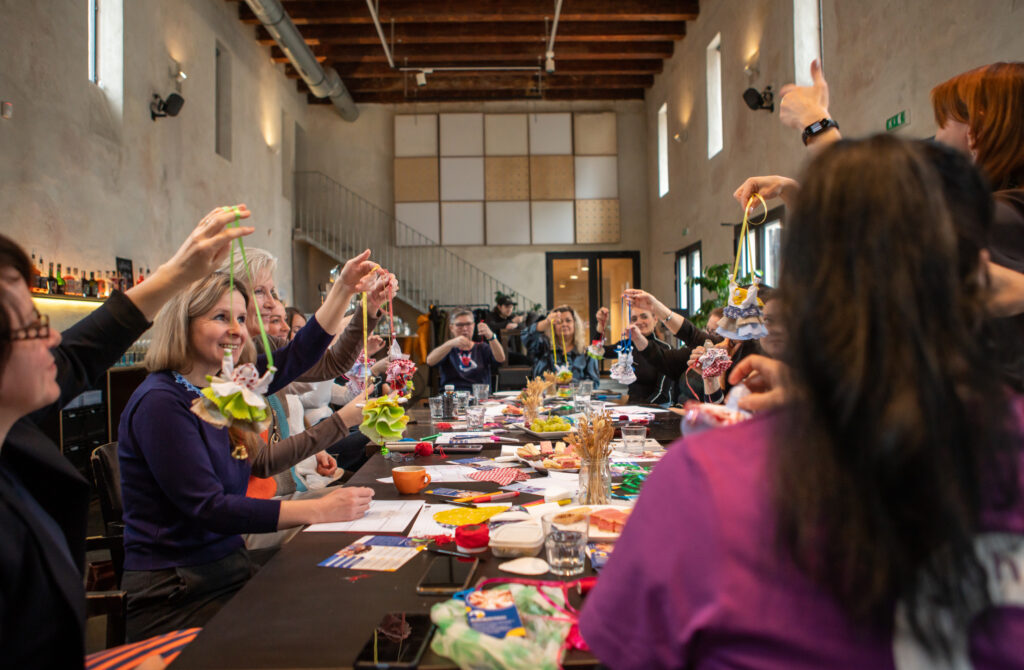
We also paid attention to those who support others every day. At a session for people in the helping professions, we discussed stress, personal boundaries and self-care. Participants tried making traditional Ukrainian cloth dolls known as motanka dolls and experienced a demonstration of a dog-assisted intervention. Alongside these shared activities, there was time to talk and exchange experiences.
People from Ukraine and those working with them can find practical tools in the free guides on supporting mental well-being.
Theatre also helped children connect with one another
For Ukrainian children who suddenly found themselves in a new country, settling into a new environment can be difficult. They need opportunities to spend time with their peers, make new friends and feel part of a group. In Žilina, an inclusive theatre initiative helped create these opportunities, bringing together Slovak and Ukrainian children as well as adults.
The idea came from psychologist and professor Halyna Handzilevska, who had experience with theatre in Ukraine. Under her guidance, children and adults worked together to prepare a Christmas performance for the public. They rehearsed at a hostel for displaced people and on church premises before performing in the cinema hall at the University of Žilina.
Dominika, a volunteer who helped backstage and also performed in the play, particularly remembers how the children learned from one another.
“Children can connect even without a shared language; they always find a way to understand one another. They taught each other Slovak and Ukrainian songs and lines from the play. They also learned how to pronounce individual words correctly.”
Preparing the performance together gave them a reason to meet, work together and discover their peers’ language and culture. Activities like these show how everyday experiences and relationships can help people feel part of a community.

Connections and support continue
We engaged 30 people from Ukraine in the IMMERSED project. Together with our partners, we developed guides on sustainable employment, financial resilience, mental well-being, discussion clubs and mapping local initiatives.
We trained 81 people in employment and financial resilience. A further 17 HR professionals from the public, private and civil society sectors completed training on employing people from Ukraine. Activities showcasing our guides and results brought together 327 participants.
We also exchanged experiences during six partner visits in Slovakia and abroad. We produced information materials in Slovak and Ukrainian and, together with our partners, created a website in six languages where all the guides we developed are available free of charge. They can be used by organisations, employers and people working with communities.
What matters most, however, is that the connections endure beyond the shared activities—both among support organisations, which can continue exchanging experience and expertise, and among participants. In Žilina, for example, women formed groups whose members plan to keep meeting. People who once received help are now supporting others, just as Hanna helps Inna learn the ropes at work. Thanks to them, someone else now has an easier first day at work or a person they can turn to.
The IMMERSED project was co-funded by the European Union under the Social Innovation Initiative+. In Slovakia, it ran from April 2025 to August 2026 in Žilina and Prešov.