People Behind People in Peril — Andrea Bednáriková: I Still Remember the First Air Raid Siren
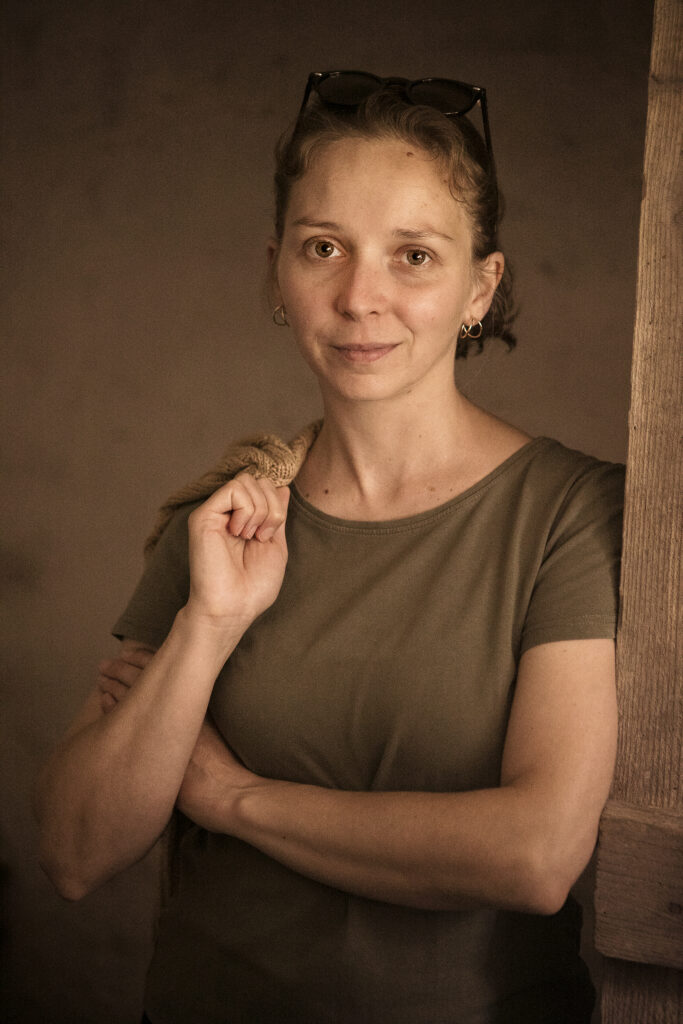
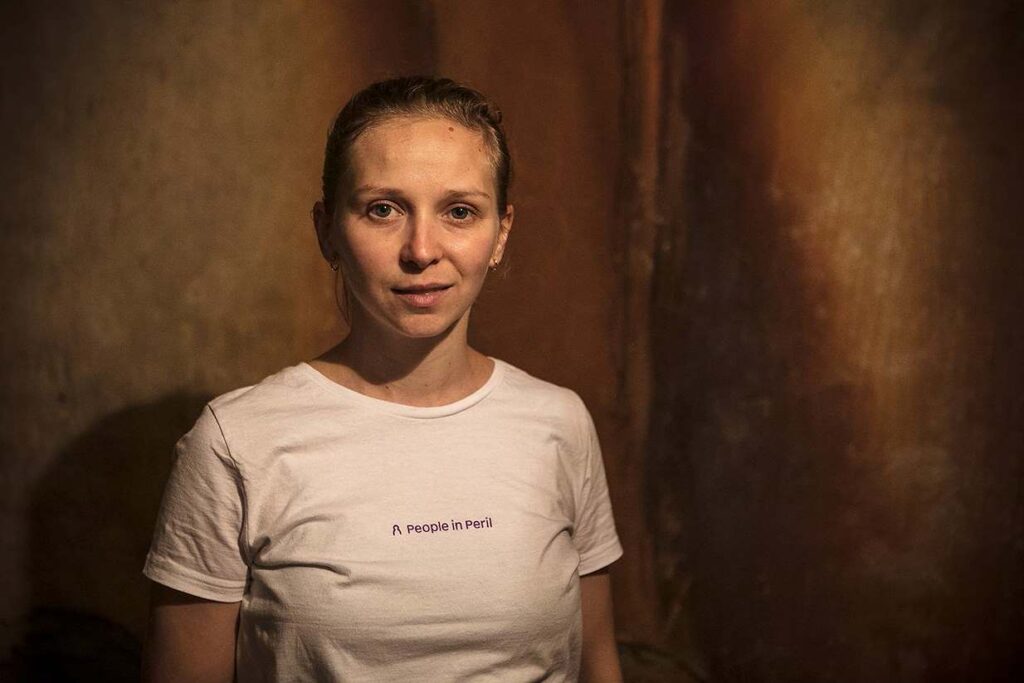
In the People Behind People in Peril interview series, we spoke with Andrea Bednáriková, Head of the Emergency Housing Support Programme for People in Peril in Ukraine.
Her colleagues simply call her Andy. Although we meet in Bratislava, she has been living in Uzhhorod, Ukraine, for the past four years. She moved there to work with People in Peril after the outbreak of the full-scale war. Today, she works on projects focused on school shelters and housing reconstruction for people affected by the conflict.
In the interview, she also talks about:
- what her first days of responding to the full-scale war in Ukraine were like,
- why she decided to move to Uzhhorod,
- why school shelters are essential for thousands of Ukrainian children,
- what years of working in the humanitarian sector have taught her.
People Behind People in Peril interview series offers a closer look at the people behind People in Peril and the humanitarian work it delivers. It introduces both those working on the ground and those coordinating relief efforts behind the scenes. Through their stories, motivations, and everyday challenges, the series shows that every act of assistance is made possible by ordinary people who have chosen to do extraordinary work.
What kind of family did you grow up in? Do you think your family and the environment you grew up in shaped what you do today?
I believe our families always provide the foundation for the values we carry into life, so definitely yes. My older sister had a huge influence on me. She volunteered with the organization Úsmev ako dar, and together we used to visit a children’s home in Spišské Vlachy, where we organized activity days for the children a few times. I was around ten years old at the time.
My sister, who is fourteen years older than me, was a great role model. My whole family shaped who I am. My father instilled in me a strong belief in the principles of humanism, while my mother was always the person who opened her arms whenever someone in the family needed help. It was really a combination of many different influences.
Do you remember the moment you first realized you wanted to work in the humanitarian sector?
After graduating from university, I started working in the private sector, where I stayed for about four years. Towards the end of that period, I became increasingly frustrated and felt I wanted to take a different path. I was looking for work that would have a greater sense of purpose and be more personally fulfilling. So I decided to leave.
Then life took me to New Zealand. I ended up staying much longer than I had planned because I was there during the COVID-19 pandemic. By the time I returned to Slovakia, I already knew I wanted to try working in the non-profit sector.
What did you do in New Zealand?
I worked in an embroidery workshop. I learned how to operate embroidery machines. It was a branding company that produced uniforms and various promotional and gift items. At first, I did the embroidery myself, and later I managed the workshop.
What brought you to People in Peril?
It was partly a big coincidence and partly the right timing. I returned to Slovakia just as the full-scale war in Ukraine broke out. I came back with time on my hands, as I did not have a job, and I wanted to volunteer somewhere — either at the border or in Bratislava — to help people fleeing Ukraine.
My sister connected me with People in Peril. She works at a recruitment agency, and at the time the organization was looking for a finance manager for its activities at the border. I first came to Humenné as a volunteer, and a week later I had already signed an employment contract.
What did your role as a Finance Manager involve at the time?
Back then, my main responsibility was making sure our operations at the border ran smoothly. I handled volunteer agreements, reimbursed volunteers for their expenses, and managed the financial flows related to purchasing supplies, food, and other essential items.
To be honest, a large part of my job consisted of sitting at the cash desk, collecting receipts, and handing out money. That’s why I sometimes joke that the title “Finance Manager” was a bit of an exaggeration (laughs).
Do you have a background in finance?
Yes. I studied management, and before that I spent four years working in financial controlling and cash flow management. So I had a solid financial background. However, when I returned from New Zealand, I was convinced I didn’t want to go back into finance. More than anything, I wanted to help during that intense period.
Were you also working at the border?
No, I worked behind the scenes. I met all the exhausted people coming back from the border, bringing in receipts and sorting out expenses. I was the person making sure the financial and operational side of the response kept running smoothly.
How did you go from being a Finance Manager to a Programme Officer, and how did that journey eventually bring you to Uzhhorod?
I never intended to stay in finance long term. My former colleague, Veronika Kusyová, offered me the opportunity to join the programme team, which was expanding because of our work in Ukraine. I started working on subgranting projects, identifying local partner organizations in Ukraine and managing grants for them.
At first, I commuted to Uzhhorod from Prešov, usually once every week or two. As our activities grew, however, it became clear that commuting was no longer sustainable. The organization arranged an apartment where several colleagues and I moved in together. There were four of us living there, and in the beginning we even worked from the apartment. Later, we found an office.
Weren’t you afraid to move to Ukraine and work there?
Absolutely. It was a stressful transition. Especially during the first months of the war, no one knew how the situation would develop or whether Russia might regain the upper hand after being pushed back from the Kyiv and Chernihiv regions. There was a great deal of uncertainty and tension.
I still remember the very first air raid siren. We were living in a rented apartment, and when it went off, I turned to my colleagues and asked, “What are we going to do? Where should we go for shelter?” We supported each other, and we got through it together.
How many air raid sirens have you experienced since then?
I don’t think it’s even possible to count them. I honestly don’t know whether it’s hundreds or thousands, but certainly hundreds.
Do you still take shelter every time the sirens sound, or has it become part of everyday life?
At the beginning, we had to seek shelter quite often. We usually went underground, sometimes to basement restaurants—we had a few places we knew were more comfortable than cold bomb shelters.
Today, the situation is different. There are far fewer air raid alerts in western Ukraine, and they tend to be much more localized. I always check Telegram to understand the specific risk. If there is an immediate threat to Uzhhorod—as there was a few weeks ago—we take shelter.
During field visits, however, you don’t always have access to a shelter, especially when you’re travelling between locations. In those situations, you simply have to assess the circumstances and respond accordingly.
Having lived in western Ukraine for several years, what differences have you noticed between Ukrainians and Slovaks?
Ukrainians often ask me, “Where are all the Slovaks?” When they come to Slovakia, they’re surprised by how empty the streets seem. There are often very few people outside.
In Ukraine, despite the war, people still spend time outdoors. They meet in cafés, sit on terraces, and socialize. Even in winter, outdoor terraces are often full. It reminds me a bit of the Balkans. In Slovakia, we tend to retreat into our homes and our own bubbles much more.
Can you briefly describe what your work at People in Peril involves today?
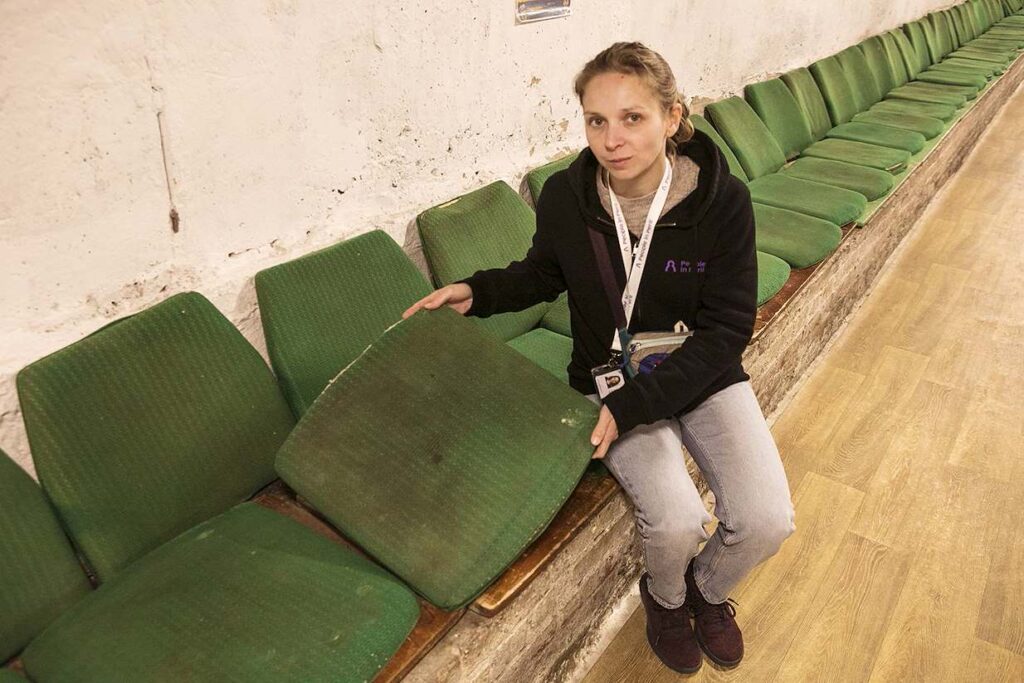
At the moment, I have two main roles. The first is connected to Ukraine and our Shelter Programme. We renovate school shelters and help restore housing. This includes repairing homes damaged by attacks as well as improving collective centres where internally displaced people live after losing their homes or being evacuated. Many of these are older buildings in poor condition that require repairs and basic equipment.
What does a school shelter reconstruction project look like?
In the regions most at risk, children no longer attend classes in regular classrooms. Instead, they go straight to the shelter, because it would make little sense to start lessons upstairs only to move everyone underground when an air raid alert is issued. As a result, they spend a large part of the school day in the shelter.
If a school does not have an adequate shelter, classes can only take place online. We are currently working with a school in Konotop, where we are expanding the underground shelter so that it can accommodate more children. At the moment, the school has only one or two underground rooms, which are far too small for all the students. Because of this, pupils have to attend school on a rotating basis and can only come in person once every seven weeks. That sounds truly heartbreaking.


In addition to your work in Ukraine, you’re also involved in projects in Moldova. What does People in Peril do there?
My second role is managing a project in Moldova funded by SlovakAid. There, we support farmers who grow strawberries, blueberries, currants, and other berries. On selected farms, we introduce sustainable farming solutions while also promoting awareness of sustainable agriculture.
The project’s goal is to help farmers better adapt to the impacts of the climate crisis. For example, we support the installation of protective nets against excessive sunlight and pests, introduce smart irrigation systems, and test plant biostimulants developed by the Slovak startup Ecolive.
What does a typical workday look like for you? Is it closer to Excel spreadsheets and phone calls, or to working in the field?
These days, I spend more time behind a computer. Our team has become smaller, and I now have to cover more administrative responsibilities. Most of our activities take place in northeastern Ukraine, where our local colleague works directly in the field. From Uzhhorod, I support her and help coordinate the projects. I still travel to the field from time to time, but much less frequently than before.
Do you remember a particular moment when you realized the true impact of your work?
I would say the school shelter reconstruction projects. I’ll be honest—they are expensive projects. But when we are able to secure the funding, the impact can be truly significant. We deliberately selected shelters and underground spaces that had been abandoned for years and required complete renovation.
The first time we walked into these spaces after the reconstruction was always an incredible moment. Damp basements with exposed pipes and neglected interiors had been transformed into clean, well-lit spaces furnished for children and teachers. Every single time, it was a shock. Those were the moments when I felt incredibly proud of what we do and knew that our work truly makes a difference.
I feel the same when we repair homes damaged by attacks. There, the impact on people’s lives is immediate and tangible. We primarily support families facing multiple vulnerabilities—for example, older people living with disabilities. Many have no stable income, and their pensions are barely enough to cover basic needs. For them, replacing windows or repairing a damaged home is simply unaffordable.
At the moment, for example, we are repairing the home of a woman whose house was severely damaged in an attack. After the Chornobyl disaster, she had been forced to relocate to the Sumy region, where she had already been living in very modest conditions before the war. Following the attack, her home became almost uninhabitable, with shattered windows and exposed walls covered only by makeshift materials to keep out the rain.
The house now requires a complete renovation. We are insulating it with mineral wool, installing a new façade, and replacing all the windows.
What would you say to people who argue that repairing these homes is pointless because another drone could destroy them a week later?
Many people—especially older people—simply do not want to leave their homes. At the same time, there is nowhere near enough capacity for everyone to relocate and build a dignified life somewhere else.
We also do not work in the immediate vicinity of the front line, where the risk is simply too high. In those areas, the humanitarian coordination system does not recommend reconstruction. Instead, government-led evacuations are taking place. We focus on locations that have been affected by the war but are more than 50 kilometres from the Russian border. Just as these homes were hit, an apartment building in Kyiv could just as easily be targeted.
Of course, the risk of renewed attacks and further damage remains very real across Ukraine. But rebuilding wherever it is possible is just as important. It gives local communities strength, hope, and reassurance that they have not been forgotten—that they are not facing this alone.
What would you say is the most difficult part of your job?
Probably the uncertainty of funding. If we want to deliver projects with a lasting impact, we need stable financial resources. We can never be completely certain that funding will continue into the following year, and that uncertainty is a constant source of stress.
At the same time, the needs are overwhelming, and we simply don’t have the capacity to help everywhere help is needed. We have to make difficult decisions and prioritize the places where assistance is most urgent. That’s a reality every humanitarian worker has to learn to accept.
Do you often struggle with feelings of helplessness? What helps you keep going?
My team—my colleagues. I can’t imagine doing this work without them. We support one another, share advice, and help each other through difficult moments. Even on the hardest days, we always find something to laugh about. Somehow, we always find a way to get through it together.

Is there something you wish the public understood about humanitarian work, but that is rarely talked about?
Every activity we carry out is part of both our own broader strategy and the wider humanitarian coordination system. Sometimes it may seem surprising that we choose to support a particular place or a specific group of people, but every decision is based on extensive planning, needs assessments, and close coordination with other humanitarian actors.
We strive to provide assistance as effectively and strategically as possible, focusing on the places where the needs are greatest while making the best use of the resources available. At the same time, we work to avoid duplication by ensuring we don’t intervene where support is already being provided by another organization. Our goal is to fill the gaps in humanitarian assistance where needs remain unmet—and that always requires a great deal of planning, coordination, and preparation.
Do you see yourself staying in Ukraine, or would you like to return to Slovakia one day?
For now, yes. I can’t say what the future will bring, but at the moment I live in Uzhhorod, and I plan to stay there.
What would you say to people who feel that one person can’t really make a difference?
It goes back to what I mentioned about humanitarian coordination. Each of us is just one piece of a much larger puzzle. If several of those pieces were missing, the gap would become much bigger. Every single piece matters, and each one has an important role to play.
Finally, can you recommend a book, film, TV series, podcast, or board game that offers insight into humanitarian work or has influenced you personally?
For anyone looking to better understand the war in Ukraine, I would definitely recommend the work of Tomáš Forró. I also recommend The Border by Stanka Harkotová, which beautifully captures everything that made me fall in love with Zakarpattia and Uzhhorod.
When it comes to podcasts, I would especially like to highlight Ľudskosť (Humanity), hosted by Barbora Mareková. It explores important and timely topics that we, as a society, need to discuss if we want to become more empathetic and attentive to one another and to the world around us. That mindset is closely connected to humanitarian work, because a compassionate society is better able to understand and support people in vulnerable situations.
I would also recommend the podcast Svet medzi riadkami (The World Between the Lines), which offers thoughtful discussions about inequality in our society. In particular, the series Slovensko nie je krajina pre slabších (Slovakia Is Not a Country for the Vulnerable), released last year, is well worth listening to.
Andrea Bednáriková (35) is a Project Manager for Eastern Europe at People in Peril. Originally from Trnava, she graduated from the Faculty of Management at Comenius University with a specialization in international and financial management.
Before moving into the humanitarian sector, she worked in finance and spent several years living in New Zealand. Since 2022, she has led the Shelter Programme in Ukraine, coordinating the reconstruction of school shelters, damaged homes, and collective centres for internally displaced people.
She currently lives in Uzhhorod and enjoys spending her free time at a cottage in the Ukrainian Carpathians.