People Behind People in Peril — Ján Ostrolucký: I realised that someone would have to rebuild what the war destroys.
In our People Behind People in Peril interview series, we spoke with Ján Ostrolucký, former Emergency Coordinator at People in Peril.
We met Ján at the beginning of this summer at the People in Peril office in Prešov. His work, however, regularly took him to Ukraine, Lebanon, Palestine and Kenya, where he built partnerships, coordinated humanitarian assistance and helped prepare the organisation for emergencies. We talked about what brought him to humanitarian work, and why he believes that providing assistance is, above all, built on trust between people.
In the interview, he also talks about:
- why face-to-face meetings in conflict-affected areas are irreplaceable,
- what he is most proud of,
- what he would pack if he had to leave his home within five minutes.

People Behind People in Peril interview series offers a closer look at the people behind People in Peril and the humanitarian work it delivers. It introduces both those working on the ground and those coordinating relief efforts behind the scenes. Through their stories, motivations, and everyday challenges, the series shows that every act of assistance is made possible by ordinary people who have chosen to do extraordinary work.
How did you end up at People in Peril?
I was working as a sales director at a construction company. I was there for only about eight months. That’s when I realized I didn’t want to continue down that path. Neither the money nor the work itself motivated me anymore. I felt like I had reached a certain point and wanted to work with people and do something that would be useful to them.
Then I went to Corfu and became a holiday representative. That was where I realised that working with people really was what fulfilled me. I was highly motivated to give them the best possible experience.
I saw a holiday as a kind of therapy. The better the experience people had, the greater the chance that they would feel happier for at least the next two or three weeks after returning home.
It was there that I started thinking about what I could actually offer people, whom I wanted to help and in what way.
After returning from Corfu in 2023, I came across an opening at People in Peril for a Junior Emergency Coordinator. What interested me was that they did not require specific experience in the humanitarian sector. They were looking instead for someone with a broad range of experience, a willingness to put it to use and, at the same time, a desire to keep learning.
After a four-month recruitment process, I got the job. And while the whole process was still ongoing, I spent the winter earning some extra money by delivering food by bicycle.
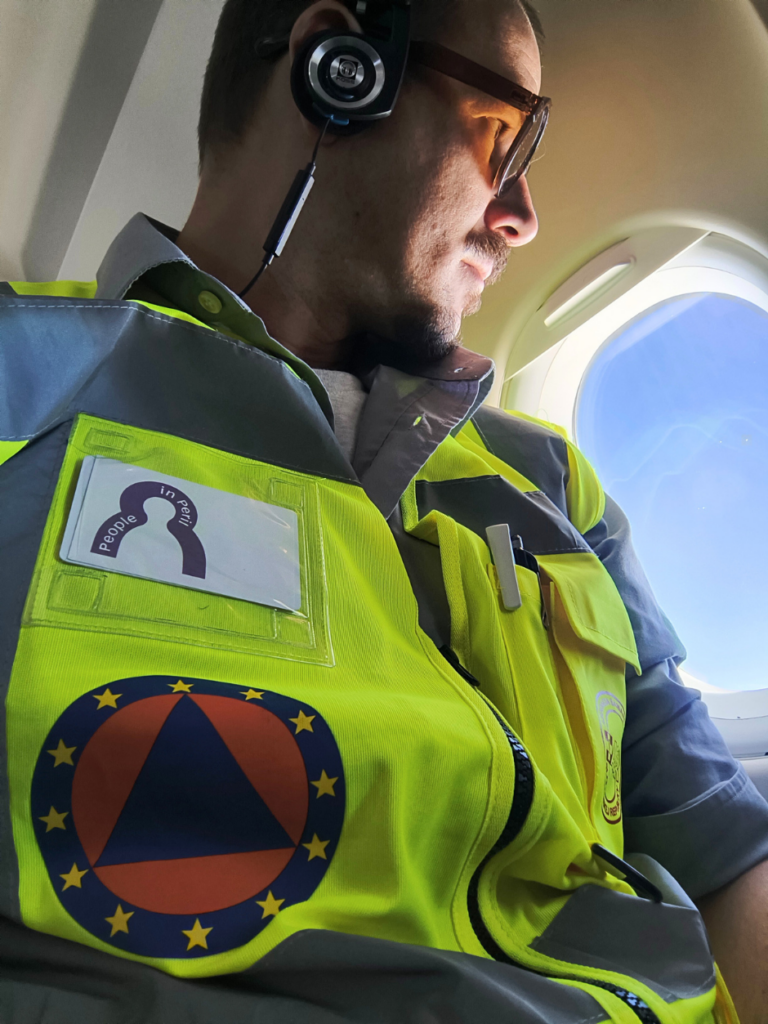
There is no single professional path to becoming a humanitarian worker
A four-month recruitment process? Why did it take so long, and what did it involve?
First, I sent in my CV – I think it was sometime in September or October. Then there was an initial interview, followed by a second one, and the process also included practical tasks.
I remember, for example, being asked what I thought posed the greatest threat to humanitarian workers on an international mission. I had to describe what I would do if I suddenly found myself in such a situation – what steps I would take and what I definitely would not forget.
Even though I had no professional experience in humanitarian work at the time, I managed to identify some important points. The selection panel was surprised, for example, that I mentioned coordination with other humanitarian organisations. They asked whether I knew that such coordination mechanisms existed. I said I didn’t, but it seemed completely natural to me that humanitarian assistance simply could not work without coordination.
So do you think that someone who wants to become a humanitarian worker in the field does not need any specific expertise? What do they actually need?
Quite the opposite. I think everyone needs some kind of expertise. It just does not always have to be directly linked to a particular position. What matters is knowing how to make use of your strengths.
A good manager in a humanitarian organisation might be an excellent project manager or someone who loves spreadsheets, but I don’t think that is a requirement. It depends on the team around them. If they have strong project managers, they do not necessarily need to be an expert in that area themselves. But then they need to be all the better at motivating, supporting and leading people, including in difficult situations.
Conversely, if the team is full of creative people who come up with solutions and think outside the box, the manager should complement the skills the team is missing. To me, it is always largely about how the team is put together.
For example, I had no expertise in emergency management. I only began developing that at People in Peril. But it turned out they were looking for someone who could really get to grips with a topic, prepare high-quality analyses and reports on countries, crises and trends, and maintain a strong overview over the long term. The other colleagues were very busy with project management at the time, so they needed someone who could complement the team in precisely this way.
If, however, you are more or less on your own in the field, you have to know how to build on your own strengths. I had worked in sales, I have a basic knowledge of Arabic, and when I travelled for work to the West Bank or Lebanon, those were exactly the kinds of advantages I could draw on.
Even delivering food taught me something. In the space of a few seconds, you have to greet someone, thank them, hand over their order and leave a good impression. Similar skills are useful when building relationships with partners or during first meetings in the field. In Arab countries, for example, the way you communicate is especially important.
That is why I think expertise should grow out of each person’s strengths. And in our organisation, it is also true that you have to be prepared to handle a genuinely wide range of tasks.
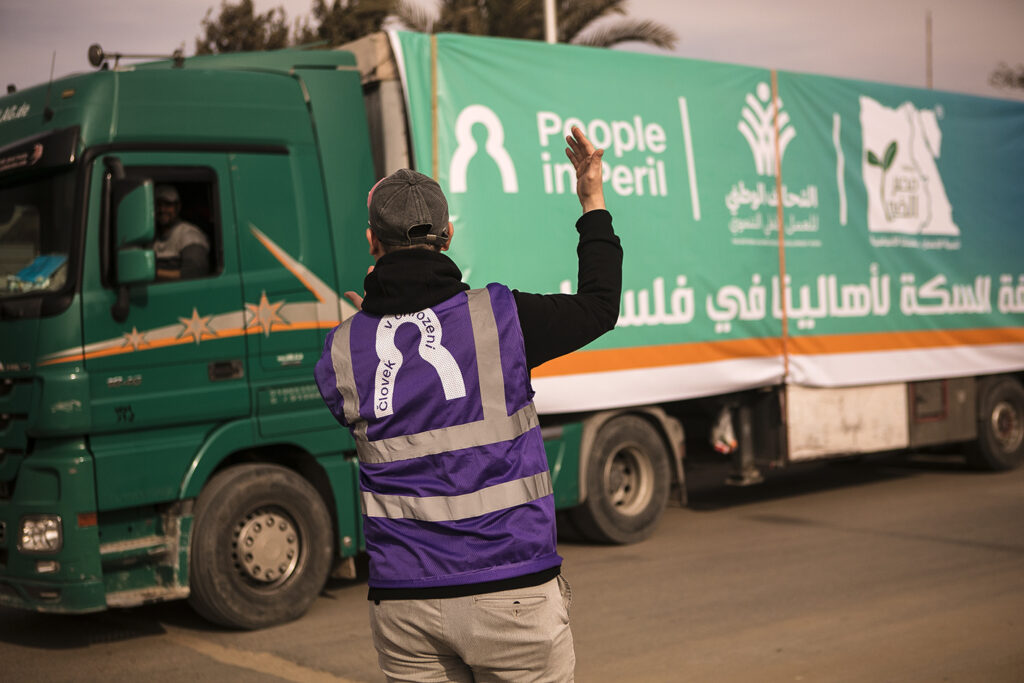
Aid begins with relationships and trust
How soon after starting the job did you go on your first trip abroad, and where did you go?
My first trip was to Ukraine, where I went in March to get to know the Ukrainian team. I had joined the organisation in February 2024.
My first longer trip abroad came about six months later. Marián Cehelník (editor’s note: Emergency and Security Advisor at People in Peril) and I went to Lebanon for a week to deal with some administrative matters. While we were there, however, we found ourselves in a difficult situation. During our stay, an Israeli intelligence operation took place in which pagers used by Hezbollah members exploded, followed two days later by other electronic devices.
We expected the situation could deteriorate quickly and that a military operation might begin, potentially leaving us stranded there. Fortunately, we managed to fly home. Almost immediately after returning, however, we had to start responding to the 2024 floods in Slovakia. I was put in charge of the organisation’s humanitarian response.
At the turn of November and December, I also travelled to the West Bank, Palestine and Jerusalem. My task was to look for potential partners in case the situation escalated in a similar way to Gaza. We had no partners in Gaza itself, and trying to find them only once a crisis is already underway is extremely difficult.
What does the process of finding partners in the field look like?
I start by looking at which organisations larger international NGOs or UN agencies are working with in the area. These are often local or grassroots organisations (editor’s note: community-based organisations founded by local people themselves). I then use the snowball method – at every meeting, I hear about other interesting people or organisations and try to meet them as well.
The face-to-face meeting itself is important too. Even something as simple as taking a photo together can show that we are a relevant partner, even if the cooperation is only just beginning.
Do you feel that face-to-face meetings are still that important?
If I were being very strict, I would say that everything can be arranged remotely. But for me, face-to-face meetings carry much more weight. I also feel more confident in them myself.
There are many things you only learn about a partner once you are there in person. I pay attention to even the smallest details – from the posters on the walls to the merchandise they give me.
In the Middle East, you also have to be very careful about who you work with. These are politically highly sensitive conflicts, and humanitarian assistance must remain neutral. If I cooperate with an organisation that is not neutral, it undermines our neutrality as well. At the same time, we need to be certain that the funds we provide will not be used for military purposes or misused in any other way.
Which of your trips abroad has been the most memorable for you?
I don’t think there is just one. Ukraine was powerful simply because it was the first time I had crossed the Slovak-Ukrainian border, even though I’m from Košice. I realised that I understood the people there quite well, and I also love the cuisine of Transcarpathia.
I’ll remember Lebanon because of the pager operation. And also because, in my opinion, Lebanese cuisine is among the best in the world.
It was my first time in Palestine. I saw biblical sites in Jerusalem and travelled quite extensively across the West Bank.
In 2025, I was in Cairo, where we inspected humanitarian aid bound for Gaza via the Egyptian border. It was also special for me because I had spent two semesters in Cairo while I was at university, so in a way it felt like coming home.
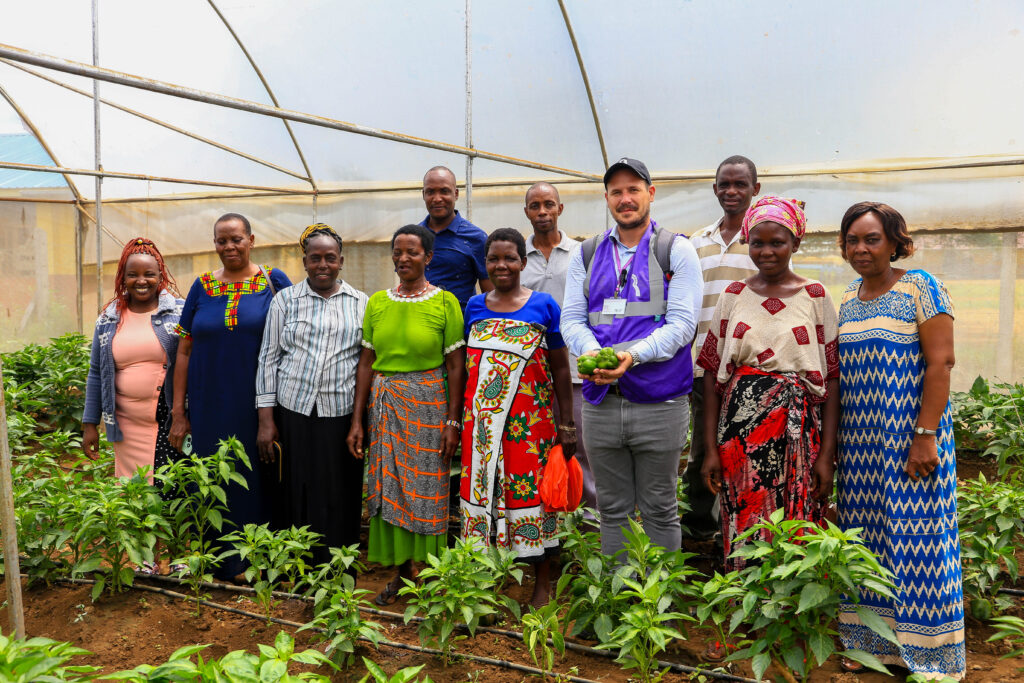
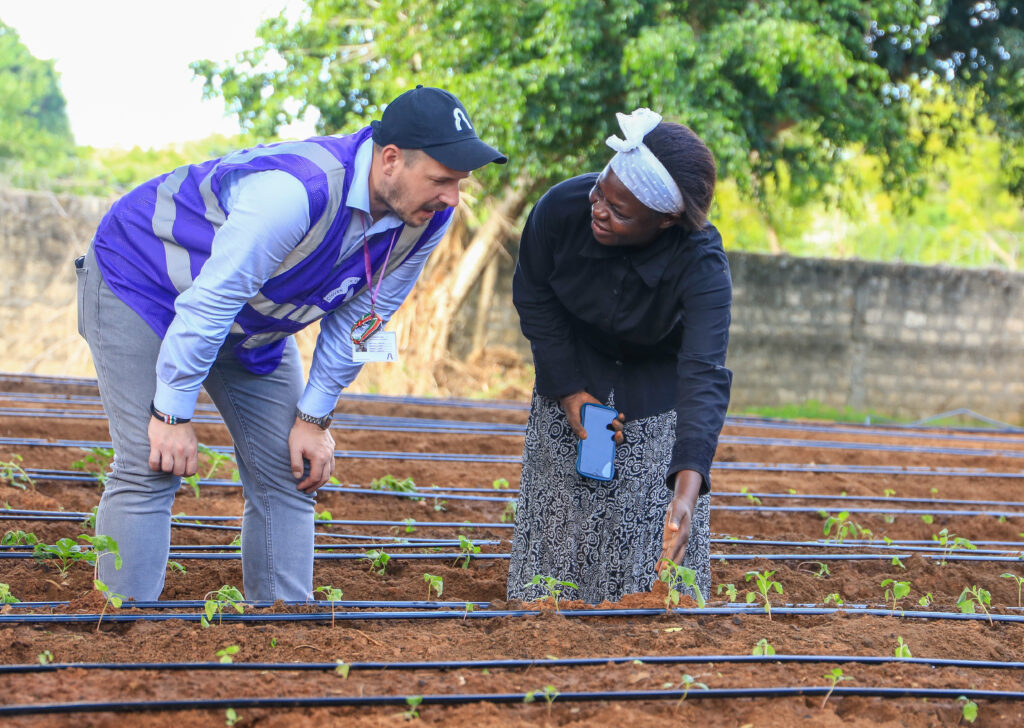
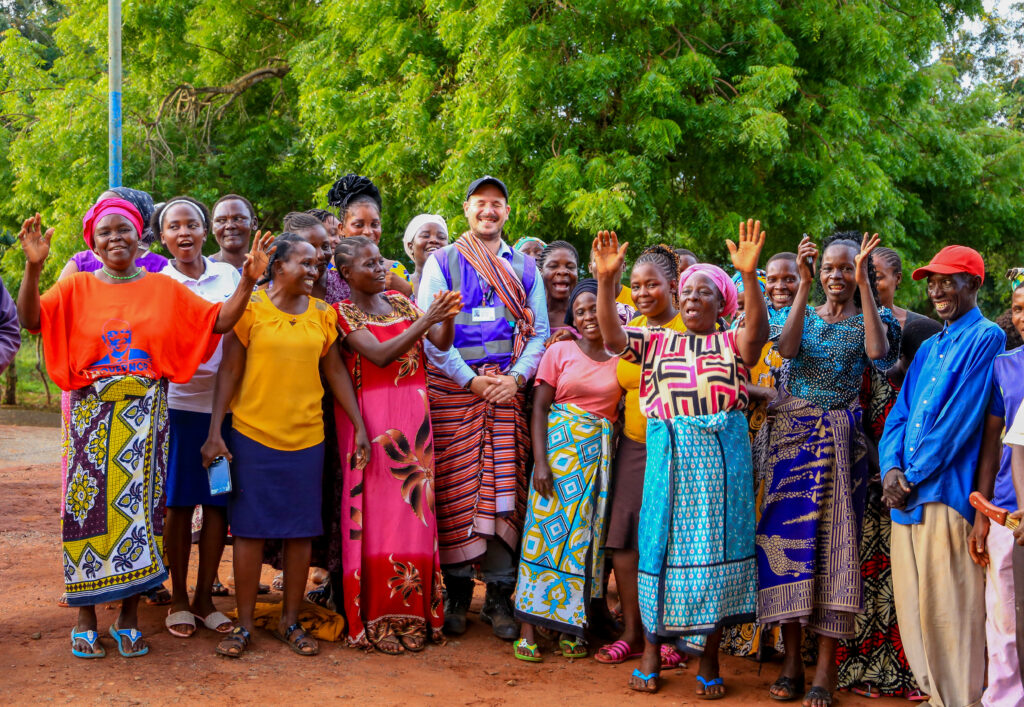
Kenya was powerful too. It was my first time in sub-Saharan Africa and the first time I had seen an elephant in the wild. I visited a village where we are implementing an agricultural and irrigation project for women’s groups. The women sang and danced for me there. The local cuisine was a completely different experience as well.
Later, I spent ten weeks in Lebanon and got to know almost the entire country. Each of those trips was memorable for a different reason.
Relationships and trust are especially important in this region. They are best built in person and only then carried over into the formal, professional relationship.
My role is to coach our partners so that they meet our standards – for example, so that they can accurately report their finances and the number of people they have assisted. We need to know exactly how many people we have helped – how many were women, men and children, whether they had any specific needs, and so on.
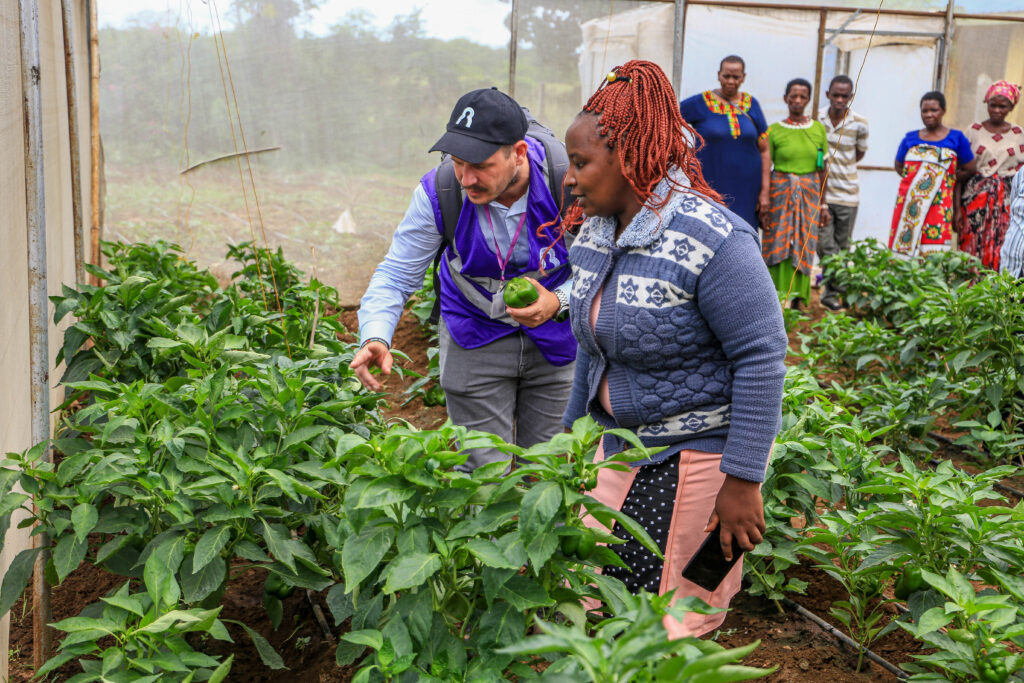
I have to admit, I was genuinely surprised by how precise our organisation’s impact reports are, down to the last person.
It is very important. It is one of the indicators that things are being done properly.
Our credibility is built on transparency. I sometimes say that we are more transparent than many state institutions. You can trace very precisely the relationship between costs and results.
The humanitarian sector is often criticised for supposedly spending half of its funding on salaries. But humanitarian work is, above all, about people – their expertise, time and attention.
What does a typical working day look like for you when you are not on a mission?
I coordinate emergency response, so I need to have a very good overview of what is happening around the world. I follow developments in conflicts and potential disasters, review financial reports from partner organisations, and read security reports from NGOs, the UN, as well as various resolutions and statements.
I also work with our accounting system and financial administration. I follow data and trends and work with maps almost every day to better understand how individual events affect the wider region. I prepare contributions for conferences, sometimes write blogs or comment on current events on television. I also attend various trainings – on security, management or public procurement.
We also devote a lot of time to organisational preparedness – developing standard operating procedures and updating security and health plans. So there is also a lot of work behind a computer.
But from a professional point of view, it is precisely this day-to-day work that I find most interesting. For example, if I see a traffic jam in Lebanon going in only one direction, it may indicate that people are leaving that area. And from a humanitarian perspective, I know that a single euro can determine whether a person in need is able to buy medicine or food.
When was the last time you realised just how meaningful your work is?
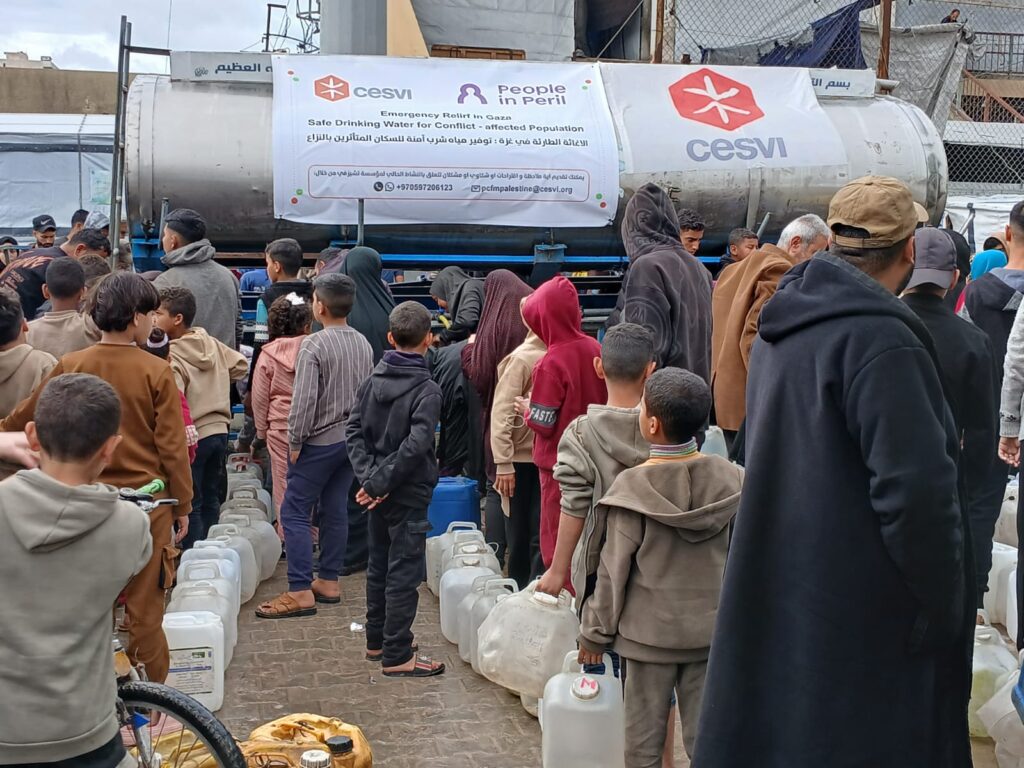
I felt a great sense of satisfaction when, after almost two years of effort, we finally managed to deliver aid directly into Gaza and the People in Peril logo appeared there as well.
We found an Italian partner that was able to employ local people to distribute drinking water. Visual documentation is very important to us – it is proof that the aid is actually being delivered. When I saw the People in Peril logo on the vehicle distributing water, it was a very powerful moment for me. I often say that, in a way, things have not really happened until they have been documented.
No one is completely on their own
Do you ever experience a sense of helplessness?
Yes. Almost every day, I see world leaders making decisions that result in more and more people needing assistance, or that prevent us from providing it. That frustrates me. At the same time, I don’t think people should torment themselves over things they cannot influence. You have to hold on to hope.
Is there anything you would like the public to understand about humanitarian work?
Humanitarian work is very poorly paid in our context. At the same time, it is built on the principle of neutrality.
Today, we sometimes see people describing themselves as humanitarian workers while supporting one of the parties to a conflict – for example, by delivering food to soldiers. That is no longer humanitarian assistance. At the same time, it puts those of us who help civilians exclusively at risk, because it can undermine our neutrality.
I am also proud that during the floods in Slovakia in 2024, we provided households with direct financial assistance based on their individual needs. It was the most effective form of support because everyone had lost something different. We trust people to know best what they need at a given moment.
What would you say to people who feel that one person cannot make any difference anyway?
They are right. One person alone cannot change anything.
But I don’t know anyone who is completely on their own in everything. There is almost always someone else who sees things in a similar way. And once you start talking about it, others gradually join in.
To finish, I have one slightly unusual question. Since you have experience in the field and in crisis-affected areas, and you also work on resilience and emergency preparedness, what three things would you take with you if you had to leave your home within five minutes?
Just one – a so-called grab bag, or evacuation backpack. I keep everything I need to manage for 48 to 72 hours away from home in it: medication, water, food, clothing and important documents.
I would not take my laptop. These days, people should have everything important stored in the cloud. If they don’t, that is a problem.
Could you recommend a book or podcast that has shaped you in some way?
I find the story of Albert Schweitzer very inspiring. As an adult, he decided to give up his career and build a hospital in Gabon, where he treated people. His life story has had a strong influence on me.
Ján Ostrolucký
He was born in Košice and studied Middle Eastern Studies, during which he came to realise that people remain the most fascinating subject of all. Over the course of his career, he has worked on motorway projects, in education, as a holiday representative in Corfu, and in areas affected by war and humanitarian crises. He has a particular interest in places where different cultures, perspectives and interests intersect, as well as in problems that may at first seem impossible to solve. He believes that knowledge without humanity is dangerous, while humanity without knowledge is blind. At People in Peril, he worked as an Emergency Coordinator. He was involved in responding to crises both in Slovakia and abroad, including in Ukraine, Gaza and Lebanon.