Three Days in Eastern Slovakia Showed Me What “Painstaking Work” Really Means
I had been at People in Peril for less than two months when our director, Andrea Najvirtová, invited me to visit our Klubovňa spaces and community centres in eastern Slovakia. I wanted to get to know our work better. I came back with a deep appreciation for the people who do it.
I already knew from my job interview that my work would occasionally take me to places where People in Peril works and provides support. But my first work trip did not take me to Ukraine or Kenya. At the beginning of June, our director Andrea Najvirtová and I headed to eastern Slovakia.
The aim was to see what was currently happening in our Klubovňa spaces and community centres and what the people working there were focusing on. We also stopped in Zvolen and Prešov, but in this article I return to three smaller municipalities – Petrovany, Kojatice and Sveržov. These were the visits that stayed with me the most, and they also have something in common: their proximity to socially excluded communities. Many of the people the centres are in daily contact with come from these communities.
In our Klubovňa spaces and community centres, we work with children, young people and adults, primarily from marginalised Roma communities. Our colleagues provide tutoring, help people choose schools or look for work, communicate with families, schools and municipalities, and create opportunities for learning as well as leisure activities.
Over the course of three days, I had the chance to see, at least in part, what this work means in practice – but above all, to get to know the people behind it. This article is about them.
Petrovany: Trust Cannot Be Rushed
A small attic room in a building on the outskirts of Petrovany gradually fills with children. It is early June, and the worst of the summer heat and drought is still ahead of us, yet with every new child, every word, laugh and breath, the Klubovňa space grows warmer and more stuffy. I have the feeling I am the only one who notices.
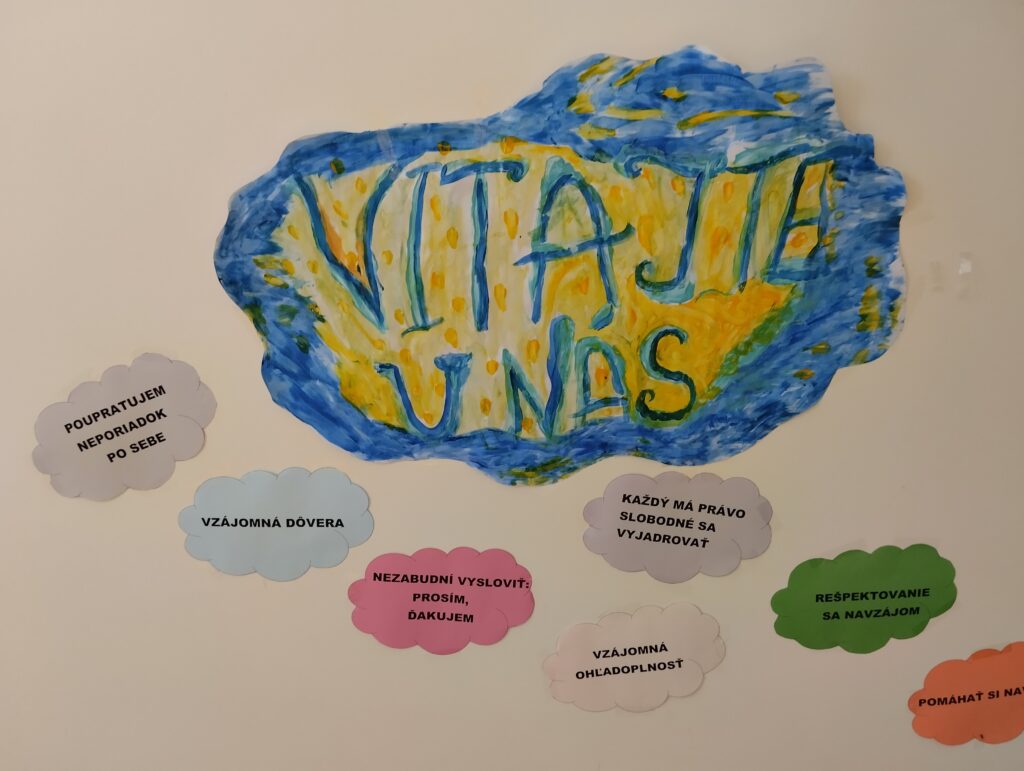
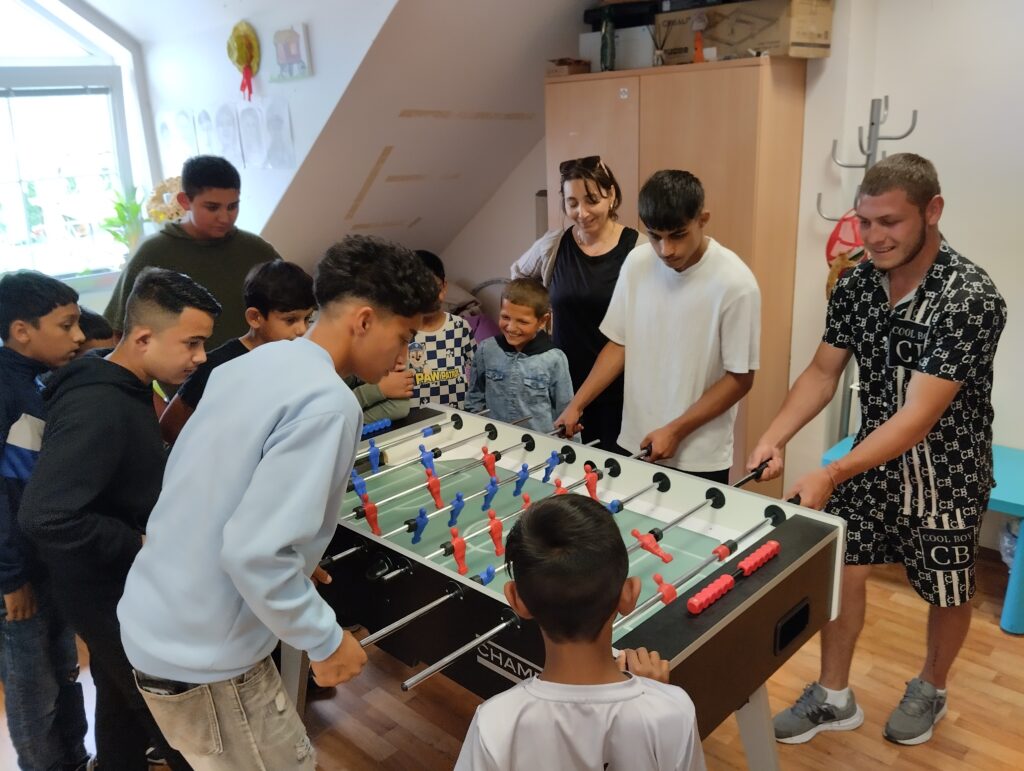
I had never been to a People in Peril Klubovňa space before, so I find myself taking in the details: a large WELCOME sign, colourful drawings on the walls and a view from the window over the surrounding fields. But most of the attention is focused on the table football in the middle of the room. There is a tournament today, so it is not only local children who have come, but also a group of kids from nearby Kendice.
Before the first ball is even dropped onto the table, we meet our colleagues from the centre, Monika, Petra and Margita, whom everyone calls Gitka. They show us around while answering our questions. But the conversation quickly blends into everything happening around us. More children arrive, someone insists it is their turn at the table, while others watch the match over their friends’ shoulders.
As we talk, Monika, Petra and Gitka repeatedly return to the importance of feeling safe. The community centre should be a place where children and adults can come without worrying that someone will reject or judge them. A place where they feel accepted. And watching the children in the Klubovňa space, I get the sense that these are not just words. They are cheerful and spontaneous, teasing one another and approaching the staff as naturally as if it were the most ordinary thing in the world. That does not mean there are no boundaries here, or that everything works on the first try. Quite the opposite. According to our colleagues, much of their work is made up of small steps and repeated attempts.
“If you don’t have empathy for people, you can’t do this work,” Monika says. She considers relationships within the team equally important. “We support one another. Our team and the sense of solidarity between us are what matter most.”
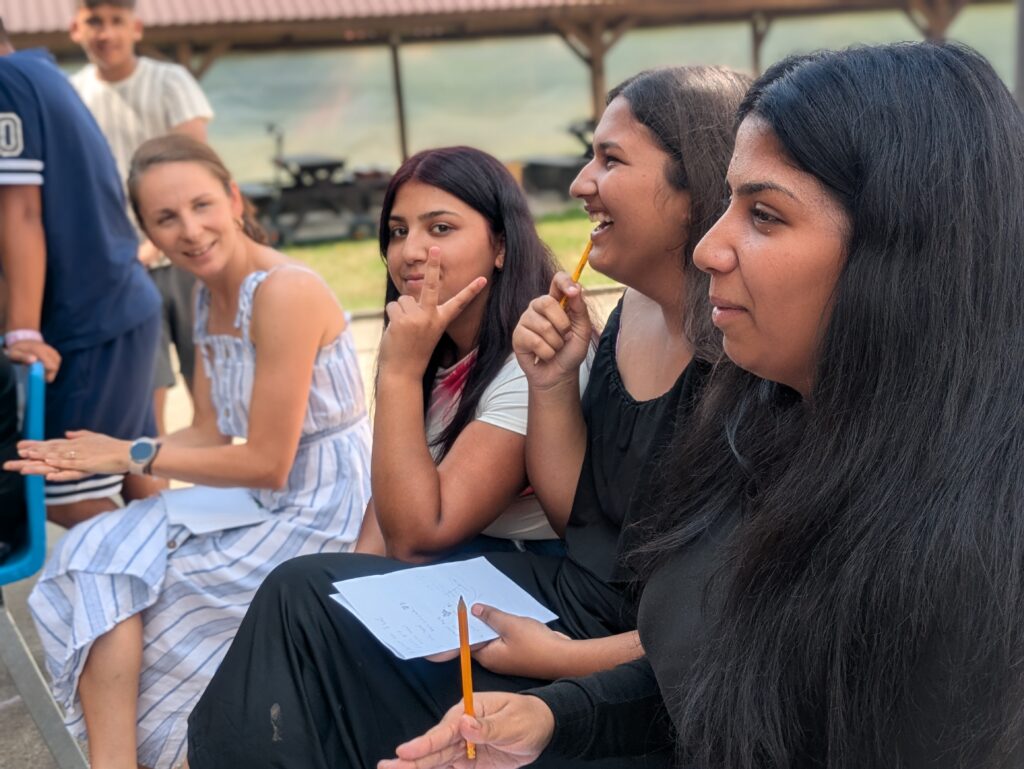
As another match gets under way, our conversation turns to school. Supporting children in education is a regular part of the centre’s work in Petrovany – from tutoring and conversations with parents to communicating with the school when a child begins missing classes or is at risk of dropping out. Our colleagues tell us they also devote a great deal of energy to helping parents see the value of education.
Monika highlights the centre’s good relationship with both the school and the municipality. When a pupil does not come to school, the centre and the school stay in touch to find out what has happened and what can be done. According to Monika, the headteacher will pick up the phone even in the evening if there is something that needs to be addressed.
They also tell us about a girl who left secondary school and, two years later, decided to return. Over time, her mother’s attitude changed as well. In the past, her daughter was expected primarily to help at home and care for the family. Today, her mother supports her in completing her education so that she can later look for a job.
The shouts and cheers continue around the table football. Suddenly, an older boy appears in the doorway. He completed secondary school in England, but after returning to Slovakia, his qualification was not recognised, so he is now taking his school-leaving exams again. Gitka smiles as she talks about him. She is visibly proud of him.
And it is through Gitka that I begin to better understand what my colleagues mean when they talk about trust.
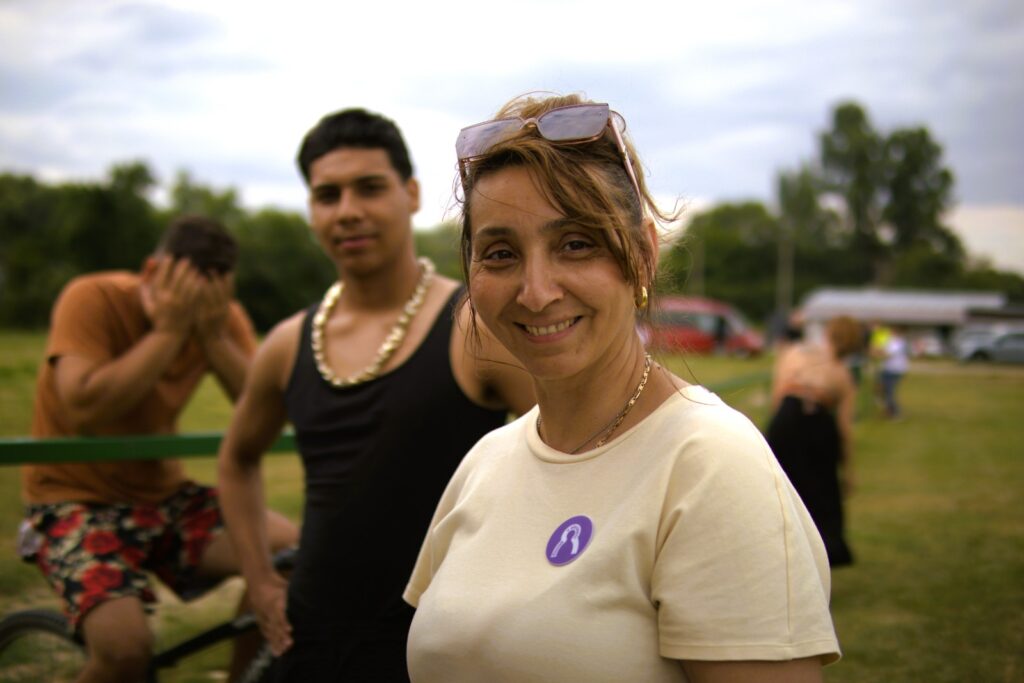
She was born in Petrovany, comes from the local Roma community herself, and has worked here for People in Peril since 2017. She simply describes herself as “one of them”. She has known many of the children who now come to the centre since they were born. Watching the way they approach her and the way she communicates with them, it is clear that this relationship was not built through a single activity or a single project.
Trust here also works both ways. As I listen to stories about returning to school, I realise that it is not only about children and parents trusting the people at the centre. Our colleagues also work to help young people believe in their own abilities – that they can make it through another school year, return to school, or try a path they had not previously considered. No one on the team talks about dramatic overnight change. Instead, they describe it as slow, painstaking work: conversations, tutoring, phone calls with schools, explaining things to parents again and again, and moments when something does not work out and they have to try once more.
As we talk, the tournament continues. The children take turns at the table and cheer one another on, and by now the room is completely full. In the end, eleven-year-old Marek and Nikolas from Kendice win.
The Klubovňa space is just as warm as it was at the beginning. By now, though, I no longer notice it at all.
Kojatice: Progress Comes Slowly
We arrive in Kojatice the following morning, shortly before nine. Even before we enter the community centre, I notice flowerpots filled with planted flowers in front of the well-kept building. They are sitting on the ground by the entrance, patiently waiting for someone to pick them up and put them in the right place.
Inside the centre, Nela is already leading activities aimed at developing adults’ basic skills. We see her in the downstairs room with five female participants. In the meantime, Alenka and Lýdia show us around the centre.
Just as in Petrovany, I find myself looking at the drawings on the walls. Hearts, flowers and little figures, with the names of centre staff among them – Alenka, Janka and Veronika – suggest that the children have formed close bonds with them. A little further on are paper balloons on which the children have written what they would like to be when they grow up. A pastry chef. A singer. A police officer. A bricklayer.
I think of the question What do you want to be when you grow up?, which I was often asked as a child too. I never really knew how to answer it. The children in Kojatice have put their ideas down on paper, and now they see them in front of them every day.

Later, Alenka suggests showing us around the area and visiting some of the families from the local Roma community who live not far from the centre. As someone born and raised in Bratislava who had never worked in the social sector, I had never been in a similar environment before. I am genuinely curious, but at the same time I feel slightly uneasy about entering a place that is, first and foremost, home to the people who live here.
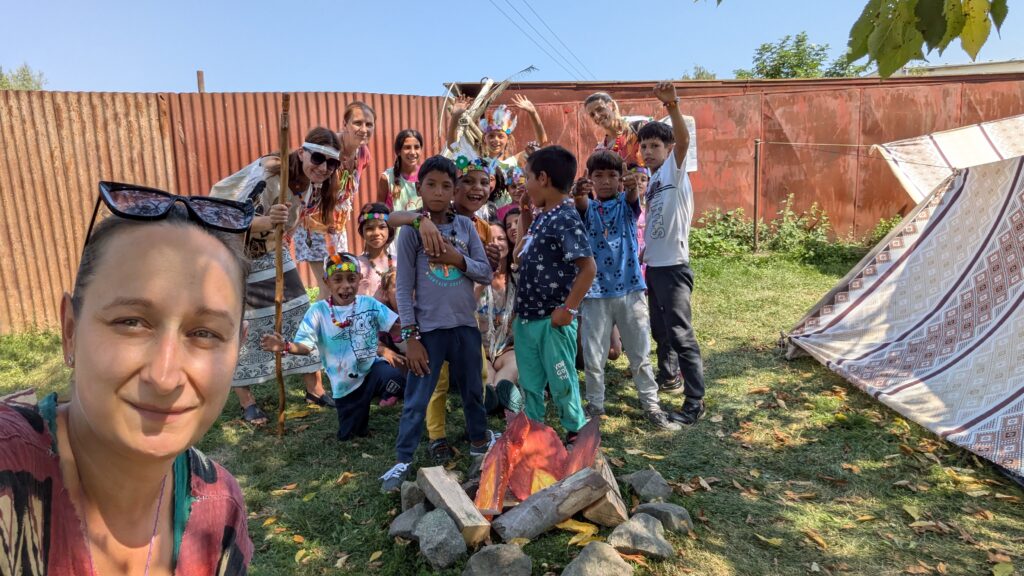
The part of the village where the local Roma community lives is less than a kilometre from the centre. On the way, we cross a bridge. Alenka points out the railing where she and local residents plant flowers every year. And I finally understand where the flowerpots I noticed outside the community centre are meant to go.
We continue along a dusty path. At the end of it stand only a handful of houses, or rather small homes. Some were built gradually from whatever materials people had available at the time. Alenka tells us that around 242 people live here, including 139 children. She knows the local residents, greets them by name, and is also carrying a letter for one of the families.
As we talk, the conversation once again turns to school. From Bratislava, it is easy to say that a child simply has to go to school. Here, Alenka tells us about children who sometimes do not attend because they do not have shoes. About families for whom even the money for a school snack can be a problem, meaning a child has to learn while hungry. Compulsory school attendance sounds simple. The reality surrounding it is less so.
And again, I think of the balloons at the centre. A pastry chef. A singer. A police officer. A bricklayer.
When we return to the Klubovňa space, our colleagues describe what an ordinary week looks like for them. Every Monday, they meet with the mayor. The centre also organises Babince, gatherings where women talk about topics they themselves bring up. On Fridays, mothers come with their children, so even the youngest are familiar with the centre. We also meet Helena, who lives in the local community and volunteers at the centre. Not because she gets something in return. She simply wants to.
We ask our colleagues what motivates them in this work. I write their answer down very simply: gradual improvement.
I keep thinking about it on the way back to Prešov, where we are staying. We live in a world that places a great deal of emphasis on performance. We often talk about results and goals, and we want to see success immediately. Social and community work simply does not work that way. Results may only come after many conversations, meetings and repeated attempts. And sometimes success means that someone from the community has managed to move even one small step forward.
Sveržov: Trust Is Built in Difficult Moments Too
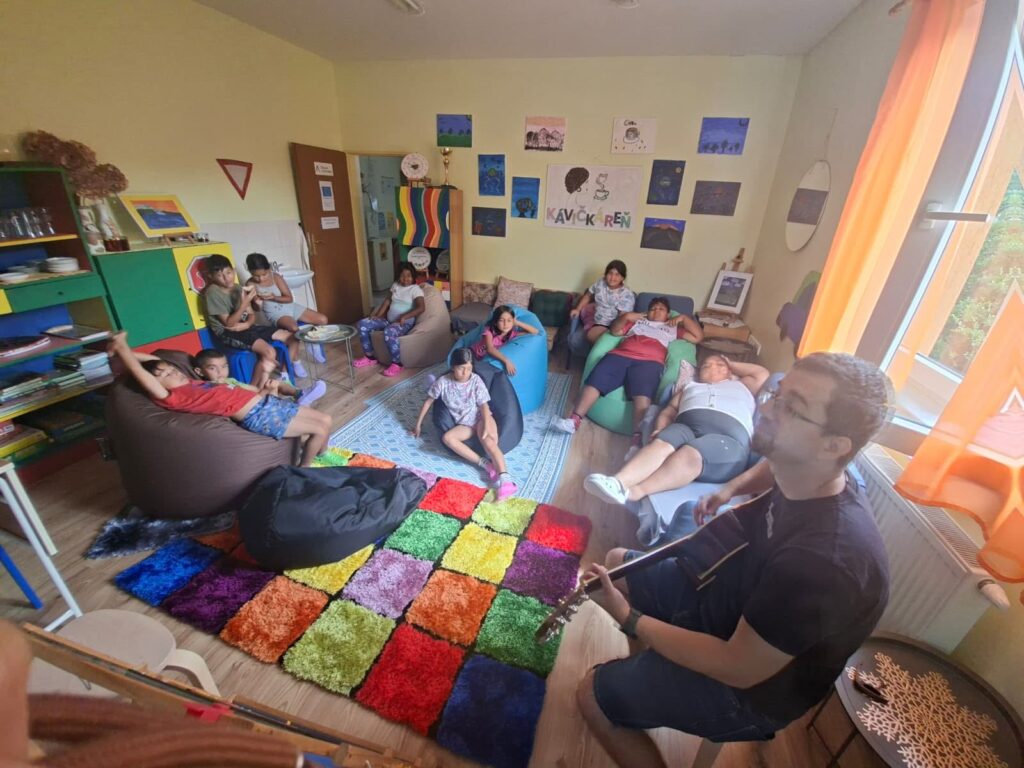
On our final day, we head north to Sveržov, a village near Bardejov. We arrive in the morning, and this time the Klubovňa space is empty. Guitars hang on the walls, the room is quiet, and I can focus fully on our conversation with Terezka and Daniel.
They gradually describe everything that usually takes place here. Daniel exercises with the children, plays guitar with them and tutors them. Terezka works mainly with younger children and women. She tells us about their “café”, where the girls bake, serve customers and learn how to plan. They are saving the money they have earned for a group trip to Prešov.
But when we ask what they find most difficult about this work, the conversation shifts.
Daniel talks about changing moods and how long it can take to build trust within the community. “Someone comes in and says, ‘I don’t care.’ And an hour later, they apologise. We have to build trust, and that takes at least a year.”
Terezka recalls a situation that affected her more deeply. Once, some of the children shouted at her that the centre staff were paid because of them, and that without them they would not have jobs. “I cried in front of them,” she says openly. “But the next day, they all came back and every single one of them apologised to me.”
Listening to Daniel and Terezka, I am reminded once again of something we have heard throughout these three days. This work brings rewarding moments, but also frustration and situations that do not turn out as hoped. Trust does not show itself only when everything is going well. Sometimes, it becomes most visible the next day, when the children come back and say, “I’m sorry.”
About the People Behind It – and the Ones Who Make It Worthwhile
When we set off on the trip, I had no plans to write about it. Above all, I wanted to get a better sense of what we at People in Peril actually do in Slovakia, meet our colleagues working in the field, and see their work beyond spreadsheets, project documents and the articles I would later be writing about it myself.
The way Andrea approached the visits also showed me what we should be paying attention to. She did not ask about numbers or how many activities a centre had delivered. She wanted to know how our colleagues were doing, what they were finding difficult at the moment, what was bringing them joy, and what they needed to do their work.
Respect, trust, inclusion, community, acceptance. These are words we use every day in conversations, articles and social media posts. After this experience, they feel a little more concrete to me. I associate them with the people I met, with the way they talk about their work, and with what they do every day.
That is what stayed with me long after I returned. It is also why, a few months later, I came back to this experience. I wanted to write about the people behind our Klubovňa spaces and community centres, whose everyday work often happens away from the spotlight.
Jana Kopecká, Media Manager at People in Peril