
We came to replace the windows. In the end, we renovated the entire house.
After the attacks on the village of Bondari, we came to replace the damaged windows. However, when we inspected Ms Halyna’s house, we realised that much more needed to be done. Today, her home is once again a safe and dignified place to live.

The attacks damaged more than ten homes
The attacks on 1 April damaged more than ten homes in the villages of Bondari and Sakhny in the Sumy region. Most had broken windows or damaged roofs. We therefore began replacing windows in the Bochechkivska community to help local people protect their homes from rain, cold and further damage.
Among the houses selected for repairs was Ms Halyna’s small home in the village of Bondari. One of the explosions occurred in its immediate vicinity, causing significantly more damage than to the surrounding buildings. Shrapnel shattered the windows and damaged the façade, roof and fence. There were no military or strategic facilities nearby—only residential houses and pastures.
The local authorities repaired the roof, while we initially planned only to replace the windows. During the inspection, however, we found that the house required more extensive renovation. We therefore insulated it with mineral wool, restored the façade and added exterior cladding. The repairs improved not only its appearance but, more importantly, its ability to retain heat.

She moved to Bondari after the Chernobyl disaster
Ms Halyna has lived in the village of Bondari for almost thirty years. She moved to the Sumy region with her family in 1997, when they were forced to leave their home in the Chernobyl exclusion zone because of the consequences of the nuclear disaster. Although more than a decade had already passed since the Chernobyl accident, the authorities continued relocating residents throughout the 1990s. As a result, many families moved only years later. Ms Halyna’s family was among them.
Their new beginning did not last long. A year later, Ms Halyna’s father died, and she later lost her mother as well. She, her brother and her younger sister were left to manage everything on their own. When she and her sister could no longer afford to maintain the house they were living in, they moved to a smaller house in Bondari. It became her home.
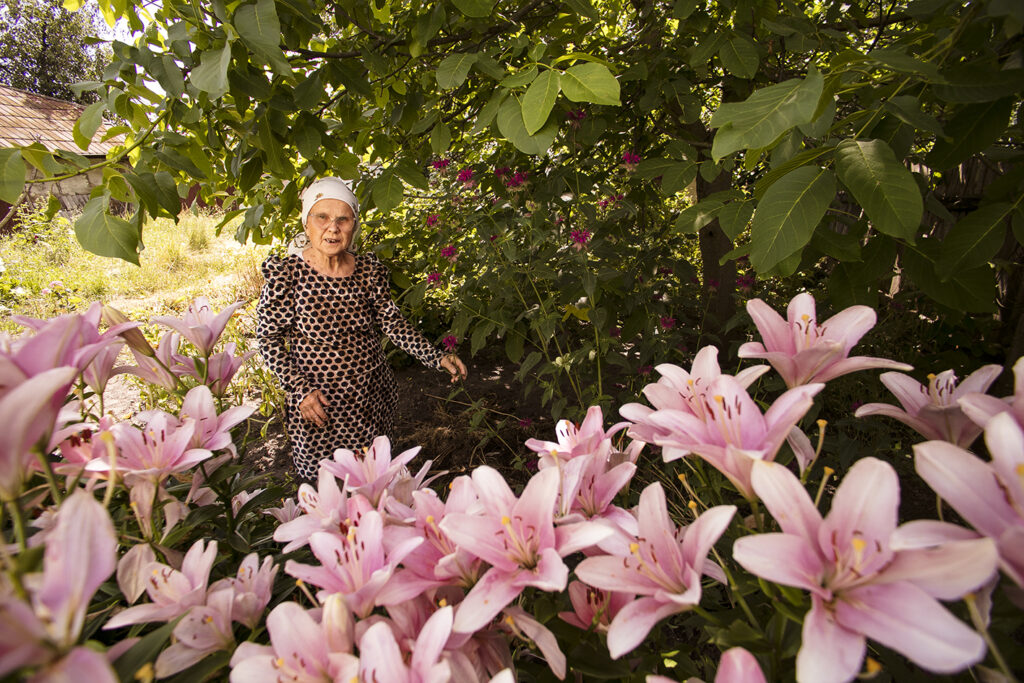
Today, Ms Halyna lives alone. She has no children and takes care of all the work around the house and garden herself. She grows vegetables, tends to her flowers and carefully maintains her home, despite living on a small pension.
At the beginning of Russia’s full-scale invasion, Russian troops occupied the village of Bondari for more than a month. During the attack on 1 April, Ms Halyna watched drones flying over her house and fires burning in the neighbourhood. Shrapnel also landed on her property, narrowly missing her dog.
The extent of the damage, however, was beyond what an older woman living alone on a small pension could manage.
Why we repair homes even during the war
As Andrea Bednáriková, Head of People in Peril’s Emergency Shelter Programme in Ukraine, explains, older people in particular are often unwilling to leave their homes, even because of the war. For many, their house is the place where they have spent most of their lives. They have a garden or smallholding there and maintain close ties with the local community. At the same time, Ukraine lacks the capacity to enable everyone whose home has been damaged to relocate and live elsewhere with dignity in the long term.
Rain, moisture and freezing temperatures enter houses through broken windows and damaged roofs and façades. As a result, the buildings provide less safe living conditions, while households have to spend more on heating. Timely repairs protect homes from further damage and allow people to continue with their everyday lives.
However, we provide this assistance only in areas where the security situation allows reconstruction work to take place. We do not work in the immediate vicinity of the front line, where government-led evacuations are under way, but in affected locations more than 50 kilometres from the Russian border. We also assess the current security situation before every renovation.
Repairing homes therefore enables people to remain in familiar surroundings, reduces their everyday expenses and helps them maintain dignified living conditions.
“Of course, the risk of further attacks and damage in Ukraine is real. At the same time, it is extremely important to support reconstruction and carry it out wherever possible, as it gives local people immense strength, hope and reassurance that they have not been left to face all of this alone,” adds Andrea Bednáriková.

Halyna from the Green House
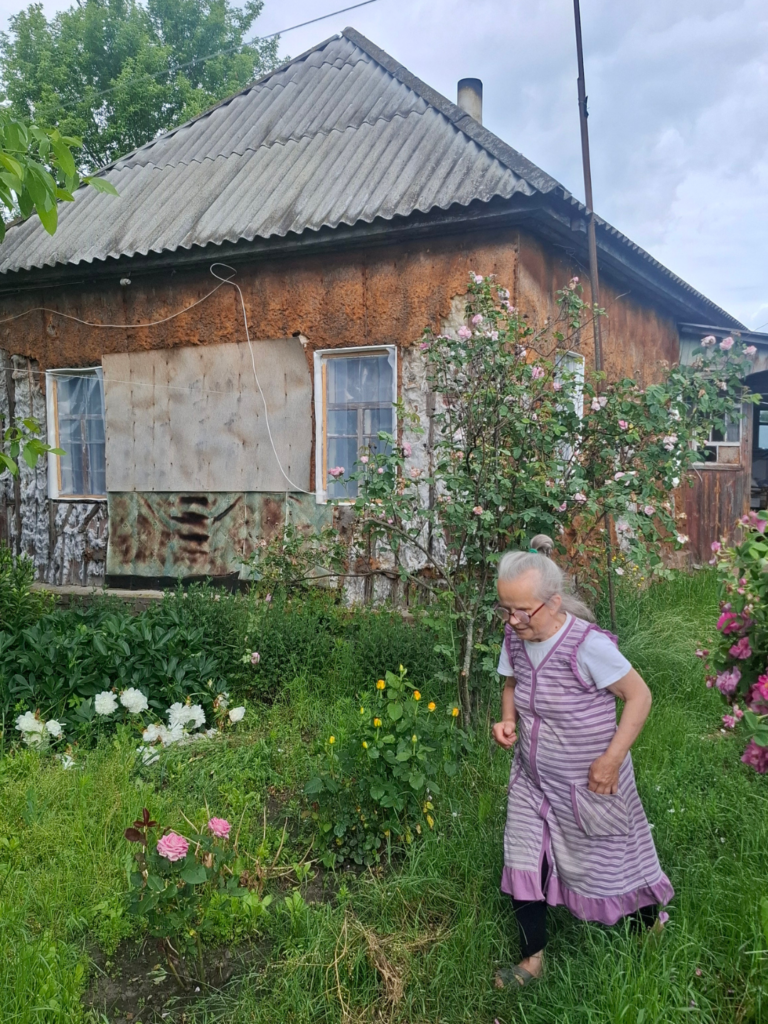
When we first visited Ms Halyna, her house still bore visible signs of the attack. The explosion shattered the windows, while shrapnel damaged the roof, façade and fence, leaving holes in several places. Various pieces of material had been used to cover the exposed walls temporarily and protect them from the rain.
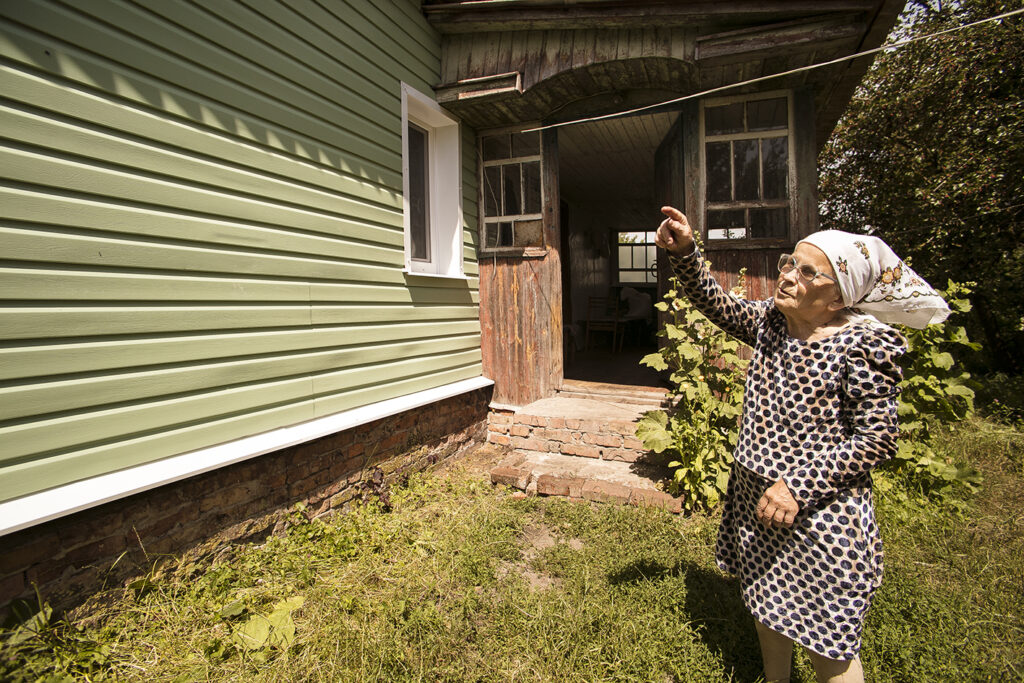
After the work was completed, Ms Halyna—a petite, smiling woman in a polka-dot dress—welcomed us in front of her renovated pale-green house. She could not hide her joy at the transformation. She showed us around the entire house, pointing out the new windows and the other repaired sections. Even the smallest details brought her happiness.
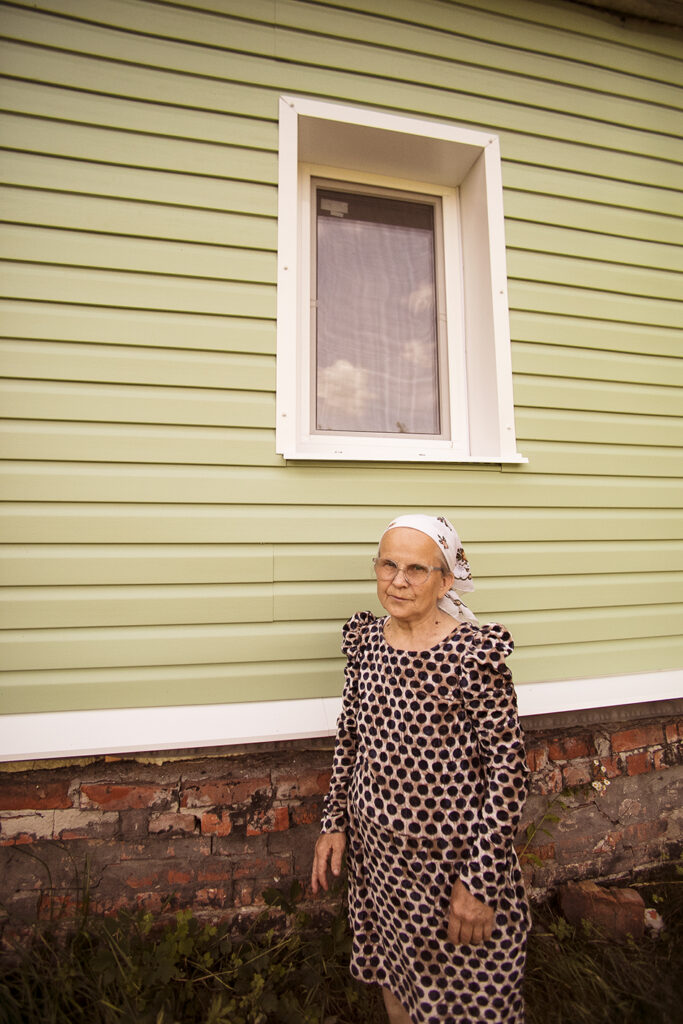
“They did a truly wonderful job. I am very pleased with it. I did not even expect them to fit insect screens on all the windows. Everything was done properly. They even put back the antenna that had been torn down by the explosion. I am very grateful to everyone who did this for me. I could never have managed it on my own. After all, my ‘generous’ pension is only 3,577 hryvnias, approximately 70 euros,” says Ms Halyna.
The difference compared with our first visit was striking. The new windows and insulation help retain heat inside the house and reduce noise from outside. For Ms Halyna, this will also mean using less fuel during the heating season.
“This winter, one truckload of firewood will probably be enough to heat the house,” she adds.
At first glance, it is just a small house. For Ms Halyna, however, it is a place she has cared for over many years and still calls home despite everything. The renovation gave her more than new windows and a restored façade. Above all, it gave her the possibility to remain in her own home.