We help turn everyday challenges into new skills
Compare prices in a shop, fill in an official form correctly, or write a CV. For most of us, these are everyday tasks we take for granted. For many people from marginalised Roma communities, however, they can present daily challenges. Through ROZZUM, we help people develop practical skills and abilities that make everyday life easier and open the door to new opportunities.
Not everyone starts from the same starting line
Many people want to work, but life has not given them the opportunity to develop even the most basic skills. They may struggle to understand documents, manage their finances, or use a computer. Without these practical skills and knowledge, handling everyday situations can be difficult—let alone writing a CV or finding stable employment.
This is why ROZZUM (Development of Basic Skills among Marginalised Communities) was created. Through three-month courses, we support people with low levels of education from marginalised Roma communities in becoming more confident in reading, numeracy, using digital technologies, and looking for work.
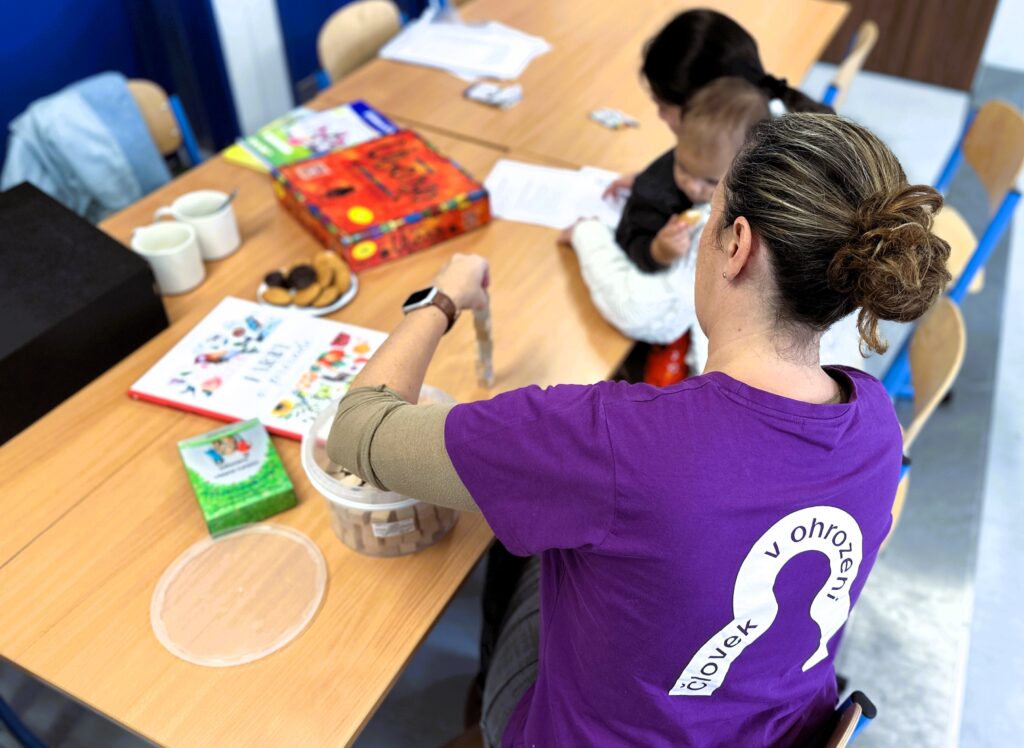
There is no one-size-fits-all approach in ROZZUM. Everyone comes with different experiences, needs, and life stories. That is why we adapt to the pace of each participant and focus on the skills they genuinely need in their everyday lives. We work in small groups, creating space for an individual approach, practical learning, and building self-confidence.
Learning the ROZZUM way
In our courses, learning looks a little different from what we may be used to at school. Maths can mean planning a family lunch using a supermarket leaflet, financial literacy can involve comparing product prices in a drugstore, and digital skills can mean looking up bus connections or useful information online.
At the community centre in Petrovany, women made doughnuts while calculating the quantities of ingredients they needed. In Žilina, participants learned to distinguish between a product’s price and its unit price so they could shop more economically. In the Spiš region, they created their own CVs or followed instructions to build LEGO models, developing both logical thinking and spatial awareness.
WHAT LEARNING THE ROZZUM WAY LOOKS LIKE
Examples of activities from our courses.
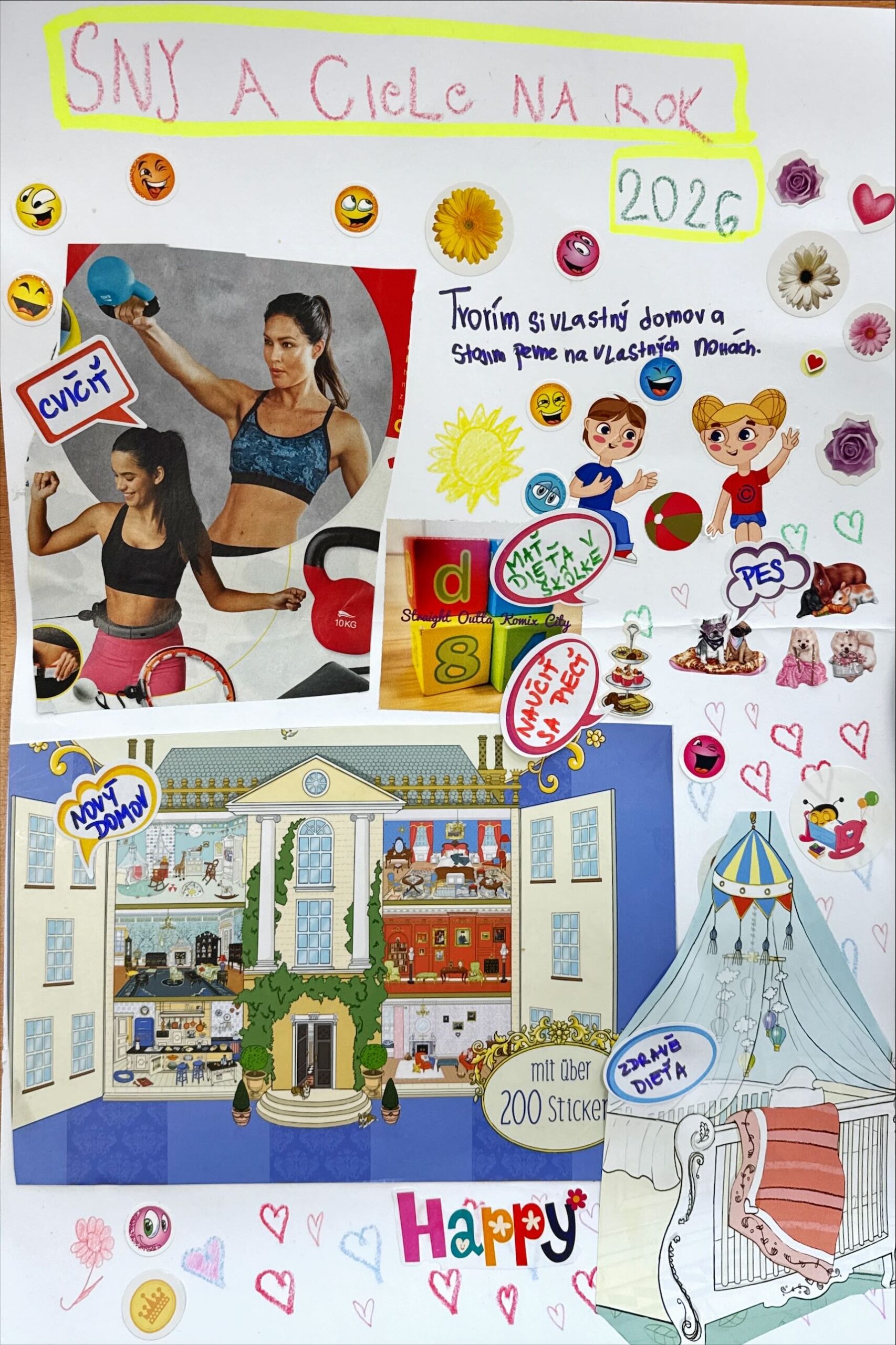
MY DREAMS AND GOALS
At the beginning of the new year, participants created their own vision boards. They reflected on what they would like to achieve in life, what brings them joy, and what goals they would like to accomplish. The activity encouraged creativity, while also developing their ability to plan and think about their future.
ST NICHOLAS PACKAGE
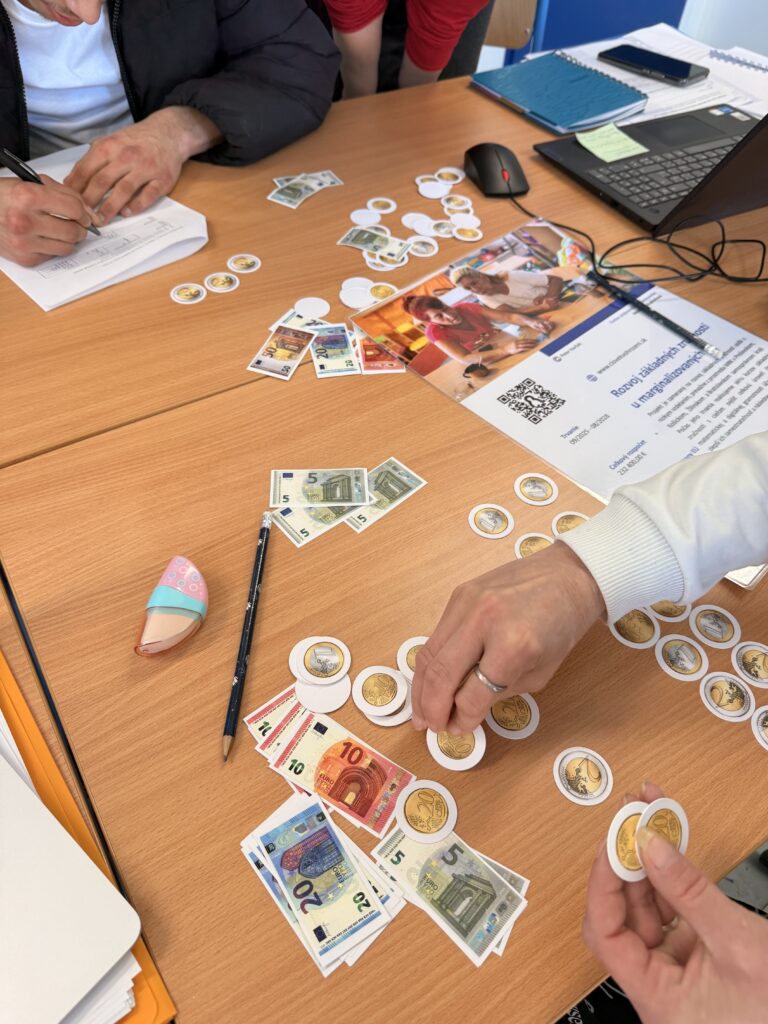
The task was to prepare a St Nicholas package for children while staying within a fixed budget. Participants compared prices, decided what to buy, and learned how to manage their money so that they stayed within the set amount.
IS CHEAPER ALWAYS BETTER VALUE?
Using everyday drugstore products, participants learned how to look up prices online, compare unit prices, and use a calculator to work out which product actually offered the best value for money. One activity thus combined digital skills, numeracy, and financial literacy.
INCOGNITO – GUESS THE JOB
In the popular game Incognito, each participant chose a card with an occupation while the others tried to guess the profession. Alongside having fun, participants developed their vocabulary, communication skills, attention, and ability to work together as a group.
LETTERS IN YOUR HANDS
Some participants are learning to read and write from the very beginning. We therefore also use plastic letters that they can hold in their hands, arrange into words, and use to better remember the shapes of individual letters.
MACRAMÉ
Tying simple knots while making macramé was more than just a creative activity. Participants practised fine motor skills, spatial awareness, logical thinking, and the ability to follow instructions.

Self-confidence is just as important as knowledge
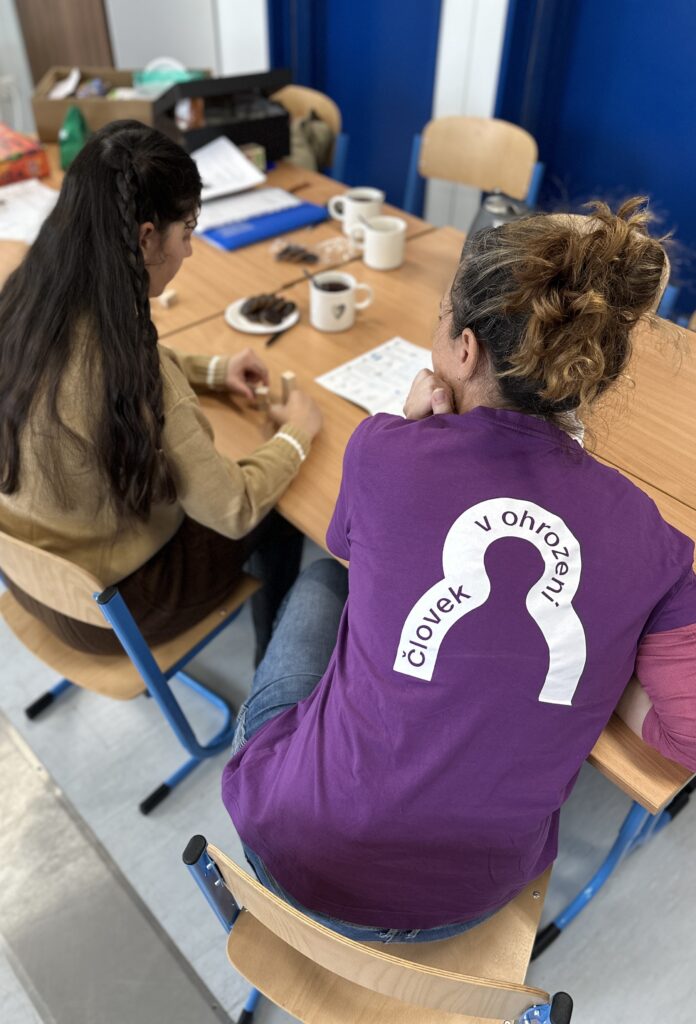
In the courses, we do more than develop literacy, numeracy, and digital skills. It is equally important for participants to build their self-confidence, learn to express their opinions, and feel more secure in everyday situations.
The courses have also created a safe space for conversations about topics that many women had previously had no one to discuss with. They talked about menstruation, women’s health, breast self-examination, and respect for their own bodies. They also watched the video Súhlas je všetko (Consent Is Everything), which explains the importance of consent in relationships in a simple and accessible way. Together, they discussed these issues, practised expressing their own views, and learned to speak openly about topics that affect both their health and their everyday lives.
“The women are delighted to finally have someone they can talk to about these topics,” says Nina Gubišová, a course facilitator from Žilina.
Participants also build their self-confidence by practising job interviews. They prepare CVs, learn how to present their strengths, and even switch roles with the employer during mock interviews.
“Switching roles during a job interview helps develop communication skills and empathy. It allows participants to see the situation from a different perspective,” explains Petra Martincová, a course facilitator from Plavecký Štvrtok.
Small steps, big changes
So far, 63 people have taken part in the programme, most of them women. 34 participants have already successfully completed the first courses, while others are continuing their learning journey. The true value of ROZZUM, however, lies not in the numbers but in the individual stories of people who are gradually becoming more independent and confident in their everyday lives.
Veronika, a participant from Žilina, completed the course despite giving birth to her ninth child while it was still underway. Mrs Mária from the Spiš region built a LEGO set for the first time in her life at the age of 62. What may seem like an ordinary game to some became an opportunity for her to practise logical thinking and experience the joy of learning.
When participants from the Spiš region came up with the idea of taking a trip to Košice, it was about more than just spending a day together. They searched for bus connections themselves, planned the route, calculated the costs, and decided what they wanted to visit during the day. In doing so, they practised digital skills, working with information, and financial literacy in a real-life situation they may encounter in everyday life. Perhaps even more importantly, they discovered that they could use their new knowledge outside our Klubovňa spaces and community centres and gained greater confidence that they could handle similar situations on their own.
The ROZZUM – Development of Basic Skills among Marginalised Communities project is implemented with financial support from the European Union under the Slovakia Programme. The project runs from 1 September 2025 to 31 August 2028 in the districts of Spišská Nová Ves, Levoča, Prešov, Žilina, and Malacky.