Why Simply Wanting a Job Isn’t Enough: Monika’s Story from Zvolen
Monika is one of many Romani women who shatter the myth that they “don’t want to work” the moment you meet them — with one simple, direct question: “Do you have a job for me?” This is her story.
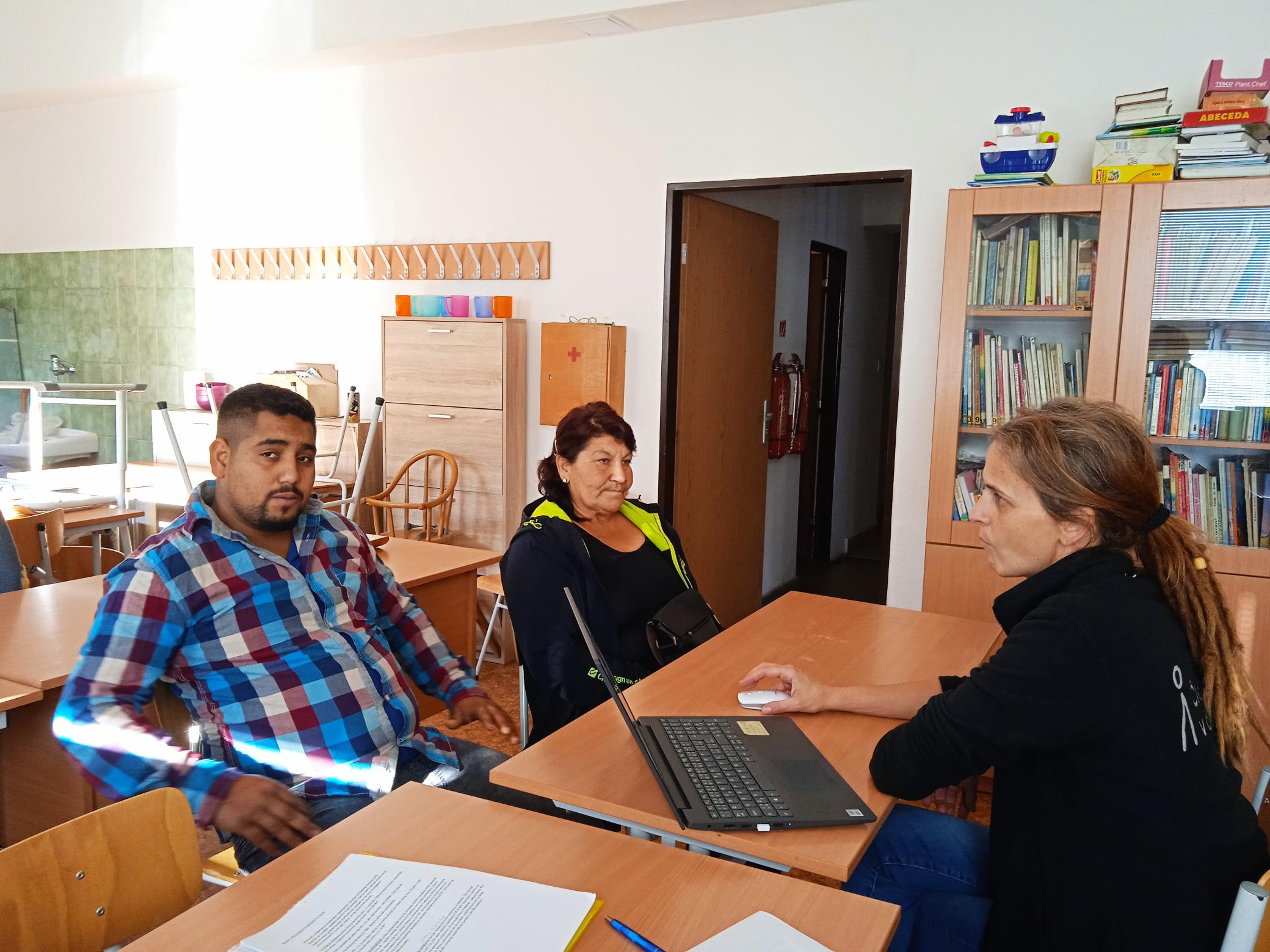
Monika scans the community center with a hungry look in her eyes. But it’s not the kind of hunger that food can satisfy. It’s a longing for work, for purpose in the ordinary rhythm of daily life, for the feeling of being needed. We are just about to ask her something when she beats us to it with an urgent question.
Monika spoke with employment programs coordinator for the Bratislava, Banská Bystrica, and Žilina regions, Nadežda Malčeková.
The First Meeting: “Do You Have a Job for Me?”
Monika: “Do you have a job for me? I used to work at the Kúpele Sliač spa resort, and they let me go.” (Her voice is filled with fear, anger, and disappointment.)
Nadežda: “Were you working under a temporary agreement or a full contract?”
Monika: “A temporary agreement. I was there every single day. How am I supposed to survive now? So — do you have a job for me?” (She speaks with urgency.)
Eight Months Later: Mrs. Monika
Nadežda: “Monika, are you doing? It’s been a long time since we last saw each other.”
Monika: “I’m doing well. I have a job, I have a place to live, and I’m earning a decent living now.” (She speaks with bright, shining eyes.)
Nadežda: “Were the beginnings difficult?”
Monika: (nods in agreement) “I thought I wouldn’t make it. I was unemployed, and every month I was supposed to receive welfare benefits, but I didn’t even know about it. So the mail carrier kept sending the money back.
Klaudia from Človek v ohrození took me to the labor office, helped me open a bank account, and taught me how to withdraw money. To her, I wasn’t just ‘hey, Monika’ — she called me ‘Mrs. Monika.’ She drove me to my job interview and stayed there with me the whole time.
Now I work as a cleaner at DSS Sénium, and honestly, after the first week, I wanted to quit…”

Klaudia from Človek v ohrození took me to the labor office, helped me open a bank account, and taught me how to withdraw money. To her, I wasn’t just ‘hey, Monika’ — she called me ‘Mrs. Monika.’
I Should Have Thought More About Myself
Nadežda: “What made you feel that way?”
Monika: (pauses for a moment) “A lot of things. I was commuting from Zvolen to Banská Bystrica, and I didn’t always have money for the bus. I had nowhere to wash my clothes, nowhere to clean myself. I was ashamed… And then my daughter threw me out of the house, and I had nowhere to go. I slept at the train station. I was ashamed to go to work — I didn’t even have a cent to my name. So I called work and said I was quitting.”
Nadežda: “You know that wasn’t a reason to quit.”
Monika: (lowers her eyes for a moment) “It wasn’t… But what was I supposed to say? That I was sleeping on the street and that I was dirty? … But you know what? The people from the community center helped me, and so did Klaudia from Človek v ohrození. They looked for me, they wanted me to come back, and they also searched for housing for me. The director called me and told me to come back. You called me too. You told me I could change my life and have a good life. Today I know you were trying to push me forward and tell me not to be afraid.”
Nadežda: “And what happened next, Monika?”
Monika: “So I went back to work. They helped me find a place to live in Banská Bystrica. I missed my family — suddenly I was alone in a room by myself. But I have a TV there, I can wash my clothes…”
Nadežda: “And at work?”
Monika: (her face changes at the question) “There are good people there. The director always says to me, ‘Monika, please do this, please do that.’ She likes me and helps me. Sometimes she’s strict. And the patients there talk to me too. At first, they didn’t trust me. They looked at me and thought, ‘She’s Roma.’ But now they invite me into their rooms and play cards with me… Even the people at reception help me. You know, I can’t really read or write well, so they help me fill out my attendance sheet. They tell me, ‘Come in tomorrow, you’re scheduled to work,’ or ‘Tomorrow you’re off.’”
Nadežda: “Do you still go back to Zvolen often?”
Monika: (laughs) “Not much. I’ll tell you something — they envy me. They say, ‘Well, Monika has a job now. Monika has a place to live. She’s doing well.’”
Nadežda: “Monika, if you met the version of yourself from a few months ago, what would you say to her?”
Monika: “I’d tell her to think more about herself.”
They looked at me and thought, ‘She’s Roma.’ But now they invite me into their rooms and play cards with me…
There is more in her answer than first meets the eye. It is not only a memory of a difficult period, but also testimony to a gradual transformation — from uncertainty, fear, and the loss of stability to rediscovering her own worth. In part, this became possible because she accepted help — not as a sign of weakness, but as a chance to stand on her own feet again. Leaving an environment where a person is merely surviving does not have to mean failure. Sometimes, it is the beginning of a new chapter. Monika’s story is therefore not only about work, but also about reclaiming a life of dignity.
Help more people like Monika.
There are many stories like this across Slovakia. Women in Romani communities perform enormous amounts of unpaid work every day — caring for children, partners, and sick relatives, while also managing households and cooking, often in the difficult conditions of marginalized Roma communities. And yet, they still want to work. What stands in their way are numerous barriers: persistent prejudice, lower levels of education, weakened self-confidence, and even seemingly ordinary obstacles — such as simply being able to travel to a job interview.
That is why support that is practical, personal, and long-term matters so much. Monika’s story shows that when someone has a person by their side to guide them, encourage them, and help them overcome the first obstacles, their chances of finding stable work — and building a better life — increase significantly.

Monika was supported on her journey by several people — from Nadežda, whom she met at the very beginning, to a social worker from Človek v ohrození, and later by her supervisor and colleagues at work. Each of them offered a helping hand, so she did not have to go through it alone.
And this is exactly something you can also offer. By contributing, you can help other women from marginalized communities find employment and stand on their own feet.